
Rail Innovations: Future of Rail Infrastructure & Sustainable Transport
Railway sector sees growth with new intermodal services and commuter rail extension. Port of New Orleans and Windsor, California, projects boost efficiency and sustainability.
Expanding Horizons: Rail Infrastructure and Logistics on the Rise
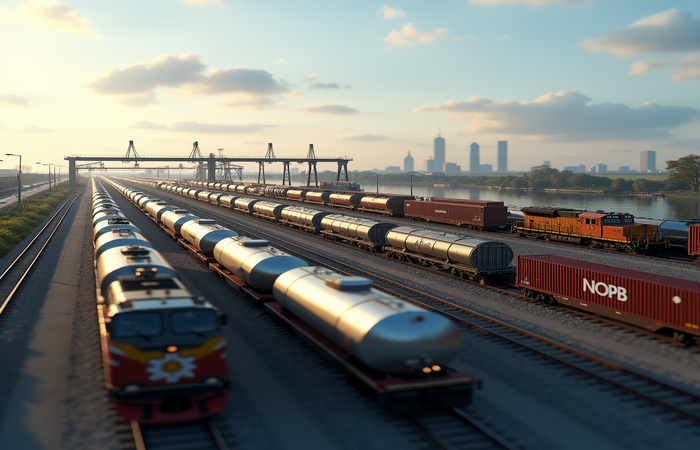
In a dynamic era for rail transport, significant developments are underway that underscore the industry’s commitment to efficiency, safety, and strategic growth. This article examines two noteworthy initiatives: Freedom Intermodal Tank Services’ expansion in the Port of New Orleans, and the opening of a new commuter rail extension in Windsor, California, designed by STV. These projects highlight the ongoing investment in critical infrastructure and services that are essential for the future of rail transportation. Both initiatives, though geographically disparate, share a common thread: a dedication to optimizing operational capabilities and meeting the evolving needs of shippers and passengers. The ‘Who’ includes key players like Freedom Intermodal, the New Orleans Public Belt Railroad (NOPB), STV, and Sonoma-Marin Area Rail Transit (SMART). The ‘What’ encompasses expanded intermodal services and the opening of a new commuter rail line. The ‘When’ is now, as both projects are in progress and being completed. The ‘Where’ is the Port of New Orleans and Windsor, California. The ‘Why’ behind these projects is to increase efficiencies and improve services for shippers and commuters. The ‘How’ involves the creation of a more comprehensive range of services in Louisiana and extending the passenger rail network in California.
Enhanced Intermodal Services at the Port of New Orleans
Freedom Intermodal Tank Services is significantly expanding its service offerings at its terminal within the Port of New Orleans. This expansion is a direct response to growing demand for specialized bulk liquid logistics solutions. A key aspect of this initiative is the introduction of rail-car cleaning services. This addition is poised to streamline operations for shippers, significantly cutting down turnaround times, and lessening the amount of time rail cars remain idle (dwell time), as well as boosting overall safety protocols. Jeff Louis, President of Freedom Intermodal, noted that this new service will create faster, safer, and more cost-effective tank car cycling. The NOPB’s (New Orleans Public Belt Railroad) ability to connect with all six Class I railroads (major freight railroads in North America), further enhances the appeal of this location for bulk liquid transportation. This development reinforces the Port of New Orleans’ strategic importance as a gateway for bulk liquid shipments, capitalizing on its direct access to key markets and distribution networks.
The Role of Rail-Car Cleaning
Rail-car cleaning is often a critical but less publicized aspect of bulk liquid logistics. Tank cars can be subjected to diverse cargos, from fuels to chemicals to food-grade products. Effective cleaning is required for compliance with stringent regulations to ensure cross-contamination is prevented. This service ensures the integrity of each shipment, and it enhances the overall safety of the rail transport process. By providing rail-car cleaning, Freedom Intermodal allows shippers to cycle their tank cars more rapidly, reducing dwell time and improving the flow of goods. This creates more efficient supply chains and reduces costs. It also highlights the need for specialized infrastructure. Furthermore, these facilities can be designed with environmental sustainability in mind, including effective wastewater treatment and material recycling.
SMART’s Windsor Commuter Rail Extension
In Windsor, California, STV recently completed the design and engineering for the new commuter-rail station and 3.2-mile extension for the Sonoma-Marin Area Rail Transit (SMART) project. The construction involved the reconstruction of tracks, a new station, upgraded rail bridges, and improved grade crossings. This latest expansion is a step forward in SMART’s comprehensive plan to develop a 70-mile passenger-rail corridor that will connect Larkspur and Cloverdale. This ambitious project showcases a commitment to providing efficient and sustainable public transportation options, with STV playing a crucial role in designing the majority of the 48 miles of the overall SMART corridor. This investment enhances connectivity, relieves highway congestion, and helps reduce carbon emissions. The SMART project is representative of the national trend toward expanded commuter rail networks.
Conclusion
These initiatives showcase the ongoing investment in rail infrastructure and intermodal services. The Freedom Intermodal expansion exemplifies the trend toward integrated logistics solutions, while the SMART extension demonstrates a commitment to sustainable transportation. Both underscore the rail industry’s ability to adapt and respond to evolving market demands. The industry is in a period of continuous improvement, and these projects are reflective of the need for efficient and effective operations. The industry must invest in enhanced services, with the rail-car cleaning service at the Port of New Orleans being a good example. Looking ahead, the success of these projects depends on the sustained commitment of all stakeholders, including rail operators, service providers, and government agencies. Continued investment in advanced technologies, infrastructure upgrades, and collaborative partnerships will be critical to capitalize on the opportunities for growth and sustainability.
Company Summary
Freedom Intermodal Tank Services specializes in offering comprehensive intermodal logistics solutions for bulk liquid transport. Based in the Port of New Orleans, they focus on services that support rail and trucking operations, including rail-car storage, transloading, and now, rail-car cleaning. The New Orleans Public Belt Railroad (NOPB) provides essential switching and terminal services for the Port of New Orleans. STV is a major engineering and design firm with extensive experience in transportation infrastructure projects, including rail and transit systems across North America.
RELATED POSTS
November 9, 2025 5:54 pm
BNSF Railway expands its Shortline Select™ program, integrating short lines...

February 22, 2021 2:52 pm
This article examines the successful completion and commencement of revenue...
December 4, 2022 4:23 am
Introduction The transportation industry is on the cusp of a...
March 10, 2017 8:02 am
"In November 2021, Caltrain terminated Balfour Beatty's contract on the...
August 12, 2025 8:33 am
Frauscher opens Indian manufacturing hub, boosting local railway technology &...
January 23, 2026 12:38 am
Norfolk Southern orders 40 Wabtec ES44AC locomotives, its first new...