
Rail Infrastructure Upgrades: Efficiency & Sustainability in Global Rail
Railway infrastructure upgrades are boosting efficiency and safety globally. Investments in modernizing tracks and signaling systems are key.
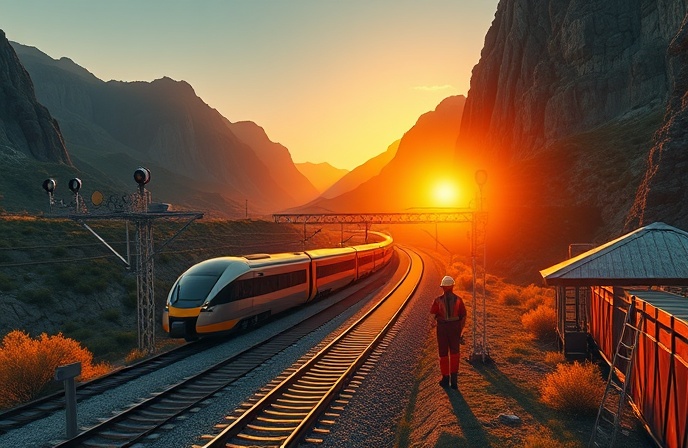
Boosting Efficiency: A Deep Dive into Rail Infrastructure Upgrades
The railway industry stands at a critical juncture, with demands for increased capacity, improved safety, and reduced environmental impact. Across the globe, governments and private entities are investing heavily in rail infrastructure upgrades to meet these pressing needs. These improvements are not just about replacing worn-out components; they represent a fundamental shift towards smarter, more resilient, and sustainable railway networks. This article will explore the key drivers behind these upgrades, the technologies being deployed, the challenges faced, and the future trajectory of the industry. The imperative for action stems from the necessity to handle increasing passenger and freight volumes efficiently, safely, and sustainably, and the implementation is complex involving many elements.
Modernizing Track and Signaling Systems
A cornerstone of rail infrastructure upgrades is the modernization of track infrastructure and signaling systems. This encompasses a broad range of enhancements, from the replacement of aging rails and sleepers to the implementation of advanced signaling technologies. Upgrading track geometry, including curves and gradients, allows for higher operating speeds and reduces wear and tear on rolling stock. Furthermore, the shift towards European Rail Traffic Management System (ERTMS) deployments, for example, promises significant improvements in safety and capacity. ERTMS Level 2 and Level 3, offer continuous Automatic Train Protection (ATP), enabling shorter headways and thus increasing the number of trains able to operate safely on a given section of track. This requires significant investment in trackside equipment, onboard train systems, and a skilled workforce to maintain and operate them. The benefits include enhanced safety, increased capacity, and reduced delays.
The Rise of Digitalization and Data Analytics
Digitalization is revolutionizing every facet of railway operations, and rail infrastructure upgrades are at the forefront of this transformation. The deployment of sensors embedded in tracks, bridges, and other infrastructure components allows for real-time monitoring of conditions. Predictive maintenance, powered by data analytics, helps to identify potential failures before they occur, minimizing disruptions and extending the lifespan of assets. Another key component involves the rollout of a digital twin – a virtual representation of physical assets. This allows engineers and maintenance teams to simulate various scenarios, optimize maintenance schedules, and improve overall asset management. Big data and machine learning are critical tools in analyzing these vast amounts of data generated by sensors, leading to data-driven decision-making and optimized operational efficiency.
Addressing the Challenges of Project Implementation
Implementing rail infrastructure upgrades presents numerous challenges. Funding, often a significant hurdle, requires collaborative partnerships and innovative financing models. The complexities of project management, including dealing with legacy systems and coordinating various stakeholders, can lead to delays and cost overruns. Environmental concerns are becoming increasingly important, requiring careful consideration of noise pollution, emissions, and land use. Moreover, ensuring the safety of railway workers and the public during construction and operation is of utmost importance. Addressing these challenges necessitates effective planning, robust project management, and a commitment to sustainable practices.
Looking Ahead: The Future of Railway Investments
The future of railway is inextricably linked to continued investment in rail infrastructure upgrades. This includes embracing innovation, with the integration of new technologies such as autonomous trains and hyperloop systems, that promise to further transform rail transport. The global expansion of high-speed rail networks will drive demand for advanced track and signaling systems. Governments and private entities are increasingly focused on achieving sustainability goals, reducing carbon emissions, and promoting railway’s environmental advantages. With a robust outlook for growth and investment, we can expect to see continued advancements in materials science, engineering, and data analytics to further bolster railway infrastructure in the coming years. The drive to optimize efficiency and meet the demands of a changing transport landscape requires this consistent investment in the vital components of the system.
Conclusion
The modernization of railway infrastructure is a continuous process, driven by advancements in technology and the need for greater capacity and efficiency. Through strategic investment in track, signaling, and digital technologies, the industry is on track to overcome challenges and build safer, more sustainable, and more efficient railways. Rail infrastructure upgrades are vital for the long-term growth and relevance of the railway sector. The forward-looking approach ensures that railways remain a competitive and environmentally responsible mode of transportation for passengers and freight. These improvements are paving the way for an era of enhanced connectivity and efficiency within the global rail network. This forward-thinking strategy is crucial to securing the future and sustaining the railway sector as a cornerstone of global transport.

Railwaynews.net is a railway information and news platform. Website presents from all around the world railway sector news, developments, projects and tender for the sector specialists. Railwaynews supports to industry events and announced them for potential participants.
Railwaynews plans to collecting data from all around the world, about railway infrastructure, rolling stock, railway transportation datum, geographical datum to present for railway professionals for short term. Railwaynews will build new platforms aims to high value railway business environment for all railway specialists, railway fans and especially railway suppliers and their decision makers. Railwaynews presents whole information from rail professionals to rail professionals.
RELATED POSTS
May 2, 2026 7:26 am
Italo invested €3.6 billion to launch German high-speed rail, connecting...
May 5, 2026 12:45 pm
Siemens Mobility delivered the first D9 electric freight locomotive to...
May 1, 2026 9:07 am
Amtrak launched a federal lawsuit against MTA Metro-North over denied...
May 3, 2026 8:14 pm
Community of European Railway and Infrastructure Companies (CER) confirmed its...
May 6, 2026 3:57 pm
Alstom secured a contract with TL to modernize Switzerland's only...
May 2, 2026 2:39 pm
The Kentucky Transportation Cabinet awarded $3.1 million across seven freight-rail...