
Rail Baltica’s Pärnu Terminal: Feasibility Study Insights
Rail Baltica’s Pärnu freight terminal feasibility study is underway! Discover how this crucial project will optimize freight capacity across the Baltic region.
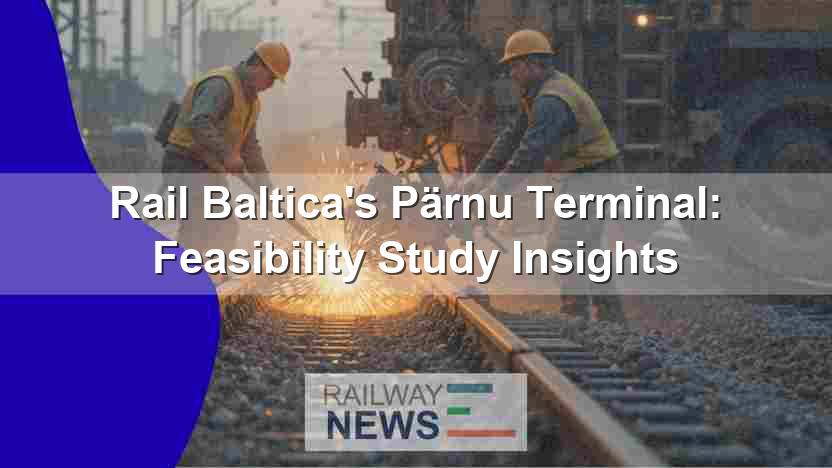
This article explores the crucial feasibility study commissioned for the Pärnu freight terminal, a key component of the Rail Baltica Global Project (RB Rail). The €139,876 contract, awarded to Civitta Estonia and Railistics following a competitive tender process overseen by Estonian Public Procurement Law, highlights the significant investment and planning involved in integrating the Baltic States into the broader European rail network. The study’s importance lies in its potential to shape the design and functionality of the Rail Baltica line, impacting freight transportation efficiency and cost-effectiveness across the region. This detailed analysis will examine various terminal alternatives, considering technical constraints, market demands, and projected cargo volumes to optimize the entire system’s performance and economic viability. The final report, anticipated by the end of the year, will provide invaluable data for informed decision-making concerning the Rail Baltica project’s future.
The Rail Baltica Context and the Importance of Pärnu
The Rail Baltica Global Project represents a monumental undertaking aimed at modernizing and integrating the rail networks of Estonia, Latvia, and Lithuania with the European Union’s high-speed rail system. This project is not simply about building new lines; it involves a complex interplay of economic, logistical, and infrastructural considerations. The Pärnu freight terminal plays a vital role within this broader context. Its strategic location offers potential for significant freight handling, impacting regional trade and economic growth. This study aims to rigorously assess the terminal’s economic justification and operational feasibility within the context of the larger Rail Baltica network.
Methodology and Key Considerations
The feasibility study conducted by Civitta Estonia and Railistics will employ a multi-faceted approach. This includes a detailed market analysis, incorporating freight forecast modeling to predict cargo volumes until 2055. This long-term perspective is critical for making informed decisions about infrastructure capacity and operational efficiency. Additionally, the study will encompass a detailed spatial and technical analysis, meticulously evaluating the alignment of Rail Baltica’s main line and its potential impact on the Pärnu terminal’s design and functionality. This involves identifying and mitigating any technical constraints that may arise from the preferred alignment. The ultimate goal is the selection of a preferred terminal option that optimally balances functionality, technical requirements, and cost-effectiveness.
Alignment with the Cost-Benefit Analysis of Rail Baltica
The Pärnu freight terminal feasibility study is intrinsically linked to the broader cost-benefit analysis (CBA) of the Rail Baltica Global Project. The projected cargo handling volumes generated by this study will be carefully aligned and cross-checked with the overall CBA. This ensures that the terminal’s development aligns with the project’s overall economic rationale and that investment decisions are based on robust data and projections. This integrated approach underscores the project’s commitment to transparency and responsible resource allocation.
Expected Outcomes and Future Implications
The final report, expected by the end of the year, will provide crucial insights into the optimal design and operational parameters for the Pärnu freight terminal. It will offer a range of alternatives, along with a detailed justification for the preferred option, considering both economic and technical factors. This study’s findings will be instrumental in shaping the overall design and planning of the Rail Baltica line, ensuring that the Pärnu terminal effectively contributes to the project’s goals. The data obtained will directly inform decision-making regarding infrastructure investments, ensuring that the project remains financially viable and delivers its projected benefits. The success of this feasibility study represents a critical step towards the successful completion of the Rail Baltica Global Project, maximizing its potential to transform freight transportation across the Baltic region and strengthen its integration into the European Union’s transport network. The rigorous approach taken, coupled with the expertise of the firms involved, promises a valuable contribution to the project’s long-term success.

Railway infrastructure, rolling stock and transport technologies specialist focused on global rail industry developments, high-speed rail systems, signaling technologies and freight transportation. Covering railway investments, public transport modernization, rail operations and international mobility projects across Europe, Asia and North America.
RELATED POSTS

September 6, 2026 5:19 am
Hitachi delivered Taiwan's first N700ST high-speed train from Japan in...

September 5, 2026 4:19 pm
CPK launched formal tender talks with four consortia to design...

September 6, 2026 4:12 am
Alstom delivered the first of 100 new G Class trams...

September 5, 2026 7:14 pm
HS2 Ltd signed renegotiated civils contracts with EKFB and Align...
September 6, 2026 6:17 am
Hungary ordered a national ban on most freight trains from...

September 6, 2026 1:17 am
Hitachi Toshiba Supreme Consortium confirmed the first of 12 N700ST...