
Rail Baltica Poland-Lithuania: High-Speed Rail Innovation Across Borders
Rail Baltica Poland-Lithuania project advances, connecting Baltic States to Europe via high-speed rail. Construction ongoing, aiming for 2030s operation.
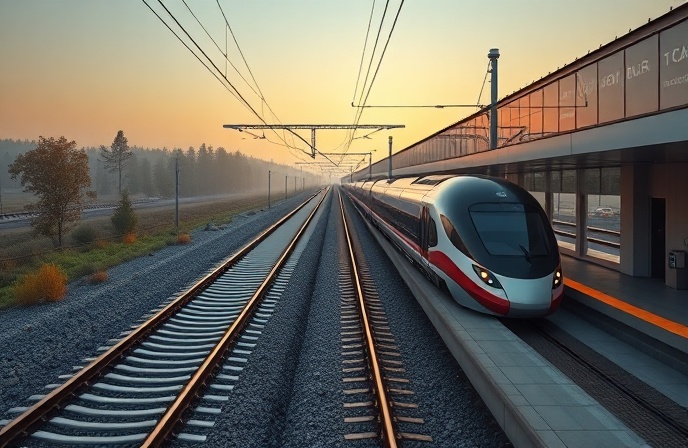
Rail Baltica Poland-Lithuania: Advancing Cross-Border Rail Connectivity
The ambitious Rail Baltica project is taking shape, and its progress, particularly across the Poland-Lithuania corridor, is generating significant interest within the railway industry. This strategically important high-speed rail line aims to connect the Baltic States with the rest of Europe, significantly enhancing freight and passenger transport capabilities. What is Rail Baltica? It is a multi-billion euro project, spearheaded by the European Union, designed to create a modern, electrified railway line. When? Construction is ongoing, with the goal of operational readiness in the mid-2030s. Where? Rail Baltica will stretch across Estonia, Latvia, Lithuania, and Poland, connecting to the existing European rail network. Why? To foster economic growth, improve regional connectivity, and reduce reliance on road transport. This article will delve into the current progress of the Rail Baltica Poland-Lithuania section, examining its key technical aspects, infrastructure challenges, and anticipated impact on the railway landscape.
Building the Backbone: Infrastructure Development Across the Poland-Lithuania Border
The construction of the Rail Baltica Poland-Lithuania section represents a critical undertaking. This segment involves laying a dual-track, standard-gauge railway, designed for speeds up to 249 km/h (155 mph). This demands robust infrastructure. Key elements include the construction of new tracks, bridges, tunnels (where necessary), and electrification systems (25 kV AC). The project utilizes the European Rail Traffic Management System (ERTMS), specifically Level 2, to ensure interoperability across borders and improve safety and efficiency. Significant efforts are underway to integrate the railway line with existing and planned transport hubs in Poland and Lithuania. This requires careful planning and construction of new stations and associated infrastructure to ensure seamless passenger and freight flows. Detailed geological surveys and environmental impact assessments (EIAs) are crucial phases of the process, which directly impact both schedule and construction costs.
Technical Innovations and Challenges in Rail Baltica Construction
The construction of the Rail Baltica Poland-Lithuania line incorporates several cutting-edge technologies. One notable aspect is the implementation of digital technologies for construction management and asset monitoring. Building Information Modeling (BIM) is widely used to optimize design, coordination, and lifecycle management. Concerning the track, the project specifies the use of high-quality concrete sleepers and continuously welded rails to ensure a smooth and durable ride. Specific construction challenges include soil stabilization in areas with challenging geological conditions and navigating complex permitting procedures. Furthermore, managing the supply chain for critical components, such as specialized signaling equipment and rolling stock, poses a significant logistical hurdle. Weather conditions across the Poland-Lithuania corridor during the winter months further complicate construction activities, necessitating careful scheduling and contingency planning.
Funding, Collaboration, and Regulatory Framework for the Rail Baltica Project
The financial structure of the Rail Baltica Poland-Lithuania project is a mix of European Union funding (through the Connecting Europe Facility – CEF) and contributions from the participating states. The collaborative model is critical for the project’s success. The project is led by RB Rail AS, a joint venture established by the Baltic States and Poland. This organization facilitates project planning, procurement, and implementation. Close coordination with national railway infrastructure managers (e.g., PKP Polskie Linie Kolejowe S.A. in Poland and LTG Infra in Lithuania) is vital for ensuring seamless integration with existing rail networks. Navigating the complex regulatory landscape, including environmental permits, land acquisition, and cross-border interoperability standards, demands diligent efforts from all stakeholders. Maintaining effective communication between the various parties involved is another important factor in ensuring a successful project completion.
Conclusion
The development of the Rail Baltica Poland-Lithuania railway is a defining project for the future of cross-border rail transport in Europe. This transformative infrastructure investment is setting new standards for high-speed rail connectivity. The project’s successful completion will dramatically reduce travel times, bolster economic ties between the Baltic states and Poland, and integrate them more closely with the broader European railway network. The implementation of advanced technologies, coupled with robust project management and collaborative international efforts, is essential to overcoming the challenges ahead. The long-term benefits, including reduced carbon emissions from the transport sector and increased efficiency in the movement of goods and people, will reshape the railway industry for generations to come. The project serves as a blueprint for similar ambitious cross-border infrastructure initiatives worldwide.
RELATED POSTS

August 13, 2019 11:45 am
The Kerala Semi-High-Speed Rail Project: A Comprehensive Analysis This article...
February 23, 2019 8:44 pm
Balfour Beatty's £220 million London Underground track renewal project utilizes...

April 22, 2025 6:23 am
This article analyzes the recent setbacks faced by GoVolta, a...
October 20, 2019 9:31 am
The Financial Sustainability of High-Speed Rail: A Case Study of...
September 20, 2020 7:47 am
This article examines the multi-year agreement signed between the UK...
June 14, 2017 1:10 am
"Alpha Trains expands its French rail presence, adding two new...