
Rail Baltica: EU Greenlights Baltic Rail’s Future, 2030 Target
EU greenlights Rail Baltica, boosting Baltic rail connectivity by 2030. Project strengthens EU-NATO mobility and regional security.
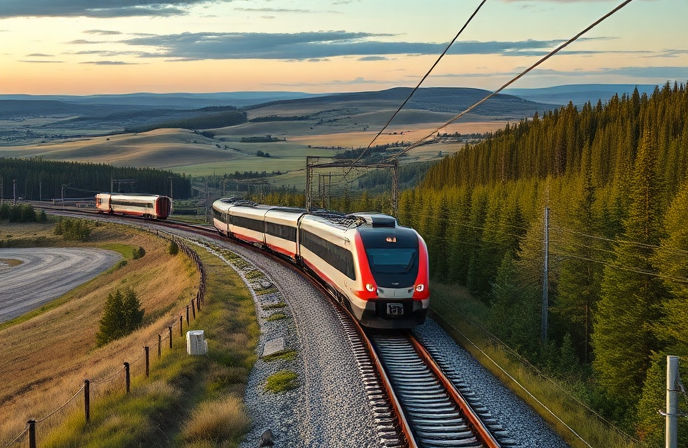
European Commission Greenlights Rail Baltica Completion, Bolstering Baltic Connectivity and Security
The European Commission has issued a landmark decision, setting critical milestones and deadlines for the completion of Rail Baltica, a project poised to reshape the railway landscape of the Baltic region. This pivotal undertaking, unanimously endorsed by all EU Member States, aims to fully integrate Estonia, Latvia, and Lithuania into the broader European railway network by the target date of 2030. The project, which will employ European standard gauge (1435 mm), will establish a vital North-South rail corridor, facilitating enhanced regional travel, boosting freight efficiency, and supporting sustainable transport initiatives. The decision underscores the project’s strategic importance by addressing the “Who, What, When, Where, Why, and How.” The project, spearheaded by RB Rail AS, will benefit the Baltic states, Poland, and indirectly Finland, is being implemented now to foster stronger ties, enhance economic development, and bolster common security.
Strategic Importance and Geopolitical Context
Rail Baltica is not just a railway project; it is a strategically vital endeavor with significant geopolitical implications. This is the “Why.” The initiative directly supports EU-NATO military mobility and strengthens the Baltic states’ integration with the EU. European Coordinator Catherine Trautmann underscored this by highlighting the project’s role in making travel and trade easier within the Baltic region and to the rest of the EU. This integration is critical for leisure travel, economic expansion, and shared security in the present geopolitical climate. The decision by the European Commission affirms the urgency and necessity of Rail Baltica, emphasizing the long-term benefits for the region and the wider European community, given the current events.
Phased Construction and Technical Specifications
The implementation of Rail Baltica will proceed in phases, as dictated by the “How”. The European Commission has approved a phased construction plan, pending the unanimous approval of all EU Member States. The initial phase aims to complete a single-track, electrified line from Tallinn, Estonia, to the Lithuania-Poland border by 2030. This will create the essential infrastructure to begin connecting the Baltic nations more directly to the rest of the European rail network. This initial phase will be crucial for creating the network’s core. The full double-track network will then follow, contingent upon sustained financial investment and effective resource allocation. The emphasis will be placed on linking critical transport hubs. This phased approach is crucial for the project’s financial feasibility and will provide operational capability as soon as possible.
Challenges and Resource Mobilization
Despite the optimistic outlook, challenges remain. Marko Kivila, Chairperson and CEO of RB Rail AS, acknowledged the challenges ahead, focusing on the “How.” The primary hurdle is securing the necessary resources and the importance of sustainable funding. A key objective is to facilitate rapid decision-making processes to ensure the project remains on track to deliver on schedule. The project’s success will rely on an adaptive approach to secure funding and ensure the project moves from the planning phase to implementation in a timely and efficient manner. These challenges highlight the need for strategic collaboration among the various stakeholders, particularly in attracting the financial investment necessary to bring the project to full operational capability.
Industry Implications and Future Outlook
The European Commission’s decision to proceed with Rail Baltica is a defining moment for the European railway industry. The project will significantly improve freight transit between the Baltic states and the rest of Europe. It will also set a precedent for similar initiatives across the continent. The emphasis on standard gauge infrastructure will help to eliminate bottlenecks and improve the fluidity of the whole European rail network. Moreover, the project will serve as a testing ground for innovations in sustainable transport solutions, with the electrification of the network set to reduce the carbon footprint of the regional rail transport. The development of Rail Baltica represents a strategic investment in the economic and security interests of the European Union, creating a more connected and resilient rail network.
Conclusion
The greenlighting of Rail Baltica marks a significant step forward for the European rail network and the geopolitical landscape of the Baltic region. The European Commission’s commitment, supported by all Member States, signals a determined effort to create a unified and interoperable rail system, improving connectivity and economic development. The project’s successful completion by 2030 will depend on effective collaboration, sustained financial backing, and strategic resource allocation. The implications of Rail Baltica extend beyond regional boundaries, and it should inspire future rail projects across the continent. The creation of the new North-South rail corridor highlights a crucial element in strengthening the EU’s transport infrastructure, supporting economic growth, and enhancing the security of its member states. Ultimately, Rail Baltica embodies the EU’s commitment to a more connected, secure, and sustainable future for its citizens.
RELATED POSTS

December 19, 2016 1:03 am
Downer is building 17 new Waratah Series 2 trains for...

October 29, 2025 9:54 pm
CSX announces key **executive appointments**: Kevin Boone as CFO and...

October 5, 2023 8:35 pm
Ensure your fleet fits the line. A technical guide to...
February 25, 2021 6:22 am
The increasing reliance on Global Positioning Systems (GPS) within critical...
August 13, 2018 11:22 am
Europe's investing €500 million in energy-efficient railways! This massive...

July 3, 2025 9:33 am
New Ivolga 4.0 train boosts Moscow suburban rail, improving speed...