
Qinghai-Tibet Railway Project: China’s High-Altitude Marvel
Qinghai-Tibet Railway, a technological marvel, connects Tibet, overcoming extreme altitude and permafrost challenges. This railway sector news highlights its impact.
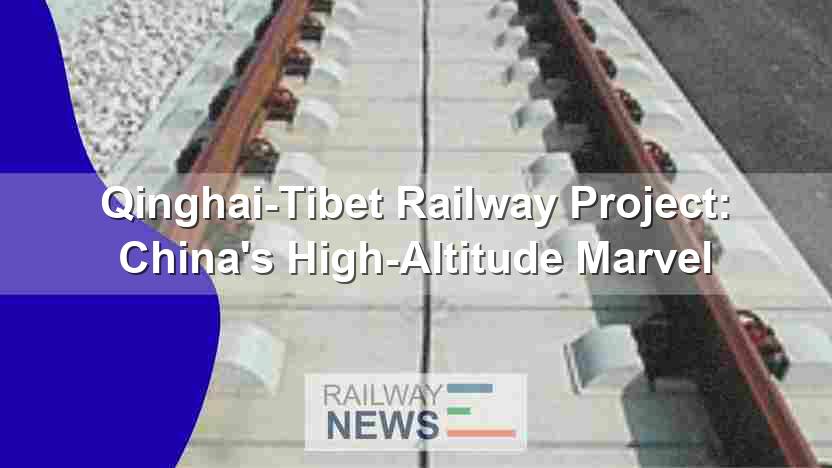
This article explores the engineering marvels and socio-economic impacts of the Qinghai-Tibet Railway (QTR), the world’s highest and longest plateau railway. The project, completed in 2005, aimed to connect Qinghai province with the Tibet Autonomous Region (TAR), a feat previously deemed impossible due to the challenging terrain, extreme altitude, and permafrost conditions. This ambitious undertaking pushed the boundaries of railway engineering, demanding innovative solutions to overcome significant hurdles. The project’s success not only revolutionized transportation in the region, facilitating economic development and tourism, but also highlighted China’s growing technological prowess in infrastructure development. We will delve into the engineering challenges, the solutions implemented, the socio-economic consequences, the rolling stock utilized, and the future expansion plans of this remarkable railway line. The analysis will focus on the technical achievements and their impact on the region, while also acknowledging the broader socio-political context of the project. Ultimately, the article aims to provide a detailed understanding of the QTR’s significance as a landmark achievement in railway engineering and its multifaceted role in the development of the Tibetan plateau.
Engineering Triumphs Over Permafrost and Altitude
The construction of the QTR presented unprecedented challenges. A significant portion of the Golmud-Lhasa section (1,142 km) traverses permafrost (permanently frozen ground), which thaws during summer, creating unstable ground conditions. To mitigate this, engineers employed various innovative techniques. Elevated tracks and causeways were built over the most vulnerable sections, bypassing the unstable permafrost. In other areas, a sophisticated system of pipes circulating liquid nitrogen was implemented beneath the rail bed to maintain the ground’s frozen state. The extreme altitude, with oxygen levels 35-40% lower than at sea level, also presented significant difficulties. Special oxygen facilities were provided for the workforce during construction, and passenger carriages are equipped with supplementary oxygen supplies and UV-filtering windows to ensure passenger safety and comfort. The railway also crosses the seismically active Kunlun Mountain range, necessitating earthquake-resistant design and construction techniques. The project included the construction of the world’s highest tunnel, the Fenghuoshan Tunnel (4,905m), and the longest plateau tunnel built on permafrost, the Kunlun Mountain Tunnel (1,686m).
Overcoming Communication and Power Challenges
Maintaining reliable signaling and communication systems across such a vast and harsh environment was another major challenge. The remote location and extreme weather conditions required robust and redundant systems. To address this, a substantial solar power system was installed. This system comprises nine solar power supply stations with a total capacity of 122.4 kW, supplemented by an additional seven stations along the line. The highest of these stations, situated at an altitude of 5,100m, is another world first, showcasing the ingenuity employed in overcoming the geographical limitations.
Socio-Economic Impacts: Development and Controversy
The QTR has significantly impacted the socio-economic landscape of Tibet. Before its construction, the primary mode of transportation was the Qingzang Highway, which had limited capacity. The railway drastically reduced transportation costs and increased the volume of goods transported into and out of the region. The projected increase in freight capacity from less than a million tonnes annually to 2.8 million tonnes by 2010 (with three-quarters carried by rail) signifies the railway’s crucial role in facilitating Tibet’s economic development. Additionally, the railway has stimulated tourism, with a significant increase in tourist arrivals reported in the years following its completion. However, the project also sparked controversy. Critics argue that the railway serves to consolidate Beijing’s political control over Tibet, promote Chinese immigration, and accelerate the erosion of Tibetan culture. Concerns were also raised regarding increased military presence and the exploitation of Tibet’s natural resources.
Rolling Stock and Future Expansion
The QTR utilizes a fleet of specialized rolling stock designed to withstand the challenging conditions. This includes GE Transportation NJ2 and Qishuyang series DF8CJ 9000 locomotives and 361 Bombardier Transportation high-altitude passenger carriages (308 standard and 53 tourist cars). Future expansion plans include several branch lines to extend the network within and beyond Tibet. The Lhasa-Shigatse line, opened in 2010, was the first branch line. Further extensions to connect Shigatse to Zhangmu, Nyingchi to Dali, and Shigatse to Yadong are also planned. A proposed extension to Nepal also highlights the railway’s potential for regional integration.
Conclusion
The Qinghai-Tibet Railway stands as a testament to human ingenuity and China’s ambition in infrastructure development. The project overcame significant engineering challenges associated with extreme altitude, permafrost, and seismic activity, employing innovative solutions in track construction, power supply, and communication systems. The railway has undeniably had a profound impact on the economy and transportation infrastructure of Tibet, facilitating trade, tourism, and overall development. However, its socio-political implications remain a subject of debate and raise complex questions about regional autonomy, cultural preservation, and resource management. The QTR’s success provides valuable lessons for future large-scale infrastructure projects in challenging environments. The meticulous planning, technological innovation, and logistical prowess demonstrated underscore the project’s immense significance. While the positive economic impacts are significant, the long-term social and environmental consequences require continued monitoring and careful consideration. The future expansion plans highlight the ongoing commitment to developing the region’s transport infrastructure and its potential role in broader regional connectivity. The detailed analysis of the challenges and solutions employed in constructing the QTR will be invaluable for future projects in similar high-altitude, challenging terrains. Further research into the long-term socio-economic and environmental effects of the railway will offer a more complete understanding of its legacy.
| Project Feature | Specification |
|---|---|
| Project Name | Qinghai-Tibet Railway (QTR) |
| Total Length | 1,957 km (Xining to Lhasa) |
| Budget | Over $3.5 billion USD |
| Cities Connected | Xining, Golmud, Lhasa |
| Number of Stations | Not specified in source material |
| Type of Project | High-altitude plateau railway |
| Longest Plateau Tunnel | Kunlun Mountain Tunnel (1,686m) |
| Highest Tunnel | Fenghuoshan Tunnel (4,905m) |
| Locomotives | GE Transportation NJ2 and Qishuyang series DF8CJ 9000 |
| Passenger Carriages | 361 Bombardier Transportation (308 standard, 53 tourist) |
Company Information:
- GE Transportation: A former unit of General Electric, now part of Wabtec Corporation, a leading supplier of locomotives and railway equipment.
- Bombardier Transportation: A major global manufacturer of railway equipment, now part of Alstom.

Railway infrastructure, rolling stock and transport technologies specialist focused on global rail industry developments, high-speed rail systems, signaling technologies and freight transportation. Covering railway investments, public transport modernization, rail operations and international mobility projects across Europe, Asia and North America.
RELATED POSTS
June 20, 2026 6:31 am
Serbian railway personnel completed a 17-day operation and maintenance training...