
Pune-Nashik Semi-High-Speed Rail: A Golden Triangle Project
The Pune-Nashik semi-high-speed rail corridor, designed to reduce travel times from six hours to one hour and forty-five minutes, is a significant infrastructure project in Maharashtra, India, aiming to reshape regional economic dynamics by connecting Mumbai, Pune, and Nashik into a stronger “golden triangle.
This article explores the development of the Pune-Nashik semi-high-speed rail corridor in Maharashtra, India, a significant infrastructure project promising substantial economic and social benefits. The project’s impact extends beyond simple transit improvements; it aims to reshape regional economic dynamics, forging a stronger “golden triangle” connecting Mumbai, Pune, and Nashik. This ambitious undertaking necessitates careful consideration of various factors, including land acquisition, funding mechanisms, technological specifications, and the integration with existing rail networks. The following sections will delve into the project’s technical specifications, financial aspects, potential economic impacts, and the broader context of India’s burgeoning high-speed rail ambitions.
Project Specifications and Technical Challenges
The Pune-Nashik semi-high-speed rail corridor, spanning approximately 235 kilometers, is designed to drastically reduce travel time between the two cities from six hours to one hour and forty-five minutes. This reduction will be achieved through a design speed of 200 km/h (kilometers per hour). The project involves the construction of approximately 24 stations along the route. Significant engineering challenges will include the design and construction of suitable track, signaling systems, and rolling stock capable of withstanding high-speed operation across varied terrain. The project’s success hinges on meticulous planning and execution to meet these technical demands. Additionally, integration with existing rail infrastructure is crucial to ensure seamless connectivity within the broader Indian rail network.
Financing and Governance
The estimated cost of the Pune-Nashik corridor is approximately Rs16,030 crore (approximately $2.2 billion USD). Funding will be a collaborative effort between the Maharashtra state government and Indian Railways, each contributing 20% of the equity. The remaining 60% will be sourced from internal financial institutions. This collaborative model highlights a commitment to shared responsibility and risk mitigation, though securing the necessary funding from financial institutions will require a robust and convincing financial model demonstrating the project’s long-term viability and return on investment (ROI).
Economic Impact and Regional Development
The corridor’s development aims to transform the Mumbai-Pune-Nashik region into a powerful economic center. Reduced travel time between these major cities will enhance connectivity, boosting trade, tourism, and overall economic activity. Improved passenger and freight movement will facilitate the efficient flow of goods and services, fostering growth across various sectors. The creation of new jobs during construction and operation will provide further economic benefits to the region. However, a detailed assessment of the project’s socio-economic impact, encompassing potential displacement effects and environmental concerns, is crucial for responsible development.
National High-Speed Rail Context
The Pune-Nashik project forms part of a larger national strategy aimed at expanding India’s high-speed rail network. The ongoing construction of the Mumbai-Ahmedabad High-Speed Rail (MAHSR) corridor, a significant undertaking involving the National High-Speed Rail Corporation Limited (NHSRCL), demonstrates India’s commitment to modernizing its transportation infrastructure. The experience gained from projects like the MAHSR, including lessons learned in bridge construction and land acquisition, will be invaluable in informing the execution of the Pune-Nashik corridor. Synergies and knowledge transfer between these projects are essential for optimized resource utilization and efficient project delivery.
Conclusion
The Pune-Nashik semi-high-speed rail corridor represents a significant step towards modernizing India’s rail infrastructure and fostering regional economic growth. The project’s ambitious goals, involving a 200 km/h design speed and a substantial reduction in travel time between Pune and Nashik, are underpinned by a collaborative funding model between the Maharashtra state government and Indian Railways. The success of this project, however, rests on several critical factors. Efficient land acquisition, meticulous project management, and effective integration with existing rail networks are crucial for timely completion and optimal operational efficiency. The project needs robust financial planning, addressing potential risks and ensuring the long-term financial sustainability of the corridor. Additionally, a thorough assessment of potential environmental and social impacts, including displacement and mitigation strategies, will be essential to ensure responsible and equitable development. The project’s contribution to India’s broader high-speed rail ambitions is significant, with lessons learned from this project contributing to future initiatives. The successful completion of this project will not only revolutionize transport between Pune and Nashik but also serve as a crucial stepping stone for India’s larger vision of a detailed, high-speed rail network. The project’s positive economic impact on the Mumbai-Pune-Nashik “golden triangle” is expected to be substantial, though careful monitoring and evaluation will be necessary to ensure that the anticipated benefits are realized. Ultimately, the Pune-Nashik corridor holds significant promise, but its success will hinge on meticulous planning, effective execution, and a commitment to sustainable and equitable development.

Railway infrastructure, rolling stock and transport technologies specialist focused on global rail industry developments, high-speed rail systems, signaling technologies and freight transportation. Covering railway investments, public transport modernization, rail operations and international mobility projects across Europe, Asia and North America.
RELATED POSTS
June 2, 2026 8:44 am
⚡ In Brief: The UK Office of Rail and Road...
June 2, 2026 10:31 am
⚡ In Brief: The UK’s Office of Rail and Road...
June 2, 2026 11:37 am
⚡ In Brief: The UK’s Office of Rail and Road...

June 1, 2026 6:57 pm
Amtrak confirmed the delivery of its first Airo trainset for...
June 1, 2026 10:58 pm
MARTA completed 8 Atlanta station upgrades and new Breeze fare...
June 4, 2026 6:22 pm
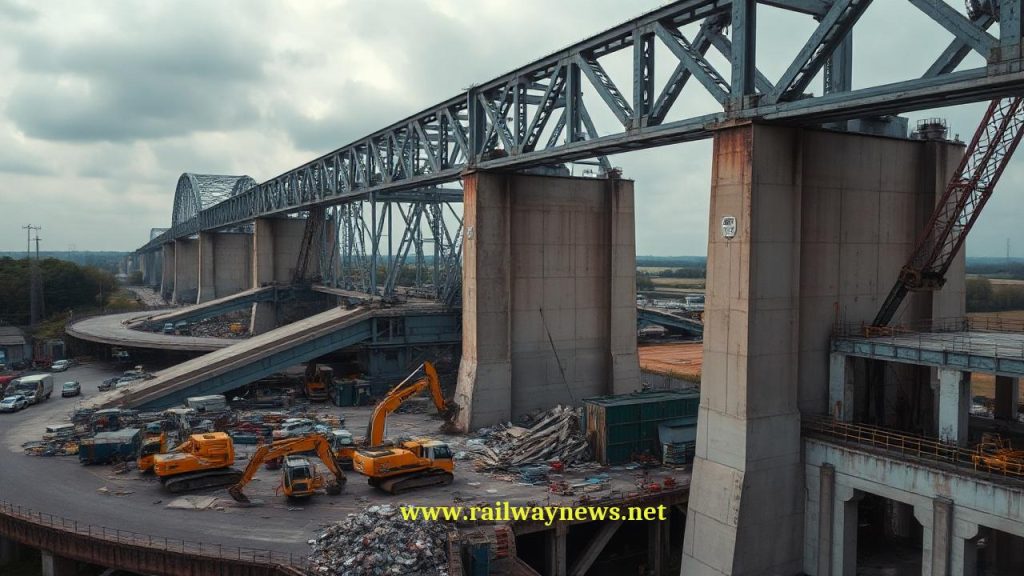
Network Rail and HS2 demolishes two strategic rail bridges, Saltley...