
Portugal High-Speed Rail: EIB Funding, Infrastructure & Impact

Portugal Embarks on Ambitious High-Speed Rail Project with EIB Backing
Portugal is poised to revolutionize its transport infrastructure with a landmark high-speed rail project connecting Lisbon and Porto. The European Investment Bank (EIB) has committed EUR 875 million in financing, marking a significant step towards realizing this transformative undertaking. This agreement, formalized with the signing of a concession and the securing of initial funding, focuses on the Porto–Oiã section, a crucial element of Phase 1 of the project. The aim is to drastically reduce travel times between the two major cities from approximately three hours to a mere hour and a half. The project’s scope includes the design, construction, and maintenance of a 71 km segment. This initiative, backed by InvestEU, represents the largest single contract supported by the program. The “Who” is the Portuguese government, the “What” is a high-speed rail line, the “When” is now, the “Where” is Portugal (specifically between Lisbon and Porto), the “Why” is to improve connectivity and sustainability, and the “How” is through a consortium and significant funding. This article will delve into the specifics of the financing, the project’s scope, its strategic importance for Portugal, and the anticipated impact on the railway industry.
Funding and Concession Details
The EUR 875 million EIB loan, which is part of a broader EUR 3 billion EIB package approved under InvestEU, is specifically allocated for the Porto–Oiã section. This funding is a cornerstone of the overall financial structure. The project is not solely reliant on the EIB’s contribution, and additional support comes from multiple sources. These include EUR 900 million from other financial institutions, EUR 480 million from the Connecting Europe Facility, and EUR 150 million from Infraestruturas de Portugal (IP), the country’s railway infrastructure manager. A 30-year concession for the design, construction, and maintenance of the 71 km segment has been awarded to Avan Norte – Gestão Da Ferrovia de Alta Velocidade, a company formed by the LusoLAV consortium. The Implementing Agreement signed between the EIB and IP aims to coordinate the successful delivery of the high-speed line.
Project Scope and Engineering Highlights
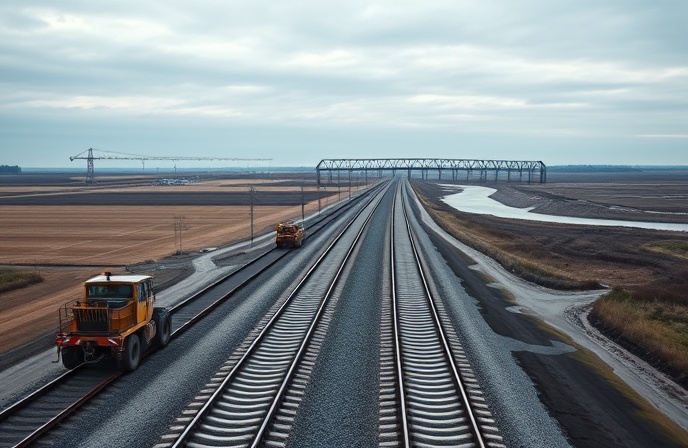
Phase 1 of the high-speed rail line, spanning 143 km from Porto-Campanhã to Soure, promises significant infrastructure upgrades. These include new connections to the existing Northern Line, a strategically positioned station in Vila Nova de Gaia, and the construction of a new bridge over the Douro River. The project’s engineering challenges are substantial, given the need to navigate complex terrain and integrate the new line with existing infrastructure. The construction process will require advanced techniques to ensure minimal disruption to current rail services and to meet the exacting standards required for high-speed operations. The new track layout and signaling systems are designed to facilitate speeds exceeding 250 km/h, thereby drastically reducing journey times. The focus is on ensuring optimal safety and operational efficiency.
Strategic Impact and Passenger Benefits
This high-speed rail project is more than just a transportation upgrade; it’s a strategic investment with far-reaching implications. The completed line is expected to serve up to 10 million passengers annually, offering a more efficient and comfortable travel option, especially for business travelers and tourists. The reduction in travel time will stimulate economic activity by improving connectivity between Lisbon and Porto, two key economic hubs. The project is aligned with the European Union’s (EU) climate objectives, promoting a sustainable mode of transport and contributing to the reduction of carbon emissions, making rail a more attractive alternative to air travel and private cars. It’s a key element of Portugal’s sustainable transport strategy and is integrated within the EIB’s 2024–2027 Strategic Roadmap.
Industry Implications and Future Outlook
The Portuguese high-speed rail project will have several industry implications. The construction phase will generate new jobs in engineering, construction, and related sectors. The long-term operation and maintenance of the line will require a skilled workforce, creating further employment opportunities. The project is also likely to attract investment in related industries, such as railway technology and rolling stock, supporting local and international suppliers. The commitment to high-speed rail signals a broader trend towards investing in sustainable transport infrastructure in Europe and worldwide. The successful completion of the Lisbon-Porto line will set a precedent for other railway projects in Portugal and beyond. As the project progresses, it’s expected to inspire further expansion of high-speed rail networks, offering enhanced mobility and greater connectivity within Portugal and to neighboring countries.
Conclusion
The financing and concession agreement for the Lisbon-Porto high-speed rail line represents a pivotal moment in Portuguese infrastructure development. With significant backing from the EIB and other funding sources, the project is positioned to drastically reduce travel times between Portugal’s two largest cities, improve passenger capacity, and generate economic benefits. The project’s emphasis on integrating high-speed rail with existing infrastructure, constructing new lines, and ensuring compliance with EU sustainability goals highlights a commitment to environmentally responsible and efficient transportation solutions. For the railway industry, this represents an expansion of operations, a renewed interest in public transport, and a shift towards modern infrastructure. The completion of this ambitious project is not only a game changer for Portugal but also serves as an inspiration and precedent for similar high-speed rail ventures across Europe and the world. It exemplifies the potential of railway infrastructure to reshape travel, boost economic growth, and promote sustainable development.
RELATED POSTS

ARH welcomes Todd Nuelle as Chief Commercial Officer, marking a...
October 2, 2017 7:27 pm
Freight car contracts are evolving! Learn how these crucial...
October 22, 2025 7:54 pm
EU grants €295.5M for Rail Baltica! Funding accelerates crucial **railway**...
May 4, 2021 4:34 pm
This article examines the significant long-term contract awarded to Alstom...
October 16, 2025 2:54 pm
U.S. FRA launches the **National Rail Partnership Programme**, offering over...
October 15, 2022 4:16 pm
Introduction The railway industry, a cornerstone of global transportation, faces...