
Poland’s Double-Deckers: Rail Expansion, Efficiency, & Future Trends
Poland’s PKP Intercity seeks 42 double-decker EMUs, a massive rail investment. Bids from Alstom and Stadler are being evaluated.
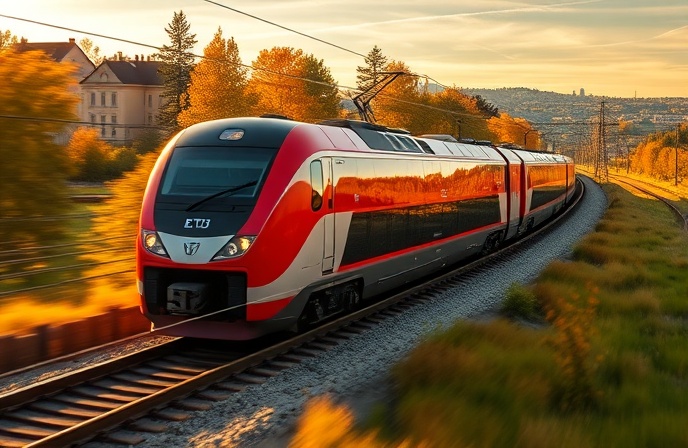
Poland Poised for a Double-Decker Revolution: PKP Intercity Floats Ambitious EMU Procurement
Warsaw, Poland – PKP Intercity, Poland’s state-owned long-distance railway operator, has taken a significant step towards modernizing its fleet with the opening of bids for 42 high-speed double-decker electric multiple units (EMUs), with an option for an additional 30. This marks the first-ever order of its kind for Poland and the largest in terms of vehicle numbers designated for long-distance passenger services. This pivotal procurement, announced in October 2024 and with final bids submitted in April 2025, represents a strategic investment to enhance passenger capacity, speed, and efficiency on key national routes. The tender showcases the operator’s commitment to meeting a projected surge in ridership, driven by a predicted 60% increase by 2030. This article delves into the specifics of the bids, the technical specifications of the new EMUs, and the broader implications for the future of Polish rail transport.
Competitive Bids and Financial Landscape
Two prominent manufacturers have submitted competitive bids to supply the EMUs and a comprehensive 30-year maintenance package. Alstom, with a long-standing presence in the Polish rail industry, offered a bid valued at PLN 4.1 billion (EUR 966.5 million) for the rolling stock itself, coupled with an additional PLN 2.78 billion (EUR 654 million) for maintenance services. This brings Alstom’s total bid to approximately EUR 1.6 billion. Stadler, another key player in the European rail market, presented an offer of nearly PLN 4 billion (EUR 939 million), alongside maintenance costs estimated at PLN 3.3 billion (EUR 769.7 million), totaling around EUR 1.7 billion. The base contract for the initial 42 EMUs is estimated at PLN 10 billion (EUR 2.3 billion), with the potential to reach PLN 17 billion (EUR 4 billion) if the option for the extra units is exercised. The bids are currently under detailed evaluation, with the winner expected to be announced in the coming weeks.
Technical Specifications and Onboard Amenities
The new EMUs are designed to accommodate a minimum of 480 passengers in comfort and will be capable of operating at speeds up to 200 km/h. These long-distance trains will offer a range of passenger amenities, including reclining seats with individual tables, armrests, footrests, and adjustable lighting. Onboard facilities will include WiFi connectivity, power sockets, USB ports, air conditioning, and digital passenger information displays. The train layout will feature both first- and second-class seating, a designated quiet zone, a family area, vending machines, bicycle storage, and secure luggage compartments. Accessibility is a priority, with the EMUs fully compliant for passengers with reduced mobility. The EMUs will be equipped with advanced safety and operational systems, including European Train Control System (ETCS) Levels 1 and 2, onboard diagnostics, GPS, and internal and external CCTV surveillance. They will be certified for operation on the Czech rail network, showcasing interoperability considerations.
Strategic Route Deployment and Timeline
The new double-decker EMUs are planned to operate on key routes throughout Poland, including lines connecting Warsaw with Gdańsk, Łódź, Olsztyn, Wrocław, Kraków, Białystok, and Terespol. The initial units are projected to enter service within approximately 3.5 years. This strategic deployment will significantly increase passenger capacity on these high-demand routes, supporting PKP Intercity’s aim of managing a projected 109 million passengers annually by 2030. The operator has actively worked to streamline its procurement strategy and has launched, under the 2024 tender, a procurement for 38 seven-car double-decker push-pull trains, valued at PLN 6.5 billion (EUR 1.5 billion), which does not include maintenance costs.
Local Manufacturing and Economic Impact
A notable aspect of the tender is that both Alstom and Stadler have production facilities within Poland, employing local engineers and staff. Depending on the successful bid, the EMUs will be manufactured either at Alstom’s plant in Chorzów or Stadler’s facility in Siedlce. This demonstrates a commitment to bolstering Poland’s domestic rail manufacturing capabilities. Alstom’s Chorzów facility has a long history in the railway industry, while Stadler has been manufacturing rail vehicles in Siedlce since 2007. PKP Intercity has already invested over PLN 16.5 billion (EUR 3.9 billion) in rolling stock projects with domestic manufacturers and maintenance providers. This procurement process, initiated in October 2024 via a competitive dialogue procedure, involved extensive discussions over three months between PKP Intercity and the manufacturers to assess technical solutions and feasibility.
Conclusion
The ambitious procurement of high-speed double-decker EMUs by PKP Intercity represents a significant investment in the future of Polish rail transport. This project, encompassing substantial investment from both Alstom and Stadler, will introduce faster and more spacious train services to long-distance routes. The introduction of these new trains aligns with PKP Intercity’s strategic goal of accommodating a growing ridership demand, providing efficient and modern rail services. The decision to introduce double-decker EMUs reflects a forward-thinking approach to railway modernization, incorporating both enhanced passenger comfort and operational efficiencies. While the final price will be confirmed once the winner is chosen, the commitment to deploying these trains reflects a broader trend across Europe towards employing double-decker trains as a cost-effective way of managing high passenger numbers. These investments will improve rail transport and contribute to the development of local economies by supporting domestic manufacturing and maintenance capabilities. The coming years are expected to see a significant transformation in Polish rail, making it more attractive and efficient for all travelers.
Company Summaries
Alstom: Alstom is a global leader in the rail industry, providing rolling stock, signaling, and infrastructure solutions. The company has a long-standing presence in Poland and is known for its comprehensive range of rail products, including high-speed trains and metro systems. Alstom’s extensive experience and technological prowess in the rail sector make it a major player in the Polish market.
Stadler: Stadler is a Swiss-based manufacturer of railway rolling stock. With a strong focus on innovation and sustainability, Stadler produces a wide range of vehicles, from high-speed trains to regional and urban rail systems. The company’s Siedlce facility in Poland plays a significant role in its manufacturing operations.
RELATED POSTS
October 30, 2013 2:36 pm
Škoda Transportation unveiled the first tram in Turkey, which was...

January 19, 2017 5:27 am
East Perth Station's $25 million upgrade, boosting capacity for Perth...

February 13, 2017 6:57 pm
An innovative locomotive that runs on liquefied natural gas (LNG)-the...

September 26, 2024 12:47 pm
Canadian Pacific Kansas City (CPKC) has successfully completed the first...
September 8, 2020 8:38 am
London's Northern Line underwent a massive upgrade, including a signaling...
September 24, 2021 12:26 am
Siemens S700 streetcars enhance US urban transit. Charlotte's Gold...