
PLK Poland: EU Funding Boosts Rail Infrastructure Investment
PLK secures €328M EU funding for Polish rail infrastructure upgrades, boosting capacity and efficiency. Tenders launch Q4 2025.
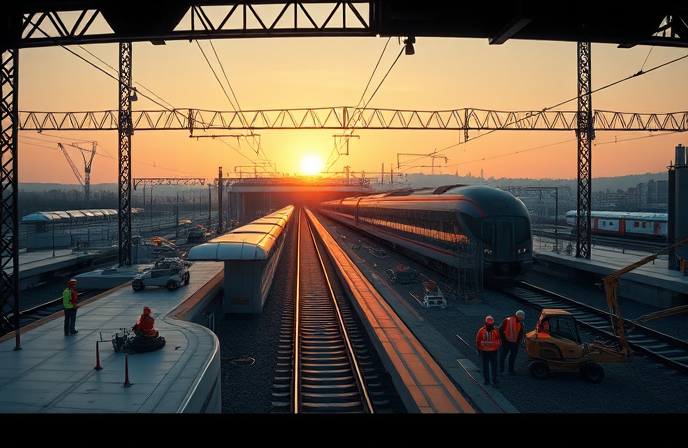
PLK Secures EU Funding, Announces PLN 1.4 Billion Rail Infrastructure Investment
Polish State Railways (PLK), the infrastructure manager for the Polish railway network, has secured significant funding from the European Union to revitalize key railway lines across Poland. This investment, stemming from the European Funds for Infrastructure, Climate, and Environment Programme 2021–2027 (FEnIKS), will see PLK launch tenders worth approximately PLN 1.4 billion (EUR 328 million) in the fourth quarter of 2025. These projects are part of a broader initiative to enhance the quality and accessibility of Poland’s national rail network, benefiting both passenger and freight operations. This article will detail the specific infrastructure improvements planned, the regional impact, and the broader significance of this investment for the Polish railway sector. The “Who” is PLK; the “What” is the modernization of infrastructure; the “When” is Q4 2025 for tender announcements; the “Where” is across Poland; the “Why” is to improve network capacity, accessibility, and efficiency; and the “How” is through EU funding via the FEnIKS programme.
Boosting Capacity in Wrocław: Line No. 143 Modernization
One of the significant projects involves the detailed modernization of Line No. 143 between Wrocław Psie Pole and Wrocław Sołtysowice. The planned works encompass track upgrades, improvements to engineering structures, platform enhancements (specifically at Wrocław Psie Pole), and the installation of advanced traffic control systems. The primary objective of this investment is to significantly increase the capacity of the Wrocław railway hub, allowing for smoother and more efficient train operations for both passenger and freight services. The existing infrastructure is currently showing its age, leading to bottlenecks and speed restrictions. This modernization initiative will address these issues, improving reliability and reducing travel times within the Wrocław area. The tender, scheduled for Q4 2025, is valued at over PLN 190 million (EUR 44.6 million). The project reflects a broader trend of targeted upgrades aimed at addressing congestion points within key urban railway networks.
Revitalizing Silesia: Upgrades on Line No. 179
In Silesia, PLK plans to revitalize the section of Line No. 179 between Tychy and Bieruń Stary. This project focuses on restoring the full functionality of the line and enabling train speeds of up to 120 km/h, increasing operational efficiency. The modernization will also include the construction of new stops and the reconstruction of level crossings to enhance safety and accessibility. The upgrades are designed to provide residents with faster and more convenient rail connections, playing a crucial role in the expansion of public transport within the Silesian Voivodeship. This investment is critical to meeting the growing demand for rail travel and supporting regional economic development. The tender is anticipated at the end of 2025, with the total project value exceeding PLN 522 million (EUR 122.6 million). This commitment underlines the importance of rail in connecting urban centers and surrounding areas, particularly for commuter traffic.
Toruń’s Rail Transformation: BiT City II Project
The city of Toruń will benefit from rail infrastructure improvements delivered under the BiT City II project. This ambitious project includes a major modernization of the section between Toruń Główny and Toruń Wschodni. Key components of the project comprise track upgrades, platform enhancements, and the refurbishment of the historic Ernest Malinowski Bridge (built in 1873), which will also gain a dedicated pedestrian and cycle path. Additionally, Toruń Miasto and Toruń Wschodni stations will be completely rebuilt and made fully accessible for people with reduced mobility. This joint investment, a collaborative effort between PLK, PKP (Polish State Railways – the parent company), and the City of Toruń, is intended to significantly enhance the role of rail within the city’s public transport system and improve accessibility for all residents. The tender for this significant project is slated for Q4 2025, with an estimated value of over PLN 685 million (EUR 161 million). The project exemplifies the integration of rail with other modes of transport and promotes sustainable urban development.
The FEnIKS Programme: A Catalyst for Railway Advancement
The FEnIKS Programme, which succeeds the previous Infrastructure and Environment Programme, is a key driver for railway investment in Poland. With a budget exceeding PLN 113 billion (EUR 26.5 billion), of which over PLN 91 billion (EUR 21.4 billion) is funded by the European Union, the programme is designed to support the development of a sustainable economy through investments in transport infrastructure, energy, environmental protection, and climate action. PLK is a major beneficiary in the transport sector, strategically utilizing these funds to deliver projects aimed at improving passenger comfort and safety, enhancing punctuality, and increasing the overall share of rail in both passenger and freight transport. Additionally, the Polish government’s commitment to modernize 800 km of rail lines with an investment of EUR 2.5 billion, financed by the National Recovery and Resilience Plan, demonstrates a wider focus on rail infrastructure modernization.
Conclusion
The planned investments by PLK, supported by the FEnIKS programme, mark a significant step forward in the modernization of Poland’s rail infrastructure. These projects, ranging from upgrades in Wrocław and Silesia to the detailed transformation in Toruń, will improve network capacity, enhance passenger experience, and promote greater integration of rail within urban transportation systems. The focus on track improvements, station modernization, and accessibility upgrades reflects a strategic approach to meeting the evolving needs of both passenger and freight transport. This investment is not merely about infrastructure upgrades; it is a commitment to a more sustainable and efficient transport system. The industry can expect a boost in operational efficiency and service quality across the Polish rail network. The broader implications include increased competitiveness of rail in both passenger and freight markets, improved regional connectivity, and support for sustainable urban development. The coming years are set to witness a significant transformation of the Polish railway landscape, positioning it for future growth and efficiency.
Company Summary
Polskie Linie Kolejowe (PLK): As the infrastructure manager for the Polish railway network, PLK is responsible for maintaining, developing, and operating the national rail infrastructure. Its core business involves construction, management, and maintenance of railway lines, stations, and related facilities. PLK plays a pivotal role in the implementation of railway modernization programs, ensuring that the network meets the demands of both passenger and freight transport. Its strategic focus involves a constant effort to modernize and improve the infrastructure to enable safe, efficient and comfortable train travel.

Railway infrastructure, rolling stock and transport technologies specialist focused on global rail industry developments, high-speed rail systems, signaling technologies and freight transportation. Covering railway investments, public transport modernization, rail operations and international mobility projects across Europe, Asia and North America.
RELATED POSTS
June 2, 2026 8:44 am
⚡ In Brief: The UK Office of Rail and Road...
June 1, 2026 9:19 pm
300 IBEW signal workers initiated a strike against Canadian Pacific...
June 4, 2026 11:05 am
California High-Speed Rail Authority awarded a $3.5 billion track and...
June 4, 2026 6:22 pm
Network Rail and HS2 demolishes two strategic rail bridges, Saltley...
June 2, 2026 10:31 am
⚡ In Brief: The UK’s Office of Rail and Road...
June 2, 2026 11:37 am
⚡ In Brief: The UK’s Office of Rail and Road...