
Philippines NSCR: Transforming Commutes, Boosting Economy
The North-South Commuter Railway (NSCR) in the Philippines is revolutionizing commutes! Discover how this transformative project is improving lives and boosting the economy.
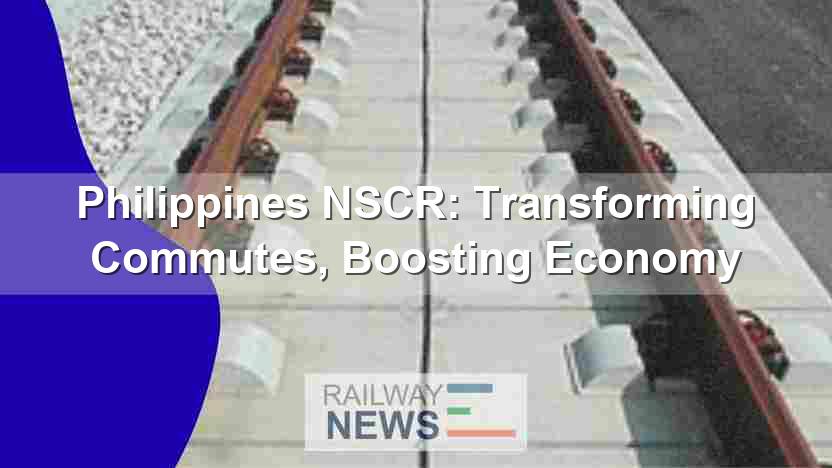
The Philippines is undergoing a significant transformation in its transportation infrastructure, spearheaded by the ambitious North-South Commuter Railway (NSCR) project. This multi-phased initiative aims to drastically improve commuter rail services in and around Manila, addressing the long-standing challenges of traffic congestion and inefficient public transport. This article explores the specifics of the NSCR, focusing on the initial phases, funding mechanisms, technological considerations, and the broader implications for the nation’s economic development and urban planning. The project’s scale and complexity represent a paradigm shift in Philippine infrastructure development, requiring significant investment, careful planning, and effective execution to realize its full potential. The success of the NSCR will not only improve the daily lives of millions of Filipinos but will also serve as a model for future large-scale infrastructure projects in the region. The project is expected to significantly boost the economy and improve the quality of life for countless commuters.
PNR Clark Phase I: Laying the Foundation
The initial phase, PNR Clark Phase I (Tutuban-Malolos), serves as the cornerstone of the NSCR. This 37.6km section, implemented by the Department of Transportation (DOTr) and the Philippine National Railways (PNR), includes ten stations and a depot in Valenzuela City. The project’s primary focus is reducing travel time between Manila and Malolos from a grueling 1 hour and 45 minutes to a mere 35 minutes. This significant improvement in commute times is expected to attract over 300,000 daily passengers, dramatically alleviating pressure on existing road networks. The technological advancements incorporated, such as the use of thirteen eight-car train sets, will ensure efficient and comfortable passenger transport. The selection of rolling stock (trains) and signaling systems will be crucial to achieving the projected travel times and passenger capacity.
Funding and International Collaboration
The NSCR’s magnitude demands substantial financial resources. A significant portion of the funding for PNR Clark Phase I comes from a $1.53 billion loan secured from the Japan International Cooperation Agency (JICA). This highlights the crucial role of international collaboration in financing major infrastructure projects. The partnership with JICA provides not only financial support but also access to Japanese expertise in railway construction and management, ensuring adherence to high technical standards. This collaboration exemplifies a successful model of public-private partnerships (PPPs) and foreign direct investment (FDI) in national infrastructure development.
Integration and Future Expansion
PNR Clark Phase I is not an isolated project; it is strategically designed to integrate seamlessly with subsequent phases. The project will connect with PNR Clark Phase II (Malolos-Clark) and the PNR Calamba line, forming a detailed and interconnected commuter railway system. This integrated approach ensures efficient transportation across a wider geographic area, fostering regional connectivity and economic growth. The careful planning and coordination among different phases is essential to prevent operational bottlenecks and maximize the system’s overall efficiency. Future expansion plans should be considered with attention to capacity planning and scalability.
Socioeconomic Impact and Urban Development
Beyond the immediate improvements in commute times and passenger capacity, the NSCR has far-reaching implications for the Philippines’ socioeconomic landscape. Reduced travel times translate into increased productivity, allowing commuters to dedicate more time to work, education, or personal pursuits. The improved accessibility fostered by the railway system can stimulate economic activity in previously underserved areas, leading to job creation and regional development. Additionally, the project contributes to a more sustainable transportation system, reducing reliance on private vehicles and mitigating traffic congestion, ultimately improving air quality and reducing carbon emissions. Proper urban planning around the new stations is crucial to maximize the positive impacts of the railway and to avoid potential negative consequences.
Conclusions
The commencement of the North-South Commuter Railway project marks a significant milestone in the Philippines’ infrastructure development. The PNR Clark Phase I, funded largely by JICA, represents a crucial first step in creating a modern, efficient, and integrated commuter rail system. The project’s focus on reducing travel time, increasing passenger capacity, and promoting seamless integration with future phases demonstrates a commitment to long-term sustainable transportation solutions. The NSCR’s success hinges on effective project management, technological innovation, and continued international collaboration. The long-term benefits extend far beyond improved commute times, impacting economic growth, urban development, and the overall quality of life for millions of Filipinos. The project serves as a model for other developing nations looking to enhance their transportation infrastructure and stimulate economic growth. Careful monitoring of the project’s progress, adapting to unforeseen challenges, and proactive planning for future phases will be key to ensuring its continued success and maximizing its transformative potential for the nation. The NSCR represents not merely a railway project but a vision for a more connected, prosperous, and sustainable future for the Philippines.

Railway infrastructure, rolling stock and transport technologies specialist focused on global rail industry developments, high-speed rail systems, signaling technologies and freight transportation. Covering railway investments, public transport modernization, rail operations and international mobility projects across Europe, Asia and North America.
RELATED POSTS
September 6, 2026 5:19 am
Hitachi delivered Taiwan's first N700ST high-speed train from Japan in...

September 5, 2026 4:19 pm
CPK launched formal tender talks with four consortia to design...

September 5, 2026 7:14 pm
HS2 Ltd signed renegotiated civils contracts with EKFB and Align...

September 6, 2026 4:12 am
Alstom delivered the first of 100 new G Class trams...
September 6, 2026 6:17 am
Hungary ordered a national ban on most freight trains from...
September 6, 2026 1:17 am
Hitachi Toshiba Supreme Consortium confirmed the first of 12 N700ST...