
Peterborough Station Upgrade: Faster Trains, More Capacity
Network Rail’s £10 million Peterborough station upgrade boosted East Coast Main Line speeds to 75mph, significantly improving capacity and punctuality. Discover how targeted track and signaling improvements revolutionized rail operations!
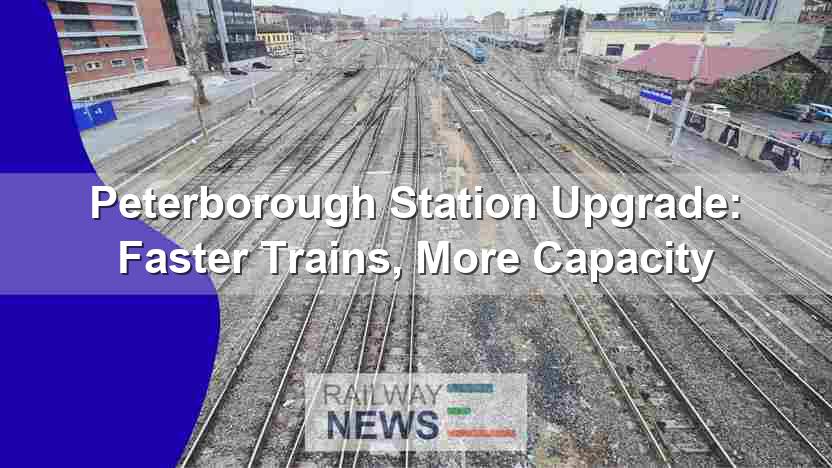
This article examines the recent £10 million investment by Network Rail (NR) in upgrading track infrastructure near Peterborough station on the East Coast Main Line (ECML) in the UK. The project, completed in March 2019, focused on enhancing operational efficiency and passenger experience by enabling higher train speeds and improved network capacity. This involved the replacement of critical track components, modernization of signaling systems, and overall track improvements. The ramifications extend beyond the immediate area, impacting the overall performance of the ECML and influencing future infrastructure development strategies. We will explore the technical details of the upgrades, the resulting operational benefits, and their contribution to the broader context of the ongoing modernization of the UK’s rail network. Finally, we will analyze the long-term implications of such investments and discuss their impact on passenger satisfaction and the economic viability of the rail system.
Track and Signalling System Modernization
The core of the Peterborough project centered on replacing two sets of points (switches and crossings) at Fletton Junction. These components, vital for directing trains between different tracks, were outdated and contributed to speed restrictions. The upgrade involved installing modern, high-performance points designed for higher speeds and enhanced reliability. This was complemented by the modernization of approximately 800 meters of track leading into Peterborough station. The improved track geometry, incorporating smoother curves and better alignment, further contributes to higher operational speeds and reduced wear on rolling stock. Additionally, the project included a detailed overhaul of the signaling system in the area. Modern signaling technology allows for more precise train control, enabling denser train schedules and increased safety. The updated signaling system is directly linked to the improved points, allowing for seamless integration and optimized train movement.
Operational Improvements and Increased Capacity
The direct outcome of these upgrades is a significant increase in the permissible train speed approaching Peterborough station. Previously, trains were restricted to 40 mph (64 km/h) for a considerable distance before the station, causing delays and impacting overall journey times. The improvements now permit trains to maintain speeds of up to 75 mph (121 km/h) until much closer to the station. This directly translates into faster journey times for passengers, improved punctuality, and reduced operational costs. The enhanced capacity stemming from the improved signaling and track layout also contributes to running more frequent services. The higher speed limits and improved signaling allow for a greater number of trains to pass through the section safely and efficiently per hour, reducing congestion and overall journey time variance.
Integration with Broader ECML Enhancement Projects
The Peterborough project isn’t an isolated incident but rather a key component of a larger-scale modernization program underway on the ECML. The project’s success is intrinsically linked to other initiatives. For instance, the creation of a “dive under” at Werrington, eliminating the need for freight trains to cross multiple high-speed passenger lines, further enhances the efficiency and speed of the network. Similarly, Network Rail’s £1.5 billion Central Track Alliance contract, awarded to Balfour Beatty, TSO, and SNC-Lavalin’s Atkins business, highlights a broader commitment to upgrading the entire UK rail network. This detailed approach, incorporating both localized improvements like those at Peterborough and larger-scale infrastructure projects, underscores a strategic vision for a more efficient and reliable railway system.
Conclusions
The successful completion of the £10 million track upgrade near Peterborough station exemplifies Network Rail’s commitment to modernizing the UK’s rail infrastructure. By replacing outdated points, modernizing signaling systems, and improving track geometry, the project has delivered tangible benefits. These benefits include increased train speeds (up to 75 mph approaching Peterborough, compared to the previous 40 mph restriction), improved punctuality, and increased line capacity. This enhancement is not isolated but forms part of a larger strategic initiative to modernize the ECML, improving overall journey times and passenger experience from Scotland to London. The project highlights the significant impact that targeted infrastructure investment can have on railway operations. The increased speeds and capacity directly translate into improved passenger satisfaction through shorter journey times and more frequent services. Moreover, the economic benefits of a more efficient railway are significant, impacting both passenger transport and freight operations. The long-term implications are substantial: a more efficient and reliable railway network contributes to increased economic productivity and improves the overall attractiveness of rail travel, encouraging a shift away from road transport and contributing to sustainability goals.

Railway infrastructure, rolling stock and transport technologies specialist focused on global rail industry developments, high-speed rail systems, signaling technologies and freight transportation. Covering railway investments, public transport modernization, rail operations and international mobility projects across Europe, Asia and North America.
RELATED POSTS

October 1, 2026 7:09 am
United States regulators confirmed a September 30 deadline for the...

October 8, 2026 1:15 pm
Alstom secured a €1bn contract to build 13 automated trains,...

October 4, 2026 5:14 pm
Alstom secured a CA$4.7 billion order from VIA Rail Canada...

October 1, 2026 12:13 am
Illinois approved $1.5 billion annually for the Northern Illinois Transit...
October 6, 2026 2:14 am
Union Pacific launched export rail shipments with Ferromex to deliver...

October 1, 2026 6:10 am
Amtrak approved a System Expansion Committee on July 30 to...