
Perth Rail Revolution: Thornlie-Cockburn Line & Future Railway Trends
Perth’s rail network expands, opening Thornlie–Cockburn line, boosting connectivity and capacity.
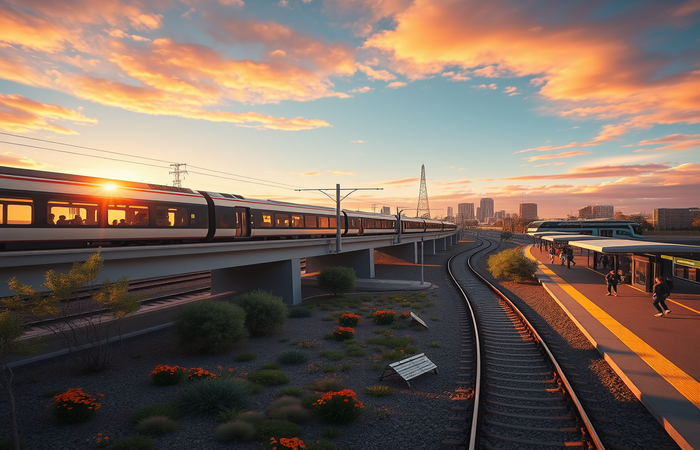
Perth’s Rail Network Expands: Thornlie–Cockburn Line Opens, Enhancing Connectivity and Capacity
Perth, Western Australia, has ushered in a new era of public transport with the grand opening of the Thornlie–Cockburn rail line, marked by Western Australia’s Minister of Transport, Rita Saffioti, and Premier Roger Cook. The official ribbon-cutting ceremony inaugurated Perth’s first east-west cross-line connection on Saturday, offering significantly improved travel flexibility for commuters and a higher level of public transport service to the city’s south-eastern suburbs. This project, which involved the relocation of a 22 km freight line, represents a pivotal advancement in the METRONET rail expansion strategy. The new 17-km line provides direct access from the Mandurah Line to Optus Stadium, enhances the city’s network resilience, and integrates with the new 8-km elevated inner-section of the Armadale Line, bolstering connectivity. This article explores the key features and implications of this transformative project for Perth’s rail infrastructure and the wider community.
Enhanced Connectivity and Network Resilience
The Thornlie–Cockburn line signifies a strategic enhancement of Perth’s rail network, particularly concerning resilience. By providing a direct link between the Mandurah Line and Optus Stadium, the new line facilitates efficient transport to major events. This results in improved accessibility for event attendees and decreases pressure on other transport modes. Moreover, the integration of the new line with the Armadale Line via the elevated section provides additional route options, minimizing disruption and improving network recovery in case of service interruptions. The project is part of the broader METRONET program, a detailed rail expansion initiative aimed at improving the efficiency, reach, and overall passenger experience within Perth’s public transport system. The new line is expected to significantly reduce road congestion in the city’s south-eastern suburbs and deliver better connections across the wider Perth area.
New Stations and Expanded Passenger Capacity
The construction of the Thornlie–Cockburn line involved the addition of new stations at Nicholson Road and Ranford Road, along with major upgrades to existing stations such as Thornlie, Cockburn Central, and Perth Stadium. These upgrades include the installation of more than 84,000 sleepers and 180,000 tonnes of gravel. Passengers can now benefit from a direct 27-minute journey to Perth from Nicholson Road Station and a 31-minute journey from Ranford Road Station. The new stations are equipped with ample parking facilities, with 1,400 parking spaces across the three stations, and are supported by an expanded bus network. Eleven of the more than 20 new bus routes will travel to and from Ranford Road and Nicholson Road stations, creating seamless integration with the wider public transport network, thereby enhancing the overall convenience for commuters. The Armadale Line connection features five new stations (Carlisle, Oats Street, Queens Park, Cannington, and Beckenham) boosting passenger access.
Impact on Local Communities and Land Development
The introduction of the Thornlie–Cockburn line is expected to stimulate land development in Perth’s south-eastern suburbs by enhancing access to public transport. The improved accessibility and connectivity provided by the new line have the potential to transform the landscape, supporting the creation of well-planned, liveable communities. The project also focuses on the creation of new parkland areas, particularly under the elevated rail sections. The opening of the stations is expected to catalyze the growth of local businesses and increase property values, creating further economic benefits for the local community. These new communities will have a world-class level of public transportation that will allow for more comfortable and efficient travel within the metro area and its surrounding areas.
Conclusion
The Thornlie–Cockburn rail line represents a significant achievement in Perth’s ongoing rail infrastructure modernization, providing increased passenger capacity, improved network resilience, and enhanced connectivity for the city’s south-eastern suburbs. The project addresses key challenges regarding road congestion, accessibility, and support for community growth. The benefits are far-reaching, including improved travel times, greater frequency of service, and improved connections to key destinations, particularly Optus Stadium. The project represents a step forward in the overall growth of the Perth metropolitan area. Moving forward, the success of this project can serve as a model for future rail infrastructure projects in Australia and abroad, demonstrating the positive impact of strategically planned expansions that prioritize passenger needs and community development. The ongoing development of the Armadale Line connection further underscores the commitment to enhancing Perth’s transport network.
Company Summary (Optional)
The Metronet project’s success is underpinned by the expertise of several key contractors and suppliers. Specifically, firms specializing in track laying, signaling systems, rolling stock, and station construction are integral to the success of such rail expansion projects. These companies are able to make considerable contributions to the development of world-class transport infrastructure while simultaneously employing local workforces. Companies with experience in complex railway projects such as the Thornlie–Cockburn Line are in high demand, and the lessons learned here are sure to be applicable in future infrastructure programs. The expansion of this rail line creates opportunities for companies and vendors involved in every part of the supply chain, including rolling stock vendors.

Railway infrastructure, rolling stock and transport technologies specialist focused on global rail industry developments, high-speed rail systems, signaling technologies and freight transportation. Covering railway investments, public transport modernization, rail operations and international mobility projects across Europe, Asia and North America.
RELATED POSTS

October 8, 2026 1:15 pm
Alstom secured a €1bn contract to build 13 automated trains,...

October 1, 2026 7:09 am
United States regulators confirmed a September 30 deadline for the...

October 4, 2026 5:14 pm
Alstom secured a CA$4.7 billion order from VIA Rail Canada...

October 1, 2026 12:13 am
Illinois approved $1.5 billion annually for the Northern Illinois Transit...

October 1, 2026 6:10 am
Amtrak approved a System Expansion Committee on July 30 to...
October 5, 2026 1:13 pm
New York MTA confirmed a late 2026 DEIS release for...