
Padma Bridge Rail Link: 2026 Construction Update
Bangladesh’s Padma Bridge Rail Link Project is complete, connecting Dhaka to the southwest, boosting trade and regional development. This crucial railway project utilizes the iconic Padma Bridge.

Project Profile: Padma Bridge Rail Link (PBRLP), Bangladesh
The Padma Bridge Rail Link Project (PBRLP) is a landmark 170 km broad-gauge railway infrastructure initiative in Bangladesh, establishing a direct connection between the capital, Dhaka, and the southwestern district of Jessore. This strategic corridor, which integrates the dual-deck Padma Multipurpose Bridge, is engineered to enhance national logistics, stimulate regional economic activity, and better position Bangladesh within the Trans-Asian Railway network.
| Attribute | Details |
|---|---|
| Project Name | Padma Bridge Rail Link Project (PBRLP) |
| Location | Bangladesh (Connecting Dhaka to Jessore) |
| Route Length | 170 km (Main Line); 215.2 km (Total Track) |
| Design Speed | 120 km/h |
| Estimated Cost | US$3.13 billion (85% China Exim Bank loan, 15% Government of Bangladesh) |
| Status (Nov 2025) | Fully Operational |
| Key Contractors | China Railway Engineering Corporation (CREC), CRRC Tangshan, AECOM, SMEC, COWI |
Technical Specifications
The project consists of a 170 km single-track, dual-gauge (BG) railway line built to a 1,676 mm gauge standard. The route is divided into four primary sections: Dhaka-Gandaria (3 km), Gandaria-Mawa (37 km), Mawa-Bhanga (42 km), and Bhanga Junction-Jessore (87 km). The infrastructure is substantial, including the construction of 66 major and 244 minor bridges, 20 total stations (14 new builds and 6 remodels), and 29 level crossings. The centerpiece is the 6.1 km Padma Multipurpose Bridge, which features a lower deck dedicated to the rail line, supported by 41 piers founded on 128-meter-deep steel tube piles.
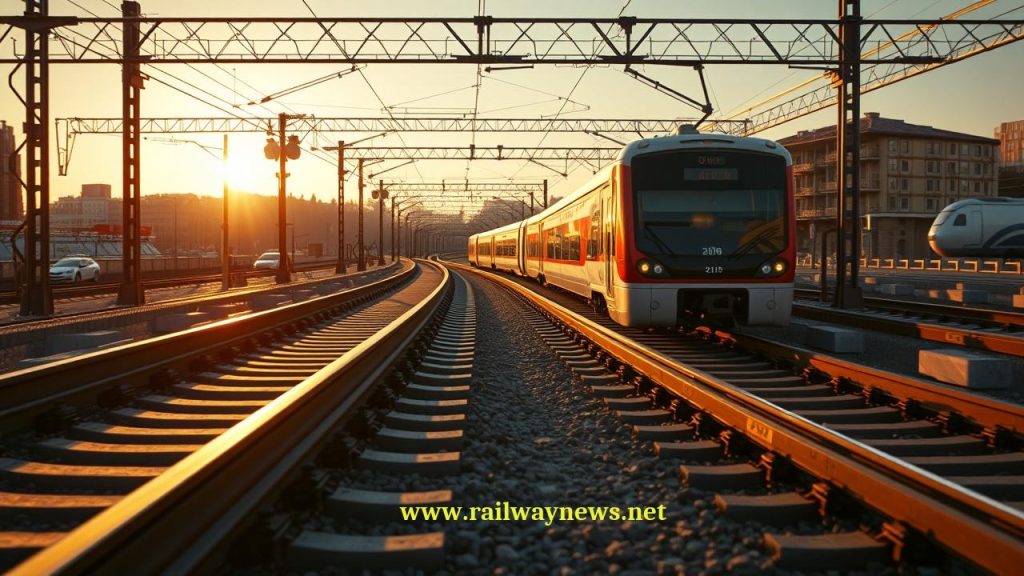
Rolling stock for the line is supplied by CRRC Tangshan, featuring passenger carriages designed for energy efficiency and compliance with local environmental standards. Key innovations include roof-mounted water injection systems to improve air conditioning efficiency and split large ventilation louvers. For operational control, an advanced signaling and telecommunications system has been implemented across all 20 stations to ensure safe and efficient high-speed transit.
Key Takeaways
- Economic Corridor Activation: The rail link directly connects the capital with over 20 southwestern districts, significantly reducing transit times for freight and passengers. This is projected to boost the national GDP by stimulating trade, agriculture, and industrial development in a previously underserved region.
- Regional and International Integration: The PBRLP is a critical segment of the Trans-Asian Railway (TAR) network’s ‘Corridor 1’. It enhances Bangladesh’s connectivity with India, Nepal, and Bhutan, positioning the country as a vital hub for regional trade and transport.
- Engineering and Project Management Milestone: The successful completion of this complex project, involving massive civil works like the Padma Bridge and extensive land acquisition, demonstrates Bangladesh’s capacity to execute mega-infrastructure projects through international financial and technical collaboration.
Frequently Asked Questions (FAQ)
When did the Padma Bridge Rail Link become fully operational?
The Padma Bridge Rail Link was opened in phases. The Dhaka to Bhanga section was inaugurated in October 2023. The final section from Bhanga to Jessore was completed, making the entire 170 km route fully operational for passenger and freight services in 2024.
Who is building and financing the Padma Rail Link project?
The primary construction contractor for the project is the China Railway Engineering Corporation (CREC). The project is financed through a commercial contract valued at US$3.13 billion, with 85% of the funding provided as a loan from the China Exim Bank and the remaining 15% contributed by the Government of Bangladesh.
RELATED POSTS
March 9, 2026 5:45 pm
ÖBB and Wiener Linien launch Vienna S-Bahn 13 km main...

March 4, 2026 12:02 am
Balfour Beatty VINCI completes 2.4km HS2 Coleshill Viaduct decks in...