
Ottawa O-Train Stage 2: LRT Expansion Deep Dive
Ottawa’s O-Train Stage 2: A massive LRT expansion adding 44km of track and 24 new stations— learn how this ambitious project is reshaping urban transit!
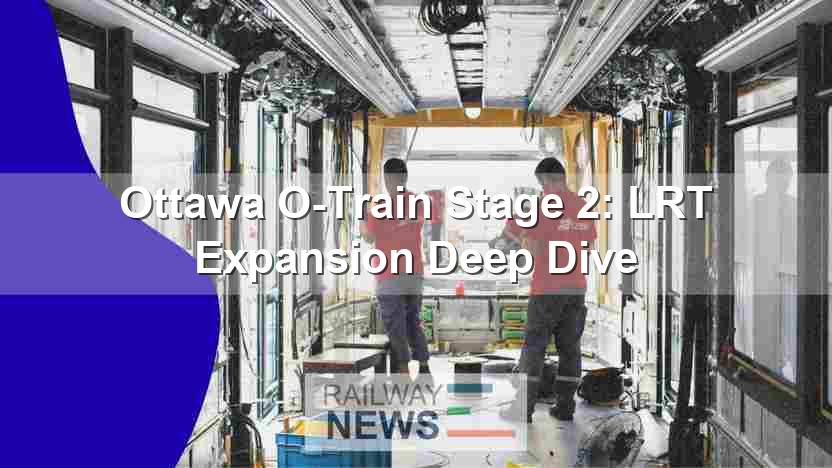
The City of Ottawa’s ambitious expansion of its O-Train light rail transit (LRT) system, specifically Stage 2, represents a significant undertaking in urban transit infrastructure development. This article explores the key aspects of this project, examining the selection of preferred proponents, the scope of the expansions, and the financial implications. The expansion, encompassing both the Confederation Line and the Trillium Line, will significantly enhance Ottawa’s public transportation network, impacting commuting patterns, urban development, and the overall quality of life for residents. We will explore the intricacies of the procurement process, the engineering challenges involved in constructing new lines and stations, and the long-term operational considerations that contribute to the overall success of such a large-scale project. This analysis provides a detailed overview of the strategic decisions made, the complexities faced, and the anticipated outcomes of Ottawa’s O-Train Stage 2.
Confederation Line Extension: Expanding East and West
The Confederation Line extension, awarded to East-West Connectors, a consortium comprising Kiewit and Vinci, focuses on extending the line in both eastern and western directions. The eastern extension, spanning approximately 12.5 kilometers, will introduce five new stations, reaching as far as Trim Road. This expansion addresses the growing transportation needs of Ottawa’s eastern suburbs. The western extension, totaling approximately 15 kilometers, will include 11 new stations, extending service to Moodie Drive and Baseline Station. This significantly improves connectivity to rapidly developing western communities. This phased approach allows for manageable construction while strategically addressing the city’s evolving transportation demands. The integration of these extensions with existing infrastructure requires careful planning to minimize disruption during construction and ensure seamless integration once operational.
Trillium Line Extension: Reaching Riverside South and the Airport
TransitNEXT was selected to design, build, finance, and maintain the Trillium Line extension. This 16-kilometer expansion will add eight new stations, extending the line from Greenboro Station to Riverside South. The most significant aspect of this extension is its connection to Ottawa Macdonald-Cartier International Airport (YOW), drastically improving airport accessibility for residents. This will alleviate traffic congestion and provide a sustainable transportation alternative. The engineering challenges associated with this extension likely involve integrating with existing infrastructure near the airport, necessitating meticulous coordination and safety protocols. The long-term operational considerations include efficient scheduling, maintenance procedures, and integration with existing airport transportation systems.
Financing and Project Cost
The O-Train Stage 2 project carries a hefty price tag, estimated at C$4.6 billion (approximately $3.5 billion USD). This substantial investment highlights the commitment to expanding Ottawa’s public transit system. The project’s funding is a tripartite arrangement involving the federal government, the provincial government of Ontario, and the City of Ottawa. This collaborative funding model demonstrates the importance of this project to all levels of government. Securing this funding signifies a collective belief in the project’s long-term benefits to the city and its residents. The transparency and accountability in managing such a large-scale project are crucial for ensuring effective use of public funds.
Project Timeline and Implications
With preferred proponents selected, construction is anticipated to commence shortly after council approval. The successful completion of Stage 2 will significantly enhance Ottawa’s public transportation network, offering increased capacity, improved connectivity, and reduced reliance on private vehicles. This, in turn, will contribute to decreased traffic congestion, improved air quality, and a more sustainable urban environment. The project’s success hinges on effective project management, meticulous planning, and the seamless integration of new lines and stations into the existing system. Additionally, successful integration and operation necessitate robust maintenance strategies and skilled workforce training to ensure efficient and reliable service for commuters.
Conclusions
The Ottawa O-Train Stage 2 project signifies a substantial investment in the city’s future, expanding its light rail transit network to better serve its growing population. The selection of East-West Connectors for the Confederation Line extension and TransitNEXT for the Trillium Line extension marks a crucial step towards realizing this vision. The project’s considerable cost, funded jointly by the federal, provincial, and municipal governments, underscores the project’s importance in addressing pressing transportation needs. The extensions, adding a combined 44 kilometers of track and 24 new stations, will significantly improve connectivity within the city, particularly in rapidly developing suburban areas, and provide vital links to the Ottawa Macdonald-Cartier International Airport. However, successful implementation requires careful consideration of various factors. Effective project management to mitigate potential delays and cost overruns is paramount. Rigorous quality control measures during construction and thorough testing before operational launch are essential for ensuring the reliability and safety of the new lines. Moreover, planning for the long-term operational needs of the expanded system, including maintenance schedules, staff training, and fare integration, is crucial for the system’s long-term sustainability and efficacy. Ultimately, the success of the O-Train Stage 2 will not only improve the daily lives of Ottawa residents, but also serve as a model for future LRT projects in other Canadian cities and beyond.

Railway infrastructure, rolling stock and transport technologies specialist focused on global rail industry developments, high-speed rail systems, signaling technologies and freight transportation. Covering railway investments, public transport modernization, rail operations and international mobility projects across Europe, Asia and North America.
RELATED POSTS

October 8, 2026 1:15 pm
Alstom secured a €1bn contract to build 13 automated trains,...

October 1, 2026 7:09 am
United States regulators confirmed a September 30 deadline for the...

October 8, 2026 12:18 pm
Siemens Mobility signed an agreement with VinSpeed to supply 350...

October 4, 2026 5:14 pm
Alstom secured a CA$4.7 billion order from VIA Rail Canada...

October 5, 2026 6:12 pm
AECOM and Jacobs secured a contract in September 2026 to...

October 1, 2026 12:13 am
Illinois approved $1.5 billion annually for the Northern Illinois Transit...