
NYC Subway Speed Limit Increase: Safety, Efficiency & The SPEED Unit
Boost NYC subway speeds safely? The MTA’s “Save Safe Seconds” initiative reveals how meticulous track assessments and signal upgrades deliver faster commutes without compromising safety. Discover how!
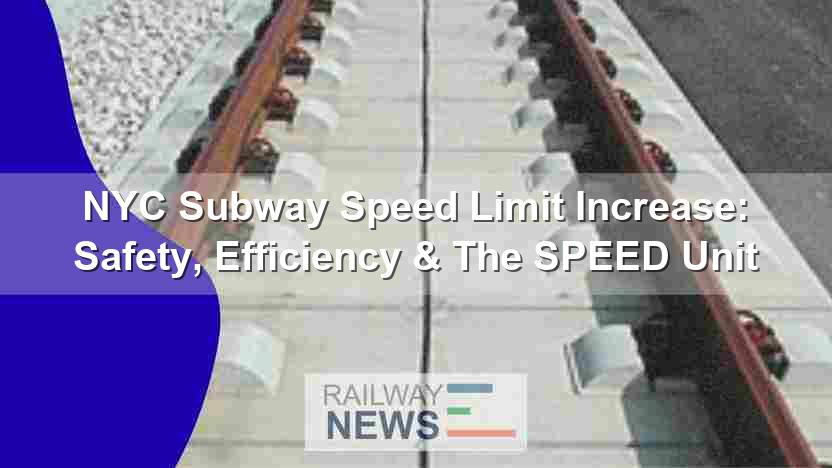
This article examines the recent initiative by the Metropolitan Transportation Authority (MTA) of New York City Transit (NYC Transit) to increase subway speed limits at various locations across its extensive network. The initiative, part of the “Save Safe Seconds” campaign, aims to reduce passenger journey times while maintaining, and indeed enhancing, the overall safety of the system. This necessitates a complex interplay of factors, including track condition assessments, signal system reliability, and rigorous safety reviews. The process of identifying suitable locations for speed increases, implementing the changes, and monitoring their impact is a multifaceted undertaking requiring specialized expertise and a commitment to both efficiency and passenger well-being. We will explore the methodology employed by the MTA, the technical challenges addressed, and the implications of these improvements for the overall performance of the New York City subway system. The ultimate goal is to analyze whether this approach presents a viable and replicable model for other large-scale transit systems globally, emphasizing both the benefits and potential drawbacks of such speed limit adjustments.
Track Assessment and Speed Limit Determination
The core of the MTA’s speed increase initiative lies in the meticulous assessment of track conditions. The newly formed SPEED Unit plays a crucial role, conducting extensive testing across hundreds of miles of track to determine which sections can safely accommodate higher speeds. This involves evaluating factors such as track geometry (alignment, curvature, and grade), rail condition (wear and tear), and the presence of any potential obstructions. Sophisticated instrumentation is used to analyze track stability and identify any areas requiring maintenance or repair before speed limits can be increased. The analysis goes beyond simply identifying structural integrity; it also considers dynamic factors such as train oscillations and wheel-rail interaction at higher speeds, ensuring that the increased speed does not compromise passenger safety or lead to accelerated track degradation. The selection process prioritizes sections where speed increases can yield the most significant reduction in journey times with minimal safety risks.
Signal System Integrity and Grade Time Signals
Simultaneously with the track assessments, the SPEED Unit conducts rigorous testing of the Automatic Train Control (ATC) and the accuracy of grade time signals. These signals play a crucial role in regulating train speeds, ensuring adherence to pre-defined limits, and preventing overspeeding. The detection of faults in a significant number of grade time signals (320 out of nearly 2000 tested) underscores the importance of this aspect of the safety protocols. The recalibration of these signals is critical because inaccurate signaling can lead to delays, and in extreme cases, even collisions. The meticulous examination and subsequent repair of these signaling systems are integral to the safety of the speed increase program. The successful recalibration of 59 signals is a testament to the unit’s efficiency and commitment to ensuring the continued safety of the network at increased speeds.
Safety Committee Oversight and Risk Mitigation
The safety committee, composed of representatives from NYC Transit’s Office of System Safety, operations planning, service delivery, and track and signal maintenance, plays a vital role in overseeing the entire speed limit modification process. This multidisciplinary approach ensures a detailed evaluation of the proposed speed increases, considering potential safety risks and mitigating them proactively. The committee’s approval is crucial before any speed limit changes are implemented, highlighting the MTA’s commitment to prioritizing safety. This rigorous safety review process serves not only to protect passengers but also to ensure the long-term reliability and sustainability of the system improvements. The involvement of diverse expertise ensures that all relevant aspects of safety are carefully considered, reducing the risk of unforeseen consequences.
Conclusions and Future Implications
The MTA’s initiative to increase subway speed limits at 24 locations represents a significant step towards improving the efficiency and performance of the New York City subway system. The project’s success hinges on a multi-faceted strategy that combines thorough track assessments, precise signal system calibration, and rigorous safety reviews. The establishment of the SPEED Unit demonstrates a proactive approach to identifying areas for improvement, highlighting the commitment to optimize system performance while maintaining the highest safety standards. The meticulous testing of track integrity and the detailed recalibration of grade time signals underscore the importance of preventative maintenance and ensuring the reliability of the signaling system. The role of the safety committee in this process is also critical, guaranteeing a holistic and multi-perspective safety evaluation before any changes are implemented. This approach provides a model for other major transit systems globally, suggesting that a targeted and data-driven approach, combined with rigorous safety protocols, can lead to significant improvements in journey times without compromising safety. The long-term effects of these speed increases will need to be continually monitored to assess their impact on track wear and tear, energy consumption, and overall system reliability. Further investments in advanced signaling technologies and continued track maintenance will be crucial to sustaining the benefits of these speed improvements.

Railway infrastructure, rolling stock and transport technologies specialist focused on global rail industry developments, high-speed rail systems, signaling technologies and freight transportation. Covering railway investments, public transport modernization, rail operations and international mobility projects across Europe, Asia and North America.
RELATED POSTS

October 8, 2026 1:15 pm
Alstom secured a €1bn contract to build 13 automated trains,...

October 1, 2026 7:09 am
United States regulators confirmed a September 30 deadline for the...

October 8, 2026 12:18 pm
Siemens Mobility signed an agreement with VinSpeed to supply 350...

October 4, 2026 5:14 pm
Alstom secured a CA$4.7 billion order from VIA Rail Canada...

October 5, 2026 6:12 pm
AECOM and Jacobs secured a contract in September 2026 to...

October 1, 2026 12:13 am
Illinois approved $1.5 billion annually for the Northern Illinois Transit...