
NYC Congestion Pricing: Federal Funding Battle Heats Up
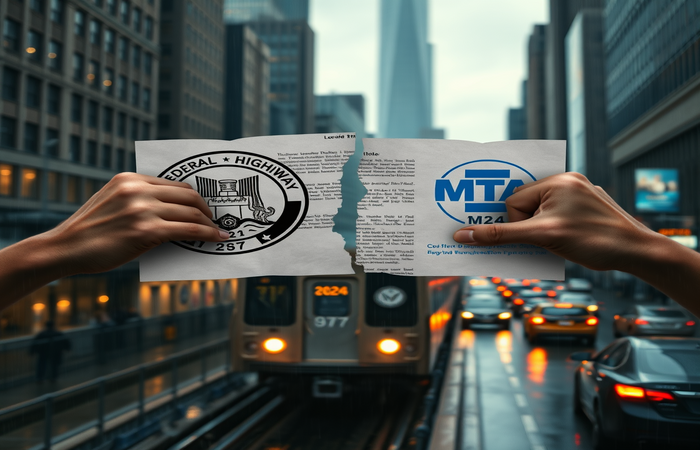
New York City Congestion Pricing Program Faces Federal Funding Battle
New York City’s ambitious congestion pricing program, designed to alleviate traffic congestion and generate revenue for critical public transportation upgrades, has become the focus of a legal and political battle. The program, which seeks to charge vehicles for entering Manhattan’s central business district, has faced opposition from the current U.S. administration, leading to threats of withheld federal funding and approvals for the state. This situation presents a complex interplay of federal regulations, state initiatives, and the financial realities of maintaining and improving a massive public transit system. The core of the dispute lies in the interpretation of federal laws concerning tolling on roads built with federal funding, and the extent to which the federal government can exert influence over state transportation projects. This article will delve into the specifics of the program, the legal challenges it faces, and the potential ramifications for New York’s transportation infrastructure.
Federal and State Clash over Congestion Pricing
The heart of the current dispute stems from a disagreement between the federal government and the state of New York regarding the legality of the congestion pricing program. The Federal Highway Administration (FHWA), under the leadership of U.S. Transportation Secretary Sean Duffy, has voiced concerns that the program violates federal law. Specifically, the administration argues that roads built with federal funds are generally prohibited from charging tolls. This legal interpretation forms the basis for the threat to withhold federal funding for highway projects in New York, a move that could significantly impact the state’s ability to maintain and improve its transportation infrastructure. Conversely, the state of New York, supported by the Metropolitan Transportation Authority (MTA), contends that the program is permissible and essential for funding vital transit improvements.
The Program and Its Approval
The congestion pricing program, approved by the Biden administration in November 2024, is designed to reduce traffic congestion in the busiest parts of Manhattan and generate billions of dollars in revenue for the MTA. These funds are earmarked for crucial capital projects, including subway signal upgrades, station accessibility improvements, and expansion of the public transportation network. The program’s implementation involves charging vehicles a fee to enter the central business district, which is intended to incentivize drivers to use public transit, walk, bike, or travel during off-peak hours. This, in turn, is expected to reduce traffic congestion and improve air quality. The legal challenge initiated by the Trump administration, however, casts a shadow over the future of this program and the projects it aims to fund.
Legal Challenges and Judicial Intervention
The legal battle between the state of New York and the federal government reached a crucial stage on May 27, when Judge Lewis Liman of the Southern District of New York issued a temporary restraining order. This order prevents the U.S. Transportation Secretary from withholding federal funding or approvals from New York while the court considers the merits of the case. This judicial intervention underscores the complexity of the legal issues at stake and the potential for a protracted legal battle. The outcome of this case will have far-reaching implications, not only for the future of New York City’s congestion pricing program but also for the balance of power between the federal government and state transportation initiatives across the country.
Conclusion: Navigating the Future of Urban Mobility
The ongoing legal dispute over New York City’s congestion pricing program highlights the complex challenges of urban transportation planning and funding. The core issue revolves around the interpretation of federal regulations and the balance of power between federal and state authorities in managing transportation infrastructure. The temporary restraining order issued by the court provides a temporary reprieve for New York, allowing the state to continue its efforts to implement the program while the legal arguments are considered. The ultimate resolution of this case will set a precedent for other cities considering similar congestion pricing initiatives. A successful outcome for New York could pave the way for similar programs to generate vital funding for public transit improvements across the nation, improving air quality, reducing traffic congestion, and supporting the sustainability of urban transit systems.
If the federal government prevails, however, it would severely impact the ability of cities to utilize congestion pricing as a funding source, forcing them to rely on alternative funding mechanisms. The future of urban mobility hinges on resolving these debates and fostering collaborative strategies between federal, state, and local authorities. The legal outcome will shape how we manage our cities’ transportation systems and invest in their futures. The importance of these projects is not to be underestimated, and that’s why it’s crucial that the parties involved find a resolution that benefits everyone.
Additional Information
Country: United States of America
Date: May 27, 2024
Brief Summary of Companies Involved:
- Metropolitan Transportation Authority (MTA): The primary transportation authority in New York City, responsible for public transit, including subways, buses, and commuter rail.
- Federal Highway Administration (FHWA): Part of the U.S. Department of Transportation, responsible for overseeing federal highway programs and funding.
RELATED POSTS

January 4, 2021 2:40 am
The Alstom MP14 Metro: A Case Study in Modern Rail...

March 18, 2025 4:18 am
Introduction This article explores the strategic expansion of Renfe (Red...
August 23, 2018 9:52 pm
Bombardier and Hitachi's joint bid for the HS2 high-speed train...
August 21, 2021 6:54 pm
This article delves into the significant undertaking of constructing the...
July 6, 2019 1:28 am
This article analyzes the acquisition of Genesee & Wyoming (G&W),...
May 24, 2020 10:26 pm
The Resumption of Passenger Rail Services in India Post-COVID-19 Lockdown...