
NSW High-Speed Rail: Feasibility Study & Future
NSW’s high-speed rail feasibility study is underway, exploring four potential routes and innovative technologies to revolutionize travel. Discover how this ambitious project could reshape the state’s future!
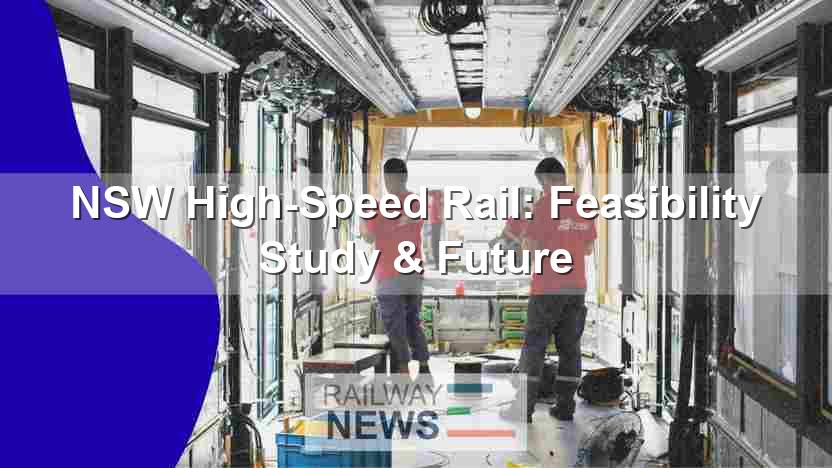
This article examines the New South Wales (NSW) government’s initiative to explore the feasibility of establishing a high-speed rail (HSR) network. The study, commissioned in 2018, aims to assess the viability of HSR corridors across the state, focusing on routes within a 300km radius of Sydney. This assessment will not only consider the technical aspects of implementing such a network, including optimal track alignment, train speed, and station placement, but also delve into the broader economic and social ramifications. The potential benefits include reduced travel times, enhanced regional connectivity, increased tourism, and economic stimulation in regional areas. Additionally, the study will inform the government’s decision-making process regarding the staged implementation of HSR, including short-term improvements to existing rail lines to increase speeds and capacity before the eventual construction of dedicated HSR infrastructure. The analysis will meticulously evaluate the various proposed routes, weighing the technical challenges and economic implications of each, ultimately guiding the development of a detailed and sustainable HSR strategy for NSW.
Route Selection and Alignment
The NSW government has initially identified four potential HSR routes: Northern, Southern Inland, Western, and Southern Coastal. These routes, all situated within 300km of Sydney, represent diverse geographic and demographic considerations. The selection process will involve rigorous analysis of factors including topography, existing infrastructure, population density, and projected economic activity along each corridor. Alignment studies will consider minimizing land acquisition costs, environmental impact, and construction complexity. Professor Andrew McNaughton’s expertise will be pivotal in determining optimal routes, balancing the desire for speed with practical constraints, cost effectiveness, and environmental considerations. The study will involve sophisticated Geographic Information System (GIS) modelling to evaluate these factors and provide a quantitative basis for route selection.
Technological Considerations and Speed
A key aspect of the feasibility study focuses on technological requirements for achieving high-speed rail operations (at least 200 km/h). This includes assessing the suitability of existing rail infrastructure for upgrades, exploring the necessary signalling systems (e.g., European Train Control System (ETCS) or similar), and evaluating the viability of different rolling stock technologies. Additionally, the study must consider the integration of the HSR network with existing rail systems to ensure seamless passenger transfers and optimize overall network efficiency. The technical specifications will directly influence the project’s overall cost and timeframe. The selection of appropriate technologies will also dictate the level of maintenance required and the long-term operational costs.
Economic and Social Impact Assessment
Beyond the technical aspects, the study must detailedly assess the economic and social impact of the proposed HSR network. This includes estimating the cost of construction and operation, assessing potential revenue streams from increased ridership, and evaluating the potential for economic development in regional areas served by the HSR. Additionally, the study will analyze the potential social benefits, such as reduced travel time for commuters and enhanced access to employment, education, and healthcare opportunities. A detailed cost-benefit analysis (CBA) will be crucial for justifying the investment, considering factors like construction costs, operational expenses, and projected economic returns. This analysis will also assess the potential for job creation during construction and operation of the HSR.
Implementation Strategy and Future Planning
The findings of Professor McNaughton’s study will inform a phased implementation strategy. This could involve short-term improvements to existing rail lines to achieve faster speeds in the near term, followed by the long-term development of dedicated HSR corridors. A staged approach minimizes initial investment risk and allows for incremental improvements to the overall rail network. The long-term plan will consider future capacity needs and potential expansion of the HSR network to connect other regions within NSW and potentially to other states. Sustainable infrastructure planning will be crucial, integrating environmental considerations and community engagement throughout the process. The implementation strategy will also include detailed plans for project financing, procurement, and construction management.
Conclusions
The NSW government’s feasibility study for a high-speed rail network represents a significant step towards improving transportation infrastructure and regional connectivity. The study, led by Professor Andrew McNaughton, will detailedly evaluate four proposed HSR routes, considering various factors including optimal alignment, technological requirements (including signaling systems and rolling stock), and economic and social impact. The detailed analysis will focus on achieving high-speed rail operations of at least 200 km/h, aiming to significantly reduce travel times and enhance connectivity within NSW. A phased implementation approach will be crucial, allowing for short-term improvements to existing lines while planning for the long-term development of dedicated HSR corridors. A robust cost-benefit analysis (CBA) will be essential for justifying the substantial investment required. The success of the project will depend not only on its technical feasibility but also on effective community engagement, sustainable infrastructure planning, and sound financial management. The final report will provide invaluable insights to guide the development of a strategic and sustainable high-speed rail network for NSW, potentially transforming the state’s transportation landscape for years to come.

Railway infrastructure, rolling stock and transport technologies specialist focused on global rail industry developments, high-speed rail systems, signaling technologies and freight transportation. Covering railway investments, public transport modernization, rail operations and international mobility projects across Europe, Asia and North America.
RELATED POSTS

September 6, 2026 5:19 am
Hitachi delivered Taiwan's first N700ST high-speed train from Japan in...

September 5, 2026 4:19 pm
CPK launched formal tender talks with four consortia to design...

September 5, 2026 7:14 pm
HS2 Ltd signed renegotiated civils contracts with EKFB and Align...

September 6, 2026 4:12 am
Alstom delivered the first of 100 new G Class trams...

September 6, 2026 6:17 am
Hungary ordered a national ban on most freight trains from...

September 6, 2026 1:17 am
Hitachi Toshiba Supreme Consortium confirmed the first of 12 N700ST...