
Northland Rail Upgrade: NZ Feasibility Study
Northland’s rail network revitalization is underway! A comprehensive feasibility study will determine the economic and environmental benefits of upgrading this crucial infrastructure.
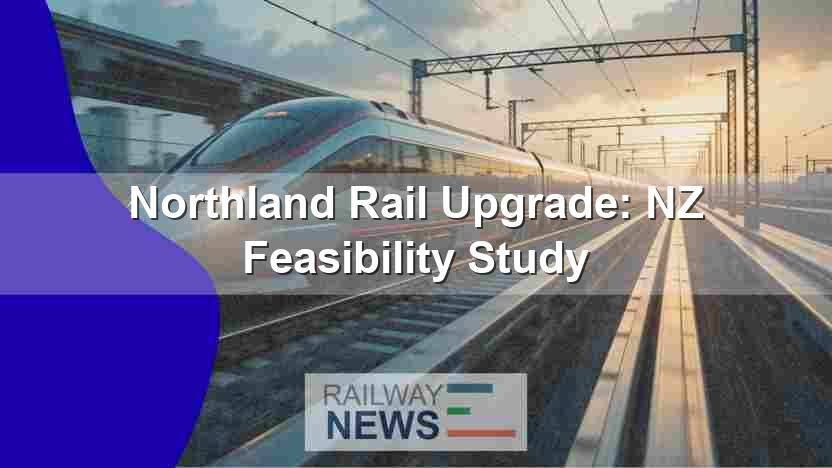
This article explores the New Zealand Government’s initiative to assess the viability of upgrading and expanding the Northland rail line in the Auckland region. This NZ$500,000 (approximately $349,801 USD) feasibility study, funded by the Provincial Growth Fund (PGF), aims to determine the economic and logistical benefits of revitalizing this underutilized rail infrastructure. The study will not only evaluate the potential for increased freight capacity but also investigate the feasibility of constructing a new spur line to Marsden Point, thereby supporting the expansion of the Northport facility. The success of this project hinges on several key factors, including the existing condition of the rail line, the demand for rail freight services within the region, and the overall cost-benefit analysis of the proposed upgrades. This detailed analysis will play a crucial role in shaping the future of freight transportation in the Northland region and its integration with the wider Auckland transport network. The implications extend beyond economic efficiency, impacting environmental sustainability and the overall quality of life for residents.
Assessing the Current State of the Northland Rail Line
The existing Northland rail line is currently in a state of disrepair, with significant sections either in poor condition or entirely out of service. This presents a significant challenge to any upgrade project. A detailed assessment of the existing infrastructure is crucial, encompassing track condition, bridge integrity, signaling systems, and rolling stock compatibility. The study must determine the extent of necessary repairs and replacements, factoring in the cost and time required for these interventions. Additionally, detailed geological surveys may be needed to evaluate the stability of the railbed and potential risks associated with landslides or other natural hazards. A thorough understanding of the current state will inform the scope and cost of any proposed upgrade.
Evaluating the Demand for Rail Freight Services
The feasibility study must accurately gauge the demand for rail freight services in the Northland region. This requires extensive consultation with businesses, local government, and other stakeholders. Detailed freight volume projections are necessary, considering the types of goods transported, their origins and destinations, and the anticipated growth in freight traffic over the coming years. The study needs to analyze the current reliance on road transport, quantifying the volume of heavy vehicles using State Highway 1 between Northland and Auckland. This data will be crucial in determining the potential for shifting freight from road to rail, alleviating congestion and improving the overall efficiency of the transportation system. The analysis should explore the possibility of attracting new businesses to the region through the provision of reliable rail freight services.
Cost-Benefit Analysis and Financial Modeling
A robust cost-benefit analysis (CBA) is essential to determine the financial viability of the Northland rail line upgrade. This requires detailed cost estimations for infrastructure improvements, rolling stock acquisition or upgrades, operational expenses, and maintenance. The CBA should also consider the potential benefits, including reduced road congestion, decreased greenhouse gas emissions, increased efficiency in freight transportation, and economic growth in the Northland region. The analysis should incorporate sensitivity analysis to account for uncertainties in cost estimates and demand projections. The development of detailed financial models is essential to evaluate the long-term economic sustainability of the project and attract potential investors or government funding.
The Marsden Point Spur Line: A Strategic Investment?
The proposed spur line to Marsden Point, connecting the upgraded rail line to the Northport facility, presents a unique opportunity to enhance the region’s connectivity and economic growth. This segment of the project needs separate detailed analysis. The study should assess the potential benefits of this connection for Northport’s expansion, including improved logistics and reduced transportation costs. It should also consider the environmental impacts of the new line, evaluating potential land acquisition, construction disruption and mitigation measures. A thorough analysis of the cost-effectiveness of the spur line, considering the potential economic returns and environmental implications, is crucial in making an informed decision regarding its inclusion in the overall upgrade plan.
Conclusions
The New Zealand Government’s investment in the feasibility study for the Northland rail line upgrade is a significant step towards improving regional connectivity and economic development. The success of this project depends on the detailed assessment of the current rail infrastructure, a thorough understanding of the demand for rail freight services, and a robust cost-benefit analysis. The study’s findings will provide valuable insights into the potential for shifting freight from road to rail, reducing congestion on State Highway 1, and improving the overall efficiency of the transportation system. The potential inclusion of a spur line to Marsden Point further strengthens the strategic importance of this initiative. A successful outcome will not only create economic opportunities in Northland but also contribute to a more sustainable transportation network for the region. The accurate projection of freight volumes, consideration of environmental impacts and detailed cost estimations are crucial to justify the investment. Ultimately, this study represents a significant opportunity to redefine freight transportation in Northland, integrating it with the broader Auckland transport system, and shaping a future characterized by efficiency, sustainability, and economic growth. The resulting detailed report will be vital in informing future decision-making processes and securing further investment, demonstrating the commitment to the future of rail in New Zealand.

Railway infrastructure, rolling stock and transport technologies specialist focused on global rail industry developments, high-speed rail systems, signaling technologies and freight transportation. Covering railway investments, public transport modernization, rail operations and international mobility projects across Europe, Asia and North America.
RELATED POSTS

October 6, 2026 2:14 am
Union Pacific launched export rail shipments with Ferromex to deliver...

October 1, 2026 3:12 am
Greenbrier confirmed Brian Comstock as new president and CEO effective...
October 1, 2026 10:14 am
HS2 installed a 55-metre steel span in Birmingham, completing phase...

October 4, 2026 11:08 pm
Sound Transit confirmed the September 30 opening of Seattle Pinehurst...
October 1, 2026 11:14 pm
CATS confirmed a six-mile streetcar route in Charlotte to add...
October 1, 2026 1:12 pm
CSX expanded Queensgate Yard in Cincinnati by installing 42 power...