
Nokia-Altran: Revolutionizing Rail Maintenance
Revolutionize railway maintenance with predictive analytics! Discover how Nokia and Altran’s IoT-powered solution boosts reliability, slashes costs, and minimizes delays.
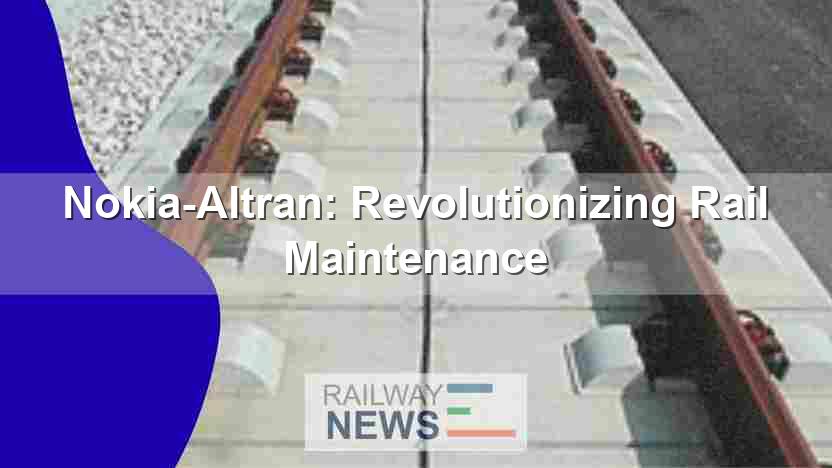
The railway industry, a critical component of global infrastructure, faces persistent challenges in maintaining the operational efficiency and reliability of its rolling stock. Traditional preventative maintenance schedules, while ensuring safety, often lead to excessive downtime and unnecessary costs. Unexpected failures, however, can result in significant delays, cancellations, and substantial financial losses. This article explores a transformative solution being developed by Nokia and Altran, leveraging the power of the Internet of Things (IoT), advanced analytics, and predictive modeling to revolutionize railway maintenance. We will delve into the technological underpinnings of this solution, its potential benefits for railway operators, and the broader implications for the future of railway maintenance strategies. The partnership between Nokia, a telecommunications giant, and Altran, an engineering and R&D services provider, represents a significant convergence of expertise, bringing together the world of telecommunications with the demands of the rail industry. This collaborative effort promises to reshape how railway companies approach the critical task of maintaining their fleets, achieving significant improvements in efficiency, reliability, and cost-effectiveness.
The Technological Foundation
The core of this innovative predictive maintenance solution lies in the seamless integration of several key technologies. At its heart is a sophisticated IoT network that connects a vast array of smart sensors strategically deployed throughout the rolling stock. These sensors continuously monitor critical parameters such as vibration levels, temperature fluctuations, and pressure differentials, providing real-time data on the health and performance of various train components. This data is then transmitted wirelessly via a robust and reliable network infrastructure provided by Nokia, leveraging their expertise in telecommunications and network management. Altran’s expertise in application development and systems integration is crucial in the creation of a data processing and analytics platform capable of handling and interpreting the enormous volume of data generated by the sensor network. Advanced algorithms and machine learning techniques are used to identify patterns, predict potential failures, and proactively suggest preventative maintenance measures before they escalate into costly breakdowns.
Data-Driven Decision Making
The power of this solution lies in its ability to move away from reactive, time-based maintenance schedules to a proactive, data-driven approach. By analyzing real-time data and leveraging predictive modeling, railway operators can anticipate potential equipment failures with remarkable accuracy. This allows for timely intervention, minimizing downtime and preventing costly emergency repairs. The platform is not merely a collection of data; it serves as an intelligent decision-support system, providing insights into the overall health of the rolling stock and enabling operators to optimize their maintenance strategies. This transition from reactive to proactive maintenance represents a paradigm shift in railway operations, resulting in enhanced efficiency, reduced operational costs, and improved passenger satisfaction.
Benefits and Implications
The anticipated benefits of this collaborative effort are substantial. The solution aims to achieve a significant improvement in train reliability (up to 30%), a reduction in delays and cancellations (up to 20%), and a decrease in maintenance man-hours (up to 10%). These improvements translate directly to cost savings for railway operators, enhanced operational efficiency, and improved passenger experience. The broader implications extend beyond individual railway companies. The successful implementation of this technology could set a new standard for predictive maintenance in the railway industry, driving innovation and fostering the adoption of similar solutions globally. This initiative also highlights the increasing importance of partnerships between telecommunications and engineering companies in developing next-generation solutions for critical infrastructure.
Expanding the Reach of Predictive Maintenance
The Nokia and Altran solution is designed to be adaptable and scalable, making it suitable for both new and existing rolling stock. This flexibility is critical in an industry with a diverse fleet of trains and varying technological capabilities. The platform’s ability to integrate with existing systems minimizes disruption during implementation and allows railway operators to gradually adopt the new technology. Additionally, the platform’s modular design allows for future expansion and integration of new sensors and data sources, providing continuous improvement and adaptation to the evolving needs of the railway industry. The collaborative approach of Nokia and Altran ensures a robust solution that is continuously refined and improved based on real-world operational data and feedback.
Conclusion
The joint venture between Nokia and Altran to develop a predictive maintenance solution for railway rolling stock marks a significant advancement in railway technology. By harnessing the power of IoT, advanced analytics, and predictive modeling, this innovative solution addresses the critical challenges of maintaining operational efficiency and reliability in the railway industry. The anticipated benefits, including improved train reliability, reduced delays, and lower maintenance costs, are substantial and represent a significant step towards a more efficient and cost-effective railway system. The success of this project could serve as a catalyst for wider adoption of predictive maintenance technologies across the global railway sector, ultimately leading to improved safety, enhanced passenger experience, and significant cost savings for railway operators worldwide. The collaboration between a telecommunications giant and an engineering services provider highlights the potential for cross-industry partnerships to drive innovation and create transformative solutions in critical infrastructure sectors. The future of railway maintenance is undeniably shifting towards a data-driven, proactive approach, paving the way for a more efficient, reliable, and sustainable railway network globally. This partnership demonstrates the power of combining technological expertise with a deep understanding of industry-specific challenges to achieve significant improvements in operational efficiency and cost-effectiveness.

Railway infrastructure, rolling stock and transport technologies specialist focused on global rail industry developments, high-speed rail systems, signaling technologies and freight transportation. Covering railway investments, public transport modernization, rail operations and international mobility projects across Europe, Asia and North America.
RELATED POSTS
September 6, 2026 5:19 am
Hitachi delivered Taiwan's first N700ST high-speed train from Japan in...

September 5, 2026 4:19 pm
CPK launched formal tender talks with four consortia to design...

September 6, 2026 4:12 am
Alstom delivered the first of 100 new G Class trams...
September 6, 2026 6:17 am
Hungary ordered a national ban on most freight trains from...
September 6, 2026 1:17 am
Hitachi Toshiba Supreme Consortium confirmed the first of 12 N700ST...
September 7, 2026 8:16 am
Midea, Gree and TCL shipped air conditioners via China Railway...