
New Taipei City Metro Expansion: Taiwan Rail Infrastructure Boost
New Taipei City’s metro expands in three phases, adding lines and stations. Construction is underway, enhancing connectivity and easing traffic.
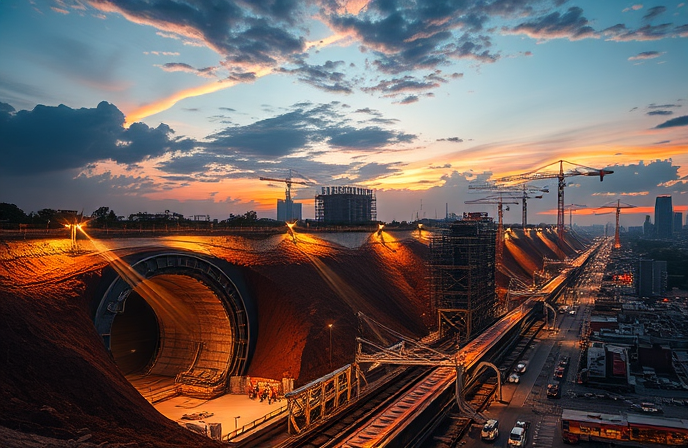
New Taipei City Embarks on Ambitious Metro Expansion: A Multi-Phase Transformation
New Taipei City is undergoing a dramatic transformation of its urban landscape, driven by an aggressive expansion of its mass transit system. This comprehensive undertaking, encompassing three major phases, involves simultaneous construction across multiple lines and the parallel planning of additional routes. The “who” is New Taipei City, led by Mayor Hou Yu-Ih; the “what” is the development and expansion of the metro network; the “when” is ongoing, with significant progress made since December 2018; the “where” is primarily New Taipei City and surrounding areas, including links to neighboring cities; the “why” is to improve residents’ quality of life, enhance urban development, and alleviate traffic congestion; and the “how” involves strategic phased implementation, technological innovation, and collaborative planning. This article will delve into the three phases of New Taipei City’s metro expansion, highlighting the achievements, ongoing projects, and future prospects of this ambitious undertaking.
Phase One: Operational Success and Innovation
The initial phase of the New Taipei Metro expansion, which began in December 2018, focused on establishing operational lines and demonstrating the viability of the project. This phase has seen the successful completion of the Danhai Light Rail, Ankeng Light Rail, and the Circular Line, adding 26 kilometres of track and 26 stations to the network. These additions have resulted in an 830% increase in passenger numbers since the initial launch. The city’s Department of Rapid Transit Systems (DRTS) has been instrumental in driving not only physical infrastructure but also innovative operational improvements; however, specific details on these seven improvements were not provided in the source material. This focus on operational excellence has laid the foundation for the more ambitious expansion to follow.
Phase Two: Construction Underway and Strategic Connectivity
The second phase is marked by the simultaneous construction of seven metro lines, representing a massive undertaking of 57 kilometres of track and 51 stations. Several key projects are advancing rapidly. The Sanying Line is in active trial runs, with an expected opening in 2026. The Wanda–Zhonghe Line is progressing, with all tunnel boring completed and an anticipated 2027 completion date for the underground transfer link at Zhonghe Station, which will connect to the existing Circular Line. The Tucheng–Shulin Line is under city control, with the CQ880B contract slated to open for bidding on June 25th. The South and North sections of the Circular Line are also under development, including Taiwan’s first underground depot constructed beneath an existing park. Furthermore, the Xidong Line has begun construction, featuring increased seating capacity and advanced smart systems. Finally, the Danhai Light Rail Phase 2 has begun construction, focusing on the Tamkang Bridge intersection. These projects will significantly expand the city’s metro coverage and improve connectivity for residents.
Phase Three: Planning for the Future – Eight Lines Advancing Together
The third phase, envisioned as “Eight Lines Advancing Together,” focuses on the planning and development of a further eight metro lines. This includes the Wutai Light Rail, an extension of the Sanying Line to Bade District in Taoyuan, and the Minsheng Line in Taipei, all currently in the integrated planning stage. Furthermore, feasibility studies are underway for the Shenkeng, Bali, and Taiban Light Rail lines, and also for the Guangfu Line in Zhonghe. A notable development is the upgrade of the Linkou Light Rail from a long-term proposal to a priority project. The city is urging the central government to expedite the approval process for construction. If all plans are realized, this phase will introduce an additional 39 kilometres of track and 42 stations. This will also increase the total number of interchange stations to 33, signifying a major boost to the regional connectivity of New Taipei’s metro network.
Collaboration and Future Growth
The development of the Keelung MRT, conducted in collaboration with Taipei and Keelung, demonstrates the collaborative nature of this project. The initial elevated section is being designed jointly, pending approval for construction costs from the central government. This collaborative approach will enhance regional transportation links. This expansion illustrates a bold vision for integrated, modern public transit, addressing current infrastructure needs while anticipating future requirements. The emphasis on strategic planning and phased development will further enhance the effectiveness of the metro network.
Conclusion
New Taipei City’s multi-phase metro expansion program represents a significant commitment to urban development and improved quality of life for its residents. The completion of operational lines in the initial phase has been successfully complemented by the ongoing construction of seven new lines in the second phase and the ambitious planning of eight additional lines in the third phase, demonstrating a clear trajectory towards a more extensive and efficient public transit system. The city’s commitment to technological innovation and operational excellence, coupled with its focus on connectivity, positions New Taipei City as a leader in Taiwan’s railway infrastructure development. The phased approach, beginning with smaller lines and progressing to larger projects, allows for continuous learning and adaptation, ensuring the long-term sustainability of the metro network. The increasing number of interchange stations will enhance regional connectivity and help reduce traffic congestion. The success of the New Taipei City Metro expansion has important implications for other urban areas looking to modernize their transportation infrastructure, providing a compelling model for effective planning, implementation, and strategic collaboration.
RELATED POSTS

March 5, 2026 7:57 pm
Banedanmark launched battery train operations on Denmark's 67 km Skjern–Holstebro...

March 5, 2026 4:23 am
Renfe suspends Spain rail services on Madrid-Andalusia corridor until February...

March 4, 2026 2:06 pm
Alstom commissioned 76 Flexity LRVs and CBTC signaling for Toronto,...

March 6, 2026 8:16 am
€247 billion rail sector strategy signed by CER and UNIFE...

March 6, 2026 3:37 am
Czech Environment Ministry approved €7.3B Prague rail tunnel EIA for...

March 3, 2026 8:10 pm
Ayesa-Egis JV secures HS2 track systems design for 140 miles...