
Network Rail’s Southend OLE Upgrade: Essential Rail Infrastructure
Network Rail’s £46 million Southend Victoria line upgrade replaces 128km of aging overhead line equipment, boosting reliability and paving the way for modern trains. Discover how this critical infrastructure project benefits passengers and the network!
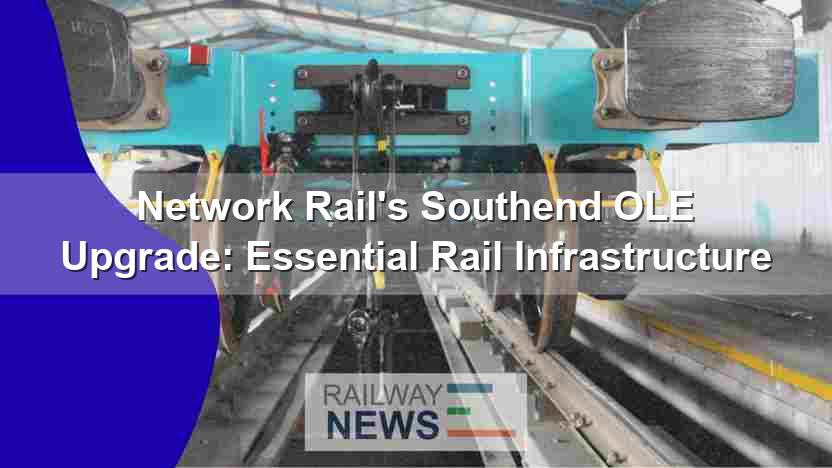
This article explores the significant upgrade project undertaken by Network Rail (NR) on the Southend Victoria branch line. The project, encompassing a substantial £46 million investment, focuses on the complete renewal of the overhead line equipment (OLE) – a critical component of the railway’s electrification system. The existing OLE, installed in the 1950s, has reached the end of its operational lifespan, necessitating replacement to enhance reliability, address thermal limitations, and alleviate persistent passenger delays. This upgrade is not merely a routine maintenance task; it’s a crucial element of Network Rail’s broader Railway Upgrade Plan, aiming to modernize the infrastructure to accommodate increased passenger demand and the introduction of new, more efficient rolling stock. We will explore the project’s phases, challenges, and the anticipated long-term benefits for passengers and the railway network as a whole. The analysis will also consider the impact of this significant undertaking on passenger service and the public’s perspective.
OLE Renewal: A Critical Infrastructure Upgrade
The core of the Southend Victoria line upgrade centers on the replacement of approximately 128 kilometers of aging overhead line equipment (OLE). This involves the installation of new wires, masts, and supporting structures. The initial phase, focusing on the Shenfield to Wickford section, has seen the successful installation of nearly 12 kilometers of new OLE. Network Rail’s “Team Orange,” responsible for the OLE installation, has already erected over 220 structures between Shenfield and Rayleigh. The subsequent sections, from Rayleigh to Southend, have also seen significant progress, with a large number of structures already in place. The remaining structures are scheduled for replacement within the following year. This phased approach minimizes disruption, allowing for controlled implementation and timely completion.
Addressing Reliability and Future Demand
The primary driver for this substantial investment is to dramatically improve the reliability of the Southend Victoria line. The aging OLE was a major contributor to service disruptions and delays. The new system, designed with modern materials and technology, promises significantly enhanced operational resilience and reduced maintenance needs. Further, the upgrade is essential to accommodate the increased passenger demand anticipated in the coming years. The introduction of new, modern trains, planned for 2020, necessitates a robust and compatible infrastructure, capable of supporting these trains’ operational requirements and ensuring safe, efficient operation. The modernization project directly addresses this future need.
Managing Disruption and Public Perception
Large-scale infrastructure projects inevitably cause disruption to passenger services. The Southend Victoria line upgrade is no exception. The ongoing work has resulted in frequent service alterations and cancellations, leading to understandable frustration amongst passengers. Network Rail and Greater Anglia (GA) (the train operating company) have acknowledged the inconvenience and have communicated proactively to keep passengers informed. The communication strategy includes detailed service updates, alternative travel options, and explanations justifying the necessary disruption in the context of long-term benefits. Public engagement is key to mitigating negative perceptions and maintaining passenger confidence in the project’s ultimate outcome.
Conclusion: Transformation of the Southend Victoria Line
Network Rail’s upgrade of the Southend Victoria branch line represents a substantial investment in the future of rail travel in East Anglia. The complete renewal of the 128km overhead line system, a project costing £46 million, is not merely a maintenance exercise but a crucial step towards modernizing the railway infrastructure. The project aims to significantly improve the reliability of the line, mitigating delays and disruptions that have plagued passengers for years. This enhanced reliability is further complemented by the introduction of new, modern trains, which will benefit from the upgraded OLE. The phased approach, while causing temporary inconvenience, allows for controlled implementation, minimizing the overall disruption to services. While the project has understandably generated some public concern due to the unavoidable service disruptions, the long-term benefits—increased reliability, improved capacity, and a more sustainable railway—significantly outweigh the short-term challenges. The successful completion of this project will mark a significant transformation of the Southend Victoria line, resulting in a more efficient, reliable, and passenger-friendly railway service for years to come. The open communication between Network Rail, Greater Anglia, and the public is vital for maintaining trust and ensuring the project’s success. Ultimately, this detailed upgrade exemplifies a commitment to delivering a modern, high-performing railway network that meets the needs of passengers and the future demands of rail travel.

Railway infrastructure, rolling stock and transport technologies specialist focused on global rail industry developments, high-speed rail systems, signaling technologies and freight transportation. Covering railway investments, public transport modernization, rail operations and international mobility projects across Europe, Asia and North America.
RELATED POSTS

October 8, 2026 1:15 pm
Alstom secured a €1bn contract to build 13 automated trains,...

October 1, 2026 7:09 am
United States regulators confirmed a September 30 deadline for the...

October 8, 2026 12:18 pm
Siemens Mobility signed an agreement with VinSpeed to supply 350...

October 4, 2026 5:14 pm
Alstom secured a CA$4.7 billion order from VIA Rail Canada...

October 5, 2026 6:12 pm
AECOM and Jacobs secured a contract in September 2026 to...

October 1, 2026 12:13 am
Illinois approved $1.5 billion annually for the Northern Illinois Transit...