
Network Rail’s Felixstowe Upgrade: Safety & Freight Capacity
Network Rail’s Felixstowe branch line upgrade: £60.4 million invested in safety, boosting freight capacity, and slashing road congestion. Discover how!
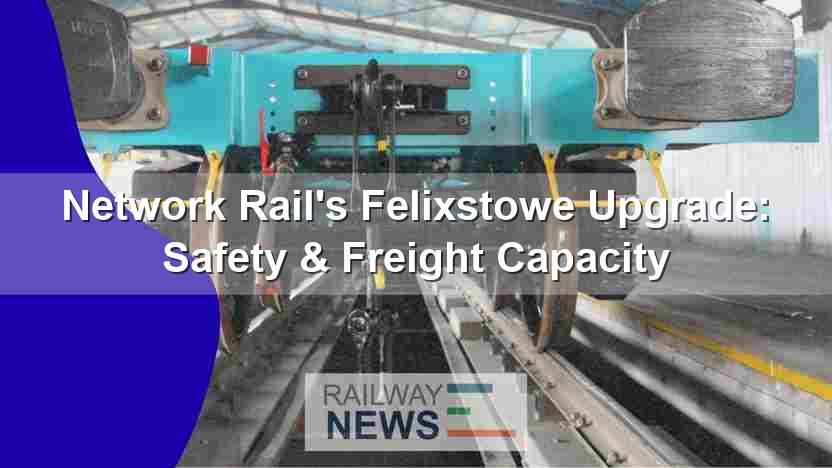
This article examines the significant infrastructure project undertaken by Network Rail (NR) on the Felixstowe branch line, focusing on the construction of a new bridleway bridge and its multifaceted impact on safety, freight capacity, and passenger services. The project, involving a substantial £60.4 million investment, represents a key element in NR’s Railway Upgrade Plan, aiming to modernize and enhance the UK’s rail network. We will explore the rationale behind the project, the engineering challenges involved, the safety improvements implemented, and the broader economic and environmental benefits achieved. This analysis will highlight the complex interplay between infrastructure development, public safety, and the efficient movement of goods, illustrating the crucial role of strategic investment in maintaining a modern and effective rail system.
Bridleway Bridge Construction and Level Crossing Closure
The centerpiece of the project is the construction of a new bridleway bridge replacing the existing Gun Lane level crossing. This seemingly localized improvement has far-reaching consequences. The new bridge provides a safe and dedicated crossing point for pedestrians, cyclists, and horse riders, eliminating the inherent risks associated with level crossings. The elimination of six pedestrian level crossings, including the Gun Lane crossing, significantly enhances public safety by removing points of potential conflict between rail traffic and pedestrians. This exemplifies NR’s commitment to prioritizing safety and reducing the risk of accidents at these vulnerable points on the railway network. The engineering challenges involved likely included detailed site surveys, careful planning of the bridge’s design and construction to minimize disruption to rail services, and coordination with local authorities and landowners.
Increased Freight Capacity and Track Upgrades
Beyond safety improvements, the project aimed to significantly enhance the capacity of the Felixstowe branch line to handle increased freight traffic. The construction included installing 1.4 km of extra track between Trimley and Gun Lane. This expansion allows for an increase in the number of freight trains operating on the line, potentially handling up to ten additional trains in each direction. This improved capacity is crucial for the Port of Felixstowe, a major UK port, facilitating the efficient movement of goods by rail, thereby reducing reliance on road transport. The resulting decrease in road traffic contributes to reduced congestion and pollution, benefiting both the local community and the wider region. Each freight train removes up to 76 lorries from the roads, highlighting the significant environmental impact of this project.
Road Level Crossing Upgrades and Safety Enhancements
The project’s scope extended beyond the bridleway bridge and track upgrades. Four road level crossings between Trimley and Westerfield also underwent upgrades to maintain public safety while accommodating the increased rail traffic. These upgrades, though not as central to the project as the bridleway bridge, are crucial for ensuring the overall safety and reliability of the Felixstowe branch line. The nature of these upgrades could include improved safety barriers, signaling systems, and possibly modifications to the crossing design itself. This attention to detail in upgrading all crossings demonstrates a holistic approach to safety improvements across the entire branch line.
Economic and Environmental Impact and Conclusion
The Felixstowe branch line upgrade is a prime example of how strategic investment in railway infrastructure can deliver substantial benefits across various sectors. The project’s success is not solely measured by the construction of a bridge and increased rail capacity but by its positive impact on public safety, freight efficiency, and environmental sustainability. The reduced road traffic leads to decreased congestion and air pollution, improving the quality of life for the local community and promoting a greener transportation system. The economic benefits extend beyond the immediate construction phase, impacting the broader region through increased trade facilitated by the improved rail capacity at the Port of Felixstowe. To summarize, Network Rail’s investment in the Felixstowe branch line upgrade demonstrates a forward-thinking approach to railway infrastructure development, effectively balancing safety, efficiency, and environmental considerations. The project serves as a valuable case study demonstrating how well-planned infrastructure improvements can have significant positive impacts on multiple facets of society and the environment. The long-term benefits of increased safety, freight capacity, and reduced road congestion far outweigh the initial investment costs, highlighting the importance of continued investment in the UK’s railway network to ensure its continued viability and efficiency for future generations.

Railway infrastructure, rolling stock and transport technologies specialist focused on global rail industry developments, high-speed rail systems, signaling technologies and freight transportation. Covering railway investments, public transport modernization, rail operations and international mobility projects across Europe, Asia and North America.
RELATED POSTS
September 6, 2026 5:19 am
Hitachi delivered Taiwan's first N700ST high-speed train from Japan in...

September 5, 2026 4:19 pm
CPK launched formal tender talks with four consortia to design...

September 6, 2026 4:12 am
Alstom delivered the first of 100 new G Class trams...

September 5, 2026 7:14 pm
HS2 Ltd signed renegotiated civils contracts with EKFB and Align...
September 6, 2026 6:17 am
Hungary ordered a national ban on most freight trains from...
September 6, 2026 1:17 am
Hitachi Toshiba Supreme Consortium confirmed the first of 12 N700ST...