
Network Rail Goes Green: Solar Power for British Railways
Network Rail powers a greener future! Our new solar farm deal with EDF Renewables will provide stable, renewable energy, reducing our carbon footprint.
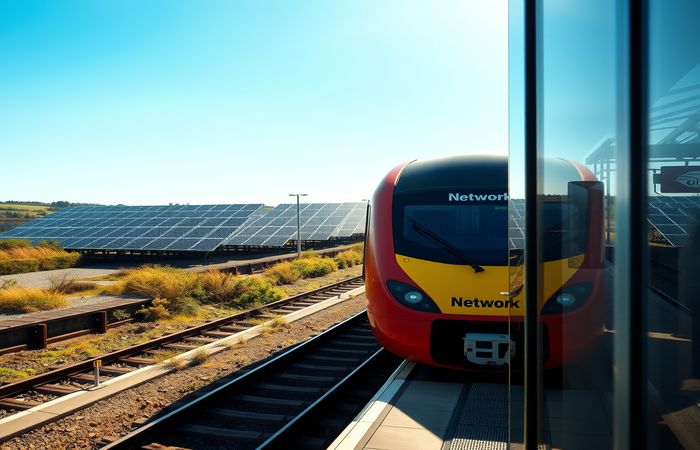
United Kingdom, October 26, 2023 – In a landmark move for the British railway industry, Network Rail has announced a pioneering agreement with EDF Renewables. This collaboration will see the railway infrastructure operator sourcing a significant portion of its electricity from a new solar farm. This initiative represents a critical step towards decarbonizing the railway and aligns with the UK’s broader commitment to sustainable energy practices. This article will delve into the specifics of this Corporate Power Purchase Agreement (CPPA), examining its implications for Network Rail, the environmental benefits, and the broader context of sustainability within the railway sector. We will explore the financial and operational aspects of the deal, as well as the long-term goals and strategies underpinning Network Rail’s commitment to a greener future. The agreement not only promises environmental benefits but also aims to enhance economic growth and job creation within the sector.
A Solar-Powered Future for British Railways
Network Rail’s commitment to sustainable practices has taken a significant leap forward with the signing of a 14-year CPPA with EDF Renewables. This agreement secures 64 GWh of electricity annually at a fixed cost, mitigating the risks associated with fluctuating energy prices. This fixed-cost arrangement provides financial stability for Network Rail and allows for more accurate long-term budgeting. The electricity will be generated from a new solar farm located at Bloy’s Grove, near Swainsthorpe in Norfolk. This strategically chosen location offers proximity to the Great Eastern Main Line, ensuring efficient power distribution to Network Rail’s operational facilities. The energy generated from this solar farm will supply approximately 15% of Network Rail’s non-traction energy needs. This includes the electricity required for offices, depots, and the 20 managed stations. This is a major step towards reducing the railway’s carbon footprint.
Environmental and Economic Impact of the Agreement
The environmental benefits of this agreement are substantial. The solar farm is projected to prevent approximately 60,000 tonnes of carbon dioxide emissions over its operational lifespan, which is equivalent to the environmental impact of planting 2.2 million trees. This significant reduction in carbon emissions aligns directly with the UK’s ambitious net-zero goals for 2050. Beyond the environmental benefits, the project also presents a positive economic impact. The construction of the solar facility will generate jobs in the renewable energy sector, contributing to local economic growth. Furthermore, EDF Renewables will establish an annual community fund of £20,000 over the 35-year lifespan of the project, supporting local initiatives and fostering a positive relationship with the surrounding communities.
Strategic Significance and Future Initiatives
This initiative forms a cornerstone of Network Rail’s Green Strategy, which outlines the company’s commitment to reducing its carbon footprint across all aspects of its operations. This CPPA marks a strategic shift towards sourcing all non-traction power from renewable sources. Network Rail is actively exploring additional agreements to further increase its reliance on solar energy. The company’s long-term vision is to create a modern transport network that prioritizes sustainability. This involves ongoing investment in renewable energy infrastructure and a commitment to working with industry partners to achieve these goals. This proactive approach is crucial for the railway industry to maintain its position as one of the most sustainable modes of transport.
Conclusion: Paving the Way for a Sustainable Railway
The agreement between Network Rail and EDF Renewables represents a significant milestone in the decarbonization of the UK railway system. This initiative not only provides a stable source of renewable energy at a fixed cost but also delivers substantial environmental and economic benefits. The solar farm, once operational, will supply a substantial portion of Network Rail’s non-traction energy needs, significantly reducing its carbon footprint. This initiative aligns with broader national goals to promote sustainable practices. The project underscores the crucial role that collaborative partnerships play in achieving a greener future. By investing in renewable energy infrastructure, Network Rail is setting a precedent for other organizations to embrace sustainable practices. The long-term vision is to integrate sustainability into every aspect of railway operations, ensuring the industry remains a leader in environmentally responsible transport. This agreement demonstrates a clear commitment to environmental stewardship, positioning Network Rail as a key player in the UK’s journey towards a net-zero future.
Company Summaries:
Network Rail: Network Rail is the owner and infrastructure manager of most of the railway network in Great Britain. It is responsible for the upkeep of tracks, signals, bridges, tunnels, level crossings, and stations. Network Rail operates a national railway system, ensuring the safe and efficient movement of passengers and freight.
EDF Renewables: EDF Renewables is a subsidiary of EDF (Électricité de France), a global leader in low-carbon energy production. It is focused on the development, construction, and operation of renewable energy projects, including solar, wind, and battery storage facilities. EDF Renewables is dedicated to contributing to the transition to a low-carbon future.
RELATED POSTS

June 6, 2023 2:15 pm
This article explores the significant €2.3 billion (CAD $3.5 billion)...
September 16, 2025 7:55 pm
Rail Baltica secures €1.77B contract for major Baltic electrification project,...
June 1, 2018 5:02 am
Delhi Metro's Magenta Line expansion: a game-changing 25.6km addition boosting...

September 24, 2025 9:55 am
SLC and Kirklees Council team up for Penistone Line upgrades,...

November 17, 2010 7:01 pm
Alstom has received two contracts with a combined value of...
September 16, 2025 1:55 am
President Trump nominates Richard Kloster and Michelle Schultz to the...