
Netherlands Rail at Risk: ProRail CEO Warns of Critical Investment Need
Dutch **railway** infrastructure faces crisis! ProRail warns of urgent need for increased **infrastructure investment** to avoid network deterioration. Billions needed for repairs.
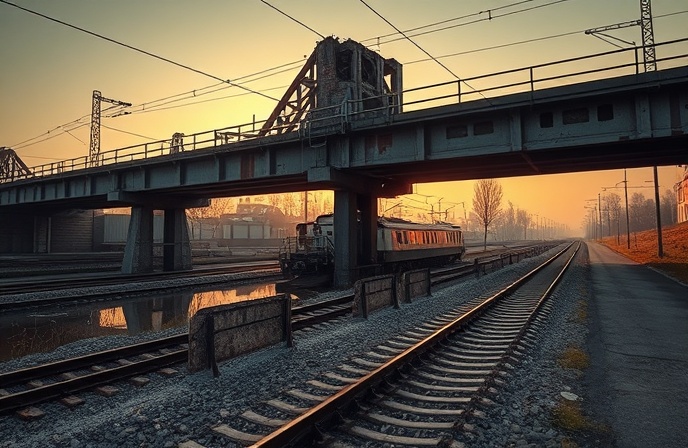
The Netherlands faces a critical infrastructure crisis, risking the loss of its robust transport network if investment doesn’t return to a minimum of 2% of GDP, warns ProRail CEO John Voppen. Years of underfunding have led to an alarming maintenance deficit, with estimates suggesting EUR 54.5 billion is urgently required to restore national rail, road, and waterway systems to a safe and functional state.
| Key Entity | Critical Detail |
|---|---|
| ProRail & Rijkswaterstaat | Urgent need for infrastructure investment; accumulated maintenance deficit. |
| Netherlands Transport Infrastructure | At risk of deterioration due to prolonged underfunding. |
| Required Investment | At least 2% of GDP annually; estimated EUR 54.5 billion total to reach safe levels. |
| Timeline Concern | Deterioration accelerating; future costs will be significantly higher if action is delayed. |
Deepening Deficit and Operational Strain
John Voppen, CEO of ProRail, has issued a stark warning regarding the future of Dutch transport infrastructure. Decades of reduced investment, now hovering around 1.2% of GDP, have significantly impacted the nation’s rail, road, and bridge networks. The accumulated maintenance deficit has ballooned to critical levels. The Netherlands Court of Audit estimates a staggering EUR 54.5 billion is needed to merely bring these vital networks back to a safe and functional standard. Of this, ProRail, responsible for the Dutch railway infrastructure, requires EUR 20 billion, while Rijkswaterstaat, managing roads and waterways, needs EUR 34.5 billion.
Both Voppen and Rijkswaterstaat director Martin Wijnen have highlighted a sharp decline in the quality of what was once considered one of Europe’s premier transport systems. Maintenance is increasingly characterized by minimal, “patchwork” interventions, failing to address underlying structural issues. This has tangible consequences: over 80 sections of the road network are currently under traffic restrictions due to safety concerns, and rail defects have surged by 21% since 2019. The economic ramifications are also becoming apparent, with critical logistics arteries, such as access to the port of Rotterdam, becoming increasingly vulnerable. Companies are beginning to factor these land-based infrastructure bottlenecks into their investment and relocation decisions.
Call for Strategic Investment and Modernization
ProRail is vehemently advocating for a return to the historical investment levels that propelled the Netherlands to the forefront of European infrastructure. An allocation of 2% of GDP is deemed essential to cover the immense investment needs and halt the accelerated deterioration of the transport networks. Voppen asserts that achieving this threshold would inject an additional EUR 2 billion annually, a sum crucial for stabilizing the current situation and ensuring the continuity of ongoing modernization projects.
Looking towards 2030, ProRail is embarking on an ambitious network transformation program. This initiative encompasses technological upgrades, capacity enhancements, and substantial investments in sustainability and operational efficiency. A cornerstone of this program is the implementation of the European ERTMS system, critical for enhancing safety and digitizing rail operations, with a projected cost of nearly EUR 4 billion. This includes equipping main lines with modern technology and upgrading the GSM-R network in preparation for the future FRMCS platform. Additionally, ProRail plans to modernize and expand approximately 30 major railway stations, a EUR 3.5 billion undertaking aimed at improving accessibility and accommodating an estimated 40% increase in passenger flow by 2030.
Additional objectives include strengthening infrastructure to manage rising traffic volumes and mitigate noise pollution in urban areas, requiring an estimated EUR 560 million. Essential maintenance is also a priority, given that a significant portion of the rail network is nearing or has surpassed its design lifespan. ProRail is thus focusing on predictive maintenance and leveraging digital technologies for continuous infrastructure monitoring to anticipate and optimize interventions. Ambitious sustainability targets are also in place, including climate neutrality for internal energy consumption, a 25% reduction in CO₂ emissions from the material chain, and the adoption of innovative solutions like sustainable sleepers and environmentally friendly materials, alongside projects to extend rail service life and promote material reuse.
Industry Context
Last June 2025, we published an article about Renfe’s cutting-edge Aranjuez maintenance hub. Click here to read – Future of Rail: Renfe’s Railway Technology Hub, Aranjuez: Essential Guide
The situation in the Netherlands underscores a broader challenge facing global railway operators and national governments: the critical link between infrastructure investment and economic competitiveness. For transport and logistics leaders, the deterioration of land-based infrastructure directly impacts supply chain efficiency, freight costs, and the attractiveness of a region for investment. ProRail’s warning serves as a clear signal that neglecting essential infrastructure renewal incurs escalating future costs and risks eroding a nation’s strategic advantage. CEOs must recognize that robust, reliable infrastructure is not merely a public service, but a fundamental enabler of economic growth and resilience in an increasingly interconnected global economy.

Railway infrastructure, rolling stock and transport technologies specialist focused on global rail industry developments, high-speed rail systems, signaling technologies and freight transportation. Covering railway investments, public transport modernization, rail operations and international mobility projects across Europe, Asia and North America.
RELATED POSTS
June 2, 2026 10:31 am
⚡ In Brief: The UK’s Office of Rail and Road...
June 2, 2026 8:44 am
⚡ In Brief: The UK Office of Rail and Road...
June 2, 2026 11:37 am
⚡ In Brief: The UK’s Office of Rail and Road...
June 1, 2026 9:19 pm
300 IBEW signal workers initiated a strike against Canadian Pacific...
June 1, 2026 4:18 pm
HS2 completed the 4,200-tonne Curzon 2 deck over Birmingham's Cross...
June 1, 2026 10:58 pm
MARTA completed 8 Atlanta station upgrades and new Breeze fare...