
National Rail Contactless Expansion Delayed for Greater Anglia
National Rail expands contactless payment across 30 stations, enhancing the passenger experience. However, Greater Anglia’s rollout is delayed due to technical challenges.
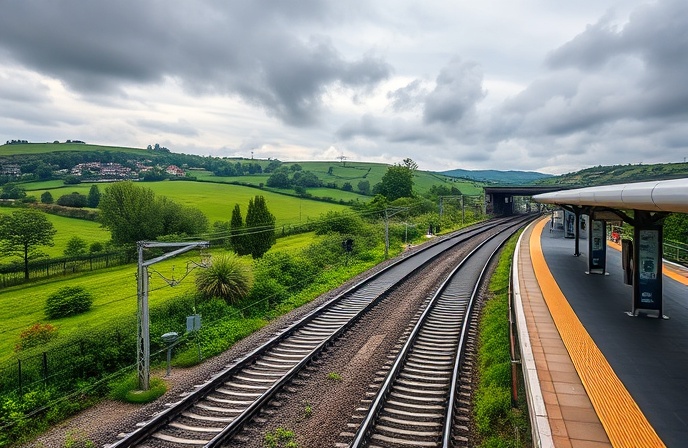
More than 30 National Rail stations in South-East England are set to enhance passenger convenience with the expansion of pay-as-you-go contactless technology from December 14, 2025. However, a significant rollout across 20 Greater Anglia locations, including major airport links, has been postponed until summer 2026 due to technical challenges in delivering accurate integrated fares.
| Key Entity | Critical Detail |
|---|---|
| Rail Operators | National Rail |
| Core Action | Expansion of Pay-As-You-Go (PAYG) contactless technology |
| Initial Rollout | 30 stations in South East England |
| Delayed Rollout | 20 Greater Anglia stations (including Stansted & Southend airports) |
| Date (Initial) | December 14, 2025 |
| Date (Delayed) | Summer 2026 |
| Reason for Delay | Technical issues with accurate integrated fares |
| Existing Network | 53 stations with 5.6 million journeys recorded since June 2024 |
Seamless Travel Expansion
From December 14, 2025, passengers at an additional 30 National Rail stations across South-East England will benefit from the expanded pay-as-you-go (PAYG) contactless system. This initiative aims to streamline the passenger experience by reducing reliance on ticket machines and offering a fluid connection to London’s extensive public transport network, including Tube, bus, and tram services. Travelers will be able to simply tap a bank card or mobile device upon entry and exit, with the system automatically applying the best available adult fare, including daily and weekly capping into and within London.
Technical Hurdles Delay Greater Anglia Rollout
The integration of PAYG technology for a further 20 stations, predominantly on the Greater Anglia network and serving vital transport hubs like Stansted and Southend airports, has been rescheduled to summer 2026. This delay stems from encountered technical complexities during rigorous testing. Specifically, the PAYG system experienced difficulties in accurately calculating integrated fares when used across multiple service types, necessitating further development work to ensure reliable operation from its launch.
Industry Commitment to Enhanced Fares
Jacqueline Starr, Executive Chair and CEO of Rail Delivery Group, highlighted the strategic importance of this expansion. “Expanding pay as you go technology to 30 stations is an important step towards making train travel easier and more convenient for customers,” Starr stated. “This move delivers greater simplicity, flexibility and choice for more people across the network. The rail industry remains committed to working closely with government to develop a simpler, better-value fares system that not only meets customer expectations but also enhances the overall travel experience.”
Martin Beable acknowledged the disappointment caused by the postponement for affected passengers. “We understand how frustrating it is when improvements like this are delayed, and I am very sorry for the disappointment this will cause some of our customers,” Beable commented. “It is essential, however, that contactless ticketing works reliably from day one. Our teams are working closely with our partners to complete this work as quickly as possible, and we remain committed to introducing contactless ticketing across these additional stations by summer 2026.”
Last June 2025, we published an article about Renfe’s railway maintenance hub. Click here to read – Future of Rail: Renfe’s Railway Technology Hub, Aranjuez: Essential Guide
Industry Context
This phased rollout of contactless payment technology represents a critical step in the broader modernization efforts within the UK rail sector. By expanding PAYG capabilities beyond the existing 53 stations, which have already facilitated 5.6 million journeys since June 2024, operators are paving the way for a more integrated and user-friendly ticketing landscape. This initiative aligns with strategic goals such as the introduction of single-leg pricing, flexible season tickets, and simplified fare structures, all aimed at enhancing customer appeal and operational efficiency. Additionally, the collaboration with local transport authorities in Greater Manchester and the West Midlands to extend PAYG across multiple modes signals a commitment to holistic, multimodal transport solutions, which are essential for sustainable urban development and for attracting passengers back to public transport in a competitive mobility market.

Railway infrastructure, rolling stock and transport technologies specialist focused on global rail industry developments, high-speed rail systems, signaling technologies and freight transportation. Covering railway investments, public transport modernization, rail operations and international mobility projects across Europe, Asia and North America.
RELATED POSTS

October 1, 2026 7:09 am
United States regulators confirmed a September 30 deadline for the...

October 1, 2026 12:13 am
Illinois approved $1.5 billion annually for the Northern Illinois Transit...

October 1, 2026 6:10 am
Amtrak approved a System Expansion Committee on July 30 to...
October 1, 2026 4:10 am
DART launched two public ridership dashboards in March 2026 to...

October 1, 2026 3:12 am
Greenbrier confirmed Brian Comstock as new president and CEO effective...

October 1, 2026 5:14 am
Siemens confirmed delivery of the first new S200 train to...