
Naples-Bari High-Speed Rail: Salini Impregilo’s Role
High-speed rail experts, Salini Impregilo’s Naples-Bari project showcases cutting-edge engineering on the Apice-Hirpinia section. Discover how this ambitious undertaking is reshaping Italian infrastructure!
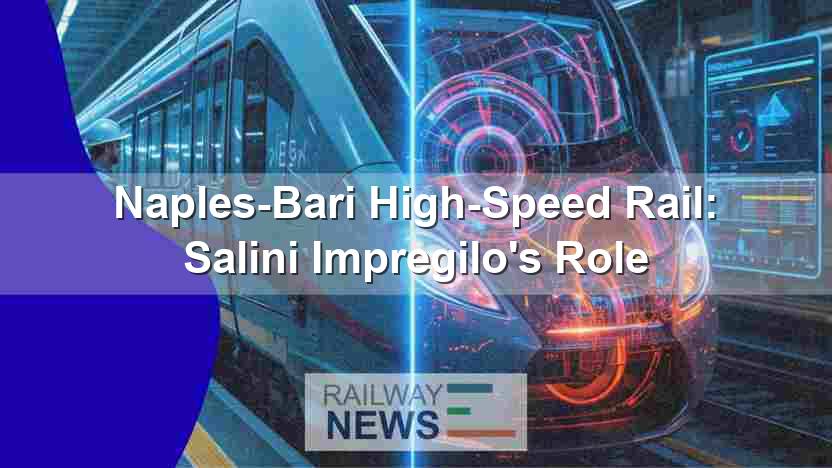
This article examines the significant contribution of Salini Impregilo to the development of Italy’s high-speed rail network, specifically focusing on their involvement in the Naples-Bari high-speed railway project. The project represents a crucial element in the expansion of Italy’s transportation infrastructure and its integration into the broader European rail network. We will delve into the specifics of Salini Impregilo’s contract for the Apice-Hirpinia section, exploring the scope of the work, the technological challenges involved in high-speed rail construction, and the wider economic and societal implications of this ambitious undertaking. The analysis will also consider the project’s position within the Italian government’s “Unlock Italy” initiative and its role in enhancing Italy’s connectivity within the Trans-European Transport Network (TEN-T).
The Apice-Hirpinia Section: A Key Component
Salini Impregilo, in consortium with Astaldi, secured a substantial €608.1 million ($683.4 million) contract to construct the 18.7km Apice-Hirpinia section of the Naples-Bari high-speed line. This section, located between the towns of Avellino and Benevento, is a critical link in the overall project. The contract encompasses significant civil engineering works, including the construction of a new station at Hirpinia, a stop at Apice, three tunnels, and four viaducts. The complexity of this undertaking highlights the specialized expertise required for high-speed rail construction, encompassing detailed geological surveys, precise tunnel boring, and the implementation of advanced track laying techniques to ensure optimal speed and safety.
Technological Challenges and Innovations
High-speed rail projects present unique engineering challenges. The construction of tunnels through varied geological formations requires sophisticated geotechnical investigation and specialized tunnel boring machines (TBMs). The design and construction of viaducts, which often span significant distances and challenging terrains, demand advanced structural engineering principles and materials. In the Apice-Hirpinia section, overcoming these challenges required the deployment of cutting-edge technologies and meticulous project management. This includes the use of advanced surveying techniques, precise construction methodologies, and stringent quality control measures to ensure compliance with the demanding safety and performance requirements of high-speed rail operations. Additionally, minimizing environmental impact during construction and operation was likely a key consideration in the design and execution phases.
Economic and Societal Impacts
The Naples-Bari high-speed railway is not merely a transportation project; it is a catalyst for socio-economic development in Southern Italy. Improved connectivity will stimulate regional economic growth by facilitating the movement of goods and people, enhancing trade, and attracting investment. The project is envisioned to reduce travel times, making the region more accessible and attractive for businesses and tourists. The creation of jobs during the construction phase and the subsequent boost to local economies represents a significant positive impact. This project aligns with broader European goals for improved interoperability and connectivity within the TEN-T network, contributing to the overall economic competitiveness of the region and the EU as a whole.
Integration into the Broader Italian and European Networks
The Naples-Bari high-speed line is a key component of the Trans-European Network (TEN-T), specifically the Scandinavia-Mediterranean corridor. This integration aims to improve interoperability and seamless travel across borders. The project complements other infrastructure investments under the Italian government’s “Unlock Italy” initiative, a detailed plan to modernize the country’s infrastructure. The completion of the line, as part of the broader FS Group’s (Ferrovie Dello Stato Italiane Group) €6.2 billion investment, will significantly enhance the efficiency and capacity of Italy’s rail network, connecting Southern Italy more effectively with the rest of the country and Europe. This integration showcases Italy’s commitment to modernizing its transportation system and aligning its infrastructure development with wider European transport policy objectives.
Conclusions
The Salini Impregilo contract for the Apice-Hirpinia section of the Naples-Bari high-speed railway represents a significant milestone in Italian infrastructure development. The project, demanding both technologically and economically, exemplifies the capabilities of Italian engineering firms in undertaking complex large-scale civil works. The successful execution of this section, characterized by its challenging terrain and the need for advanced engineering solutions, contributes to the overall goal of modernizing Italy’s rail network and integrating it seamlessly into the broader European TEN-T network. The project’s impact extends beyond the immediate construction activities. The improvements in connectivity will foster economic growth, enhance regional competitiveness, and improve the quality of life for residents in Southern Italy. The synergy between Salini Impregilo’s expertise, the Italian government’s “Unlock Italy” initiative, and the broader European transport objectives demonstrates a collaborative effort to achieve sustainable and impactful infrastructure development. The long-term benefits associated with reduced travel times, increased accessibility, and boosted economic activity will undoubtedly shape the future of Southern Italy’s transportation and economic landscape. The successful completion of this and other similar projects underscores the critical role that strategic investment in infrastructure plays in driving economic growth and promoting sustainable development. The Naples-Bari high-speed railway stands as a testament to the transformative power of ambitious infrastructure projects in shaping the future of a nation and contributing to the broader economic and social fabric of Europe.

Railway infrastructure, rolling stock and transport technologies specialist focused on global rail industry developments, high-speed rail systems, signaling technologies and freight transportation. Covering railway investments, public transport modernization, rail operations and international mobility projects across Europe, Asia and North America.
RELATED POSTS

October 1, 2026 12:13 am
Illinois approved $1.5 billion annually for the Northern Illinois Transit...
October 1, 2026 5:14 am
Siemens confirmed delivery of the first new S200 train to...
October 1, 2026 3:12 am
Greenbrier confirmed Brian Comstock as new president and CEO effective...
October 1, 2026 8:12 am
Knorr-Bremse expanded its UK rail adhesion trial on Chiltern Railways...
October 1, 2026 2:12 pm
Pittsburgh Regional Transit secured an $82.8 million FTA grant to...
October 2, 2026 12:12 am
Maywood Station Museum confirmed the completed cosmetic restoration of its...