
Moscow Rail: Ivolga 4.0 Modernizes Suburban Railway Network
New Ivolga 4.0 train boosts Moscow suburban rail, improving speed & comfort. RZD & CPPK launch modernizes Yaroslavl Line.
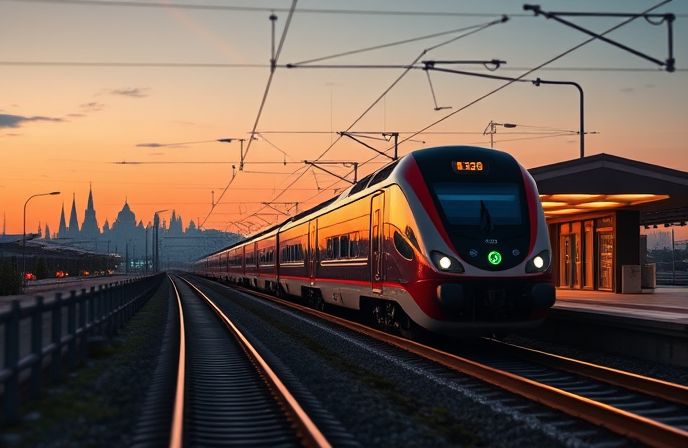
New Ivolga 4.0 Train Inaugurates Modern Era for Moscow Suburban Rail
Moscow, Russia – Russian Railways (RZD) and the Central Suburban Passenger Company (CPPK) marked a significant milestone in the modernization of the Moscow region’s suburban rail network with the launch of the first Ivolga 4.0 train on the Yaroslavl Line of the Moscow Railway on [Insert Date, if available from source material]. This event represents not just a technological advancement but a commitment to enhancing passenger experience and boosting domestic manufacturing. The new Ivolga 4.0, manufactured by Transmashholding, promises to revolutionize suburban transit by improving speed, comfort, and reliability. This article will explore the features of the new train, the infrastructure developments accompanying its introduction, and the broader implications for the Russian railway industry. The launch underscores a concerted effort to upgrade infrastructure, enhance passenger comfort, and foster growth within the domestic manufacturing sector, promising a more efficient and modern transit experience for Moscow’s commuters.
Rolling Stock Revolution: The Ivolga 4.0 Unveiled
The Ivolga 4.0 train represents a significant evolution in rolling stock design. The train boasts several advancements over its predecessors, including improved passenger comfort features and enhanced operational efficiency. While the source material does not give explicit details on the technical features of the train, it mentions its ability to provide comfort, speed, and reliability. Passenger experience will be enhanced. Transmashholding’s design philosophy appears to prioritize passenger experience and operational performance. This is critical in the Moscow suburban network, one of the busiest in the world.
Infrastructure Upgrades Pave the Way for Enhanced Service
The introduction of the Ivolga 4.0 is strategically linked to extensive infrastructure upgrades along the Yaroslavl Line. These improvements, a collaborative effort involving Moscow Metro and RZD, include the construction of additional main tracks and the creation of a major transport hub at Rostokino, with an interchange to the Moscow Central Circle (MCC). These initiatives aim to decrease train intervals by one-third, significantly increasing the line’s capacity and efficiency. The synchronized development of rolling stock and infrastructure is essential to delivering a seamless and modern passenger experience. The infrastructure upgrades will streamline operations and improve connectivity, making the Yaroslavl Line a more efficient and attractive transport option.
Domestic Manufacturing Drives Industry Growth
A key highlight of the Ivolga program is the high degree of production localization. Approximately 97% of the train’s components are sourced domestically from over 600 Russian enterprises. Moscow accounts for 75% of the orders for new metro and suburban train cars. This demonstrates a concerted effort to bolster domestic manufacturing capabilities within the railway sector. This localization not only supports local businesses and jobs but also enhances the nation’s self-sufficiency in railway technology, insulating the industry from potential supply chain disruptions. The investment in domestic production fuels growth across the broader Russian transport industry, creating a multiplier effect.
Future Expansion: The Yaroslavl Line Transformation
The ambitious plans for the Yaroslavl Line extend beyond the initial launch. RZD and CPPK aim to deploy 92 new Ivolga trains on the line by 2030, completely renewing the existing suburban train fleet. This large-scale programme promises significant improvements to the efficiency and quality of the suburban rail network. The long-term vision includes sustained improvements to infrastructure and service quality. The investment in new rolling stock, combined with ongoing infrastructure improvements, underscores a long-term commitment to enhancing the commuter experience and supporting sustainable transport solutions in the Moscow region.
Conclusion
The launch of the Ivolga 4.0 on the Yaroslavl Line represents a pivotal moment for Moscow’s suburban rail network and the broader Russian railway industry. The integration of advanced rolling stock, accompanied by significant infrastructure upgrades, signifies a forward-thinking approach to improving passenger experience and operational efficiency. The high degree of localization in the manufacturing process further strengthens the Russian economy and reduces dependence on foreign suppliers. The ambitious deployment plans for the Ivolga trains, coupled with ongoing infrastructure projects, will continue to shape the future of suburban transit in Moscow. The success of this project holds important implications for the future modernization of railway networks. Furthermore, the emphasis on domestically produced components underscores a commitment to building a resilient and self-sufficient railway industry, positioning Russia at the forefront of railway technology innovation.
Company Summary
Russian Railways (RZD): As one of the world’s largest railway companies, RZD is the primary operator of railway networks in Russia, responsible for passenger and freight transportation, as well as infrastructure maintenance and development. RZD plays a crucial role in connecting cities and regions across the vast Russian landscape and facilitating international trade routes. The company’s commitment to infrastructure upgrades and fleet modernization is essential to maintaining and improving the country’s transport network.
Central Suburban Passenger Company (CPPK): The Central Suburban Passenger Company is a subsidiary of Russian Railways and is the largest suburban passenger carrier in the Moscow region. CPPK is responsible for the operation of passenger services on suburban routes, overseeing a large network that connects Moscow with its surrounding areas. CPPK’s focus on passenger comfort and service quality is vital to the commuter experience.
RELATED POSTS

November 6, 2007 3:42 am
Brussels railway modernization is underway! The metro and tram...
June 5, 2013 11:18 pm
Škoda Transportation signed a contract with the Chinese company CSR...
February 27, 2026 2:07 pm
Tramwaje Warszawskie awarded a €3.4 million contract to Databout for...
April 25, 2010 2:55 am
Metrowagonmash and Zeleznicе Srbije (Serbian Railways) have signed in the...
July 7, 2022 9:09 pm
Toronto's Sheppard East Light Rail Transit (SELRT) project, a 14km...

December 5, 2025 8:01 pm
Network Rail achieves Britain's first hydrogen delivery by rail. This...