
Montreal Metro MPM-10 Project: Orange Line Railway Car Modernization
MPM‑10 Azur rubber‑tired metro trains (Bombardier‑Alstom consortium) debut on Orange Line Feb 2016. 468 cars / 52 nine‑car trains, open‑gangway design, 24% capacity boost over MR‑63 fleet.
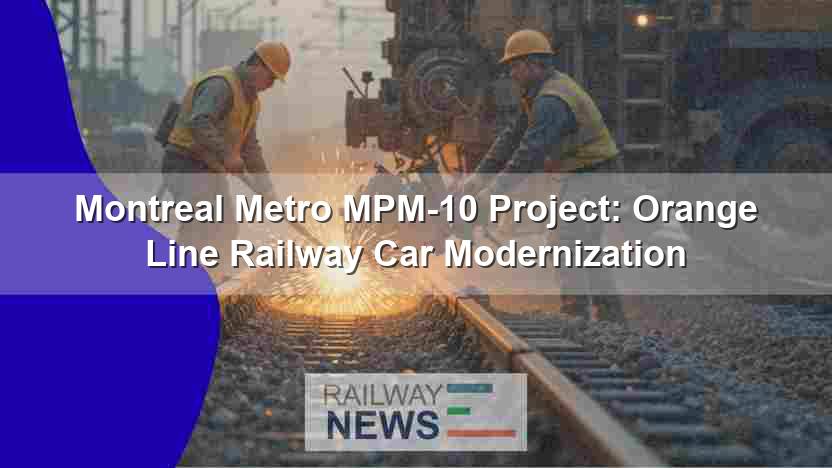
This article examines into the technological advancements and design considerations behind the MPM-10 metro cars implemented in Montreal’s Orange Line. The project, a significant undertaking by the Société de transport de Montréal (STM), aimed to modernize the city’s metro system, enhancing passenger comfort, safety, and overall operational efficiency. This involved a detailed review of existing rolling stock, a competitive bidding process, and a rigorous design and development phase incorporating extensive user feedback. The analysis will explore the technical specifications of the MPM-10 cars, highlighting their innovative features and comparing them to their predecessors. The discussion will also touch upon the challenges faced during the project’s lifecycle, from initial procurement to final implementation, providing insights into the complexities of large-scale railway infrastructure projects. The ultimate goal is to assess the success of the MPM-10 project in achieving its intended objectives and to identify key lessons learned that can be applied to future railway modernization endeavors.
Project Overview and Procurement
The Montreal Metro’s modernization efforts culminated in the procurement of 468 MPM-10 metro cars, a $1.2 billion project awarded to a Bombardier-Alstom consortium in October 2010 by the STM. This followed an initial contract awarded solely to Bombardier, which was later contested by Alstom, leading to a revised, competitive bidding process. The initial proposal for replacement of the aging MR-63 rolling stock began in 2006. The involvement of both Bombardier and Alstom brought together considerable expertise in rolling stock design and manufacturing, creating a robust partnership. The estimated manufacturing cost per car unit was approximately $2.64 million. The project’s timeline saw the initial operation of the MPM-10 cars commencing in 2014 on the Orange Line, with a new nine-car train added monthly.
Design and Development: A User-Centric Approach
The design process for the MPM-10 cars placed a strong emphasis on passenger experience. Labbé Designers et associés played a crucial role in the initial design, leveraging cognitive ergonomics and industrial design principles. STM actively participated using full-scale mockups to evaluate various aspects, including spatial layout, human-machine interfaces, material selection, and component accessibility. Extensive user testing, involving target groups comprising transit users, passengers with disabilities, and STM employees, informed critical design decisions regarding seating, standing areas, lighting, door systems, information displays, and emergency equipment placement. This iterative design process ensured the final product met the diverse needs of the riding public.
Technological Enhancements and Specifications
The MPM-10 cars represent a significant upgrade compared to the MR-63 rolling stock. Key improvements include a wider car body (27% increase), providing more space for passengers. The open-concept design allows for free movement throughout the nine-car train sets, facilitated by a wide inter-circulation module (minimum 1300mm opening) ensuring passenger safety. Each car features three double sliding doors with obstruction sensors and audio-visual signals. The cars incorporate energy-efficient propulsion systems with regenerative braking, reducing reliance on mechanical brakes and improving energy consumption. Air suspension and the unique STM-manufactured wooden brake shoes (adapted MP05 bogie system) contribute to a smoother, quieter ride. The MPM-10’s technical specifications are summarized in the table below:
| Specification | Value |
|---|---|
| Project Cost | $1.2 Billion USD |
| Number of Cars | 468 |
| Cost per Car | $2.64 Million USD |
| Line of Operation | Montreal Metro Orange Line |
| Train Set Length | 152.43m |
| Car Width | 2.51m |
| Door Width x Height | 1.65m x 1.95m |
| Maximum Speed | 72.4 kmph |
| Traction Power | 750V DC |
Conclusion
The MPM-10 metro car project stands as a notable example of successful railway modernization. The STM’s commitment to a user-centric design process, combined with the technological expertise of the Bombardier-Alstom consortium, resulted in a significant improvement in passenger comfort and operational efficiency. The integration of innovative features such as regenerative braking, air suspension, and advanced passenger information systems demonstrates a forward-thinking approach to railway technology. The meticulous attention to detail, from the ergonomic design of the passenger compartment to the selection of materials and components, reflects a high level of commitment to quality. The project’s success can be attributed to several factors: a well-defined procurement process (despite initial challenges), the collaborative efforts of the involved parties, and the prioritization of passenger needs throughout the design and development phases. The extensive use of full-scale mockups and user feedback loops allowed for early identification and mitigation of potential design flaws, leading to a more refined and effective final product. The project’s successful implementation provides valuable insights for future large-scale railway modernization endeavors, emphasizing the importance of collaboration, user-centered design, and the integration of advanced technologies to enhance the overall passenger experience and operational efficiency.
The lessons learned from the MPM-10 project underscore the criticality of thorough planning, robust procurement strategies, and active stakeholder engagement throughout the project lifecycle. Future projects can benefit significantly from adopting a similarly detailed and user-focused approach. The successful integration of advanced technologies demonstrates the potential for significant improvements in passenger comfort, safety, and environmental sustainability. This project serves as a model for future railway upgrades worldwide.
Company Information:
Bombardier Transportation: A leading global manufacturer of rail transportation equipment.
Alstom: A global leader in the design, manufacture, and maintenance of railway systems.
Société de transport de Montréal (STM): The public transit authority responsible for operating the Montreal Metro.
Labbé Designers et associés: A design firm specializing in industrial design and ergonomics.

Transport and railway industry editor covering global rail infrastructure, sustainable mobility, urban transit systems and next-generation railway technologies with a focus on accessible and industry-focused reporting.
RELATED POSTS

October 4, 2026 5:14 pm
Alstom secured a CA$4.7 billion order from VIA Rail Canada...
October 7, 2026 5:15 pm
Canada confirmed a $113 billion rail cost for the Quebec...
October 9, 2026 3:11 pm
Wabtec secured a $700 million service deal in Guinea to...
October 1, 2026 3:12 am
Greenbrier confirmed Brian Comstock as new president and CEO effective...
October 1, 2026 8:12 am
Knorr-Bremse expanded its UK rail adhesion trial on Chiltern Railways...
October 9, 2026 6:15 am
Transflo launched a 40 railcar transload terminal in Petersburg, Virginia,...