
Montenegro Rail Upgrade: EIB & TEN-T’s Sustainable Rail Vision
EIB funds Montenegro’s Bar-Golubovci rail line reconstruction, crucial for EU transport network.
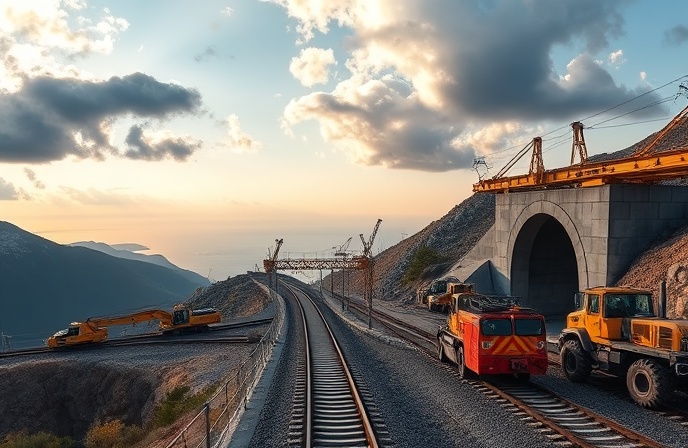
Montenegro’s Rail Renaissance: EIB to Finance Reconstruction of Strategic Bar – Golubovci Line
The European Investment Bank (EIB) is poised to significantly upgrade Montenegro’s rail infrastructure with a proposed EUR 168 million loan towards the reconstruction of the Bar – Golubovci rail section. This project, a key component of Rail Route 4 (SEETO Route 4), a vital link within the Trans-European Transport Network (TEN-T) Core Network, aims to modernize a critical segment of Montenegro’s railway network. The project will be executed by Željeznička infrastruktura Crne Gore (ŽICG), the Railway Infrastructure of Montenegro. This marks a decisive step towards improving rail connectivity, facilitating economic growth, and bolstering the country’s integration with the broader European railway system. The project, with a total eligible cost of EUR 231 million, is slated for completion by December 2029 and is expected to generate time savings, enhance safety, and yield environmental benefits. This article explores the scope of the project, its anticipated impact, and the broader context of European investment in Montenegrin railway infrastructure.
Project Scope and Technical Specifications
The Bar – Golubovci rail project, spearheaded by ŽICG, encompasses the comprehensive reconstruction of a 38.6 km electrified, single-track, standard-gauge railway line. The scope extends beyond the main track, encompassing 17 km of station tracks and 6 km of shunting tracks. The line features five railway stations, four train stops, seven level crossings, ten bridges, and four railway tunnels. Upon completion, the modernized line will allow for train speeds up to 120 km/h, except in urban areas and the section passing through Skadar Lake National Park, where speed restrictions will be maintained. This modernization includes upgrades to electrification, signaling, and telecommunication systems, ensuring improved availability and reliability. The existing route, which opened to traffic in 1976, has not undergone significant upgrades to its signalling systems, bridges, or tunnels. The planned works represent a long-overdue overhaul of the rail infrastructure. The project will bring 39.6 km of railway line up to TEN-T standards.
Strategic Significance of Rail Route 4 and TEN-T Integration
The Bar – Golubovci line is an integral part of the larger Bar – Vrbnica railway, Montenegro’s most significant rail corridor, linking the Port of Bar with Podgorica and the Serbian border. This crucial artery is part of the indicative extension of the TEN-T Core Network to the Western Balkans and lies along the indicative Extended Orient/East-Med TEN-T core corridor, also known as SEETO Route 4, as identified by the South East Europe Transport Observatory. The Orient/East-Med Rail Corridor extension into the Western Balkans, running along Route 4, spans 580 km. The Bar – Vrbnica line carries approximately 20% of all passengers and 60% of all cargo in Montenegro, highlighting its vital role in the country’s transport sector. The focus on Route 4 reflects the European Union’s (EU) strategic vision for enhancing connectivity and promoting economic development within the Western Balkans.
Financing and European Union Support
The project benefits from significant financial backing from the European Union, EIB, and other institutions. The EU has provided EUR 3 million in technical assistance via the Western Balkans Investment Framework (WBIF), focusing on Flagship 2 – Connecting North to South, part of the Economic and Investment Plan for the Western Balkans (EIP), adopted in October 2020. Further support includes EUR 70 million in grants for the rehabilitation of the Bar – Vrbnica R4 rail interconnection, complementing loans of EUR 140 million from the EIB and KfW Development Bank (on behalf of the German Federal Government). The total financing secured for the Bar – Vrbnica rail section amounts to EUR 405.6 million, comprising EUR 188.2 million in grants and EUR 212.3 million in loans. This comprehensive financial package underscores the EU’s commitment to modernizing Montenegro’s rail infrastructure.
Expected Benefits and Future Outlook
The modernization of the Bar – Golubovci line is poised to yield substantial benefits, including reduced travel times, lower vehicle operating costs, enhanced transport safety, and environmental gains through decreased greenhouse gas emissions and pollution. This project is anticipated to facilitate the growth of rail traffic across Montenegro, the Western Balkans, and the wider European railway network. The EU’s support for projects in transport, energy, and the green and digital transition, under the IPA III (2021–2027) framework with up to EUR 9 billion in funding, highlights the focus on fostering sustainable growth and employment across the region. The ongoing revitalization of the Montenegrin rail network reflects a broader trend of strategic investment in critical transport infrastructure across Europe. The success of the Bar – Golubovci project will likely pave the way for further rail modernization efforts and will strengthen Montenegro’s position as a key transport hub in the region.
Conclusion
The reconstruction of the Bar – Golubovci rail section represents a pivotal investment in Montenegro’s future, promising significant improvements to its transportation infrastructure and alignment with European standards. The project’s focus on speed improvements, safety enhancements, and environmental considerations reflects a modern vision for railway development. This initiative is more than just a rail project; it is a strategic move to integrate Montenegro more closely with the European transportation network, fostering economic growth and sustainability. The involvement of the EIB, alongside the EU and other financial institutions, underscores a collaborative effort to bolster the Western Balkans’ infrastructure and bolster regional connectivity. The completion of this project by 2029 is expected to trigger a new chapter in Montenegrin rail transport, leading to higher operational efficiency and a marked boost in the role of rail in passenger and freight transport. The ongoing commitment to upgrading the entire Bar – Vrbnica line is a signal of a sustained program of infrastructure investment that will bring far reaching benefits to the country.
RELATED POSTS

August 22, 2020 6:00 pm
Etihad Rail’s Expansion: A Comprehensive Analysis of its Increased Freight...
June 9, 2025 7:11 am
Akiem orders 50 Siemens Vectron locomotives, boosting European rail freight....

June 17, 2025 8:01 pm
4Tel to modernize train control on Tarcoola-Kalgoorlie line with TMACS...
October 2, 2021 10:20 am
This article explores the significant expansion of the Belle Fourche...
July 30, 2017 11:26 pm
Here's a voiceover-friendly excerpt for railway professionals:"From steam to sleek...
April 28, 2018 6:33 am
Global railway projects are booming! From cutting-edge signaling to...