
Modernizing Rail: Essential Trends & Future for Sweden
Modernize your railway infrastructure for enhanced efficiency. From advanced tracks to cutting-edge signaling, discover the secrets to a smarter, more sustainable railway.

Modernizing Railway Infrastructure: A Deep Dive
The evolution of railway infrastructure is a continuous process, driven by advancements in technology, increasing demands for efficiency, and the need for sustainable solutions. This article delves into the critical aspects of modernizing railway systems, exploring the challenges, innovations, and future trends shaping the industry. We will examine the various components involved, from track construction and signaling systems to rolling stock and operational strategies. The goal is to provide a comprehensive overview of the key considerations for railway modernization projects, highlighting the importance of strategic planning, technological integration, and a commitment to safety and environmental responsibility. Understanding these elements is crucial for stakeholders involved in the planning, development, and operation of modern railway networks. The focus will be on providing a detailed examination of railway infrastructure, examining the complexities and outlining how to efficiently modernize these systems.
Enhancing Track and Infrastructure
One of the primary areas for modernization lies in upgrading the physical infrastructure. This encompasses everything from the track itself to the supporting elements like ballast, sleepers, and subgrade. Traditional methods of track construction often involve labor-intensive processes and require frequent maintenance. Modernization efforts are focused on introducing more durable and efficient materials and techniques. This includes the use of continuously welded rails (CWR), which reduce the number of joints and associated maintenance requirements, thus improving ride quality. The implementation of high-strength concrete sleepers, often made from pre-stressed concrete, significantly extends the lifespan of the track compared to traditional wooden sleepers. The use of advanced ballast materials, like those designed for improved drainage and load distribution, is another critical step in track modernization.
You might be interested in: “`html
Last October 2018, we published an article about composite railway sleepers. Click here to read – Australia’s Rail Revolution: Composite Sleeper Advancements
“`
This also involves incorporating track monitoring systems that utilize sensors to detect any issues, such as rail defects or misalignment, before they become major problems. These advancements not only improve the reliability of the railway system but also reduce the overall life-cycle costs through lower maintenance needs.
Signaling and Control Systems: The Brains of the Operation
The efficiency and safety of a modern railway network heavily depend on advanced signaling and control systems. These systems manage train movements, ensuring safe separation and optimizing the utilization of track capacity. Traditional signaling systems rely on fixed blocks and track circuits, which can limit the capacity of the railway. Modernization involves the adoption of more sophisticated technologies, such as:
- Automatic Train Protection (ATP): This system automatically controls the speed of trains to prevent over-speeding and collisions.
- Automatic Train Operation (ATO): ATO systems automate train operations, including acceleration, deceleration, and door opening/closing, optimizing train schedules and reducing energy consumption.
- Communications-Based Train Control (CBTC): CBTC systems use continuous, two-way communication between trains and a central control center to provide real-time information about train location and speed, allowing for more efficient train spacing and higher capacity.
These systems enhance safety, increase operational efficiency, and allow for better management of train schedules. The integration of these technologies requires significant investment in infrastructure upgrades, including the installation of signaling equipment, communication networks, and control centers.
Rolling Stock and Energy Efficiency
The rolling stock (locomotives, carriages, etc.) plays a crucial role in a railway’s efficiency. Modernization efforts focus on improving the performance, reliability, and energy efficiency of trains. Key strategies include:
- Using Lightweight Materials: The use of materials like aluminum and composites in train construction reduces weight, leading to lower energy consumption and improved acceleration/deceleration performance.
- Implementing Advanced Propulsion Systems: Electric multiple units (EMUs) and diesel-electric locomotives with improved fuel efficiency and reduced emissions are increasingly being adopted. Hybrid and battery-powered trains are also gaining traction.
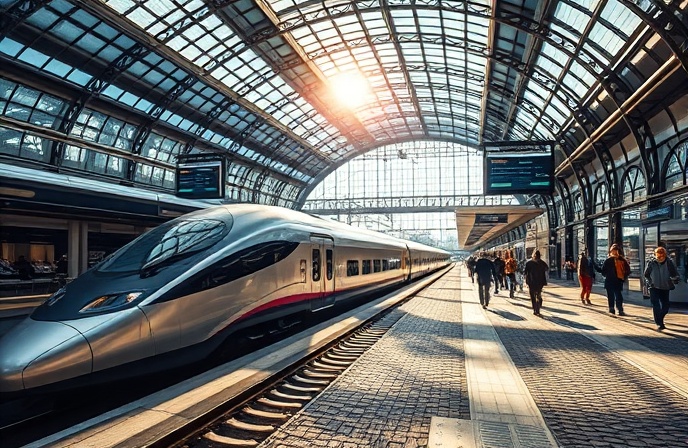
- Improving Aerodynamics: Streamlining train designs reduces air resistance, further improving energy efficiency and reducing noise pollution.
These innovations are part of the general shift towards more environmentally friendly and sustainable transportation solutions. The aim is to reduce the carbon footprint of the railway and offer a more attractive and competitive transportation option.
Operational Strategies and Future Trends
Beyond hardware upgrades, modernizing railway infrastructure also includes improving operational strategies. This involves optimizing train schedules, improving maintenance practices, and leveraging data analytics to enhance decision-making. Predictive maintenance, for example, uses data from sensors and monitoring systems to anticipate equipment failures and schedule maintenance proactively. Implementing automated systems for track inspection and maintenance can significantly reduce downtime. The development of smart railway systems that use data analytics to improve the efficiency and safety of operations is a significant future trend. The integration of Artificial Intelligence (AI) and Machine Learning (ML) to optimize train movements, predict maintenance needs, and manage resources more effectively will become increasingly common. The shift toward high-speed rail and the exploration of innovative technologies like maglev (magnetic levitation) trains are also key components of future railway development.
With respect to Railway construction Sweden, the adoption of advanced technologies and sustainable practices is crucial for the future of railway infrastructure.
Conclusion: Building a Smarter, More Sustainable Railway
In conclusion, modernizing railway infrastructure is a complex undertaking that requires a holistic approach. It involves strategic investment in track and infrastructure upgrades, advanced signaling and control systems, energy-efficient rolling stock, and optimized operational strategies. The benefits are numerous, including increased capacity, improved safety, reduced environmental impact, and enhanced operational efficiency. Furthermore, adopting modern maintenance strategies, and leveraging data analytics are integral parts of this evolution. The continuous development and integration of new technologies are critical to the future of railways. By embracing these advancements, the railway industry can become a more attractive, efficient, and sustainable mode of transportation, contributing to the broader goals of economic development and environmental responsibility. This requires collaboration among governments, railway operators, technology providers, and other stakeholders to ensure successful implementation and sustainable long-term operation. The commitment to innovation, the adoption of best practices, and a focus on long-term sustainability will determine the future of railway networks globally.
RELATED POSTS
April 4, 2017 10:25 pm
Here's a voiceover excerpt tailored for railway professionals:"Siemens Mobility is...
November 20, 2006 11:55 pm
Helsinki's metro expands to Espoo, adding 7 new stations and...
April 4, 2022 5:57 am
Enhancing Railway Safety in India: The Kavach Automatic Train Protection...
August 1, 2021 2:59 am
The ongoing modernization of the United Kingdom’s rail network is...
October 23, 2025 8:54 am
Complex **rail booking** systems deter passengers, a survey reveals. Simplification...
August 5, 2019 9:40 am
This article examines the complex political and economic landscape surrounding...