
MML Electrification Pause: UK Rail Industry’s Decarbonisation Concerns
Railway leaders urge government to resume Midland Main Line electrification, fearing economic fallout and job losses.
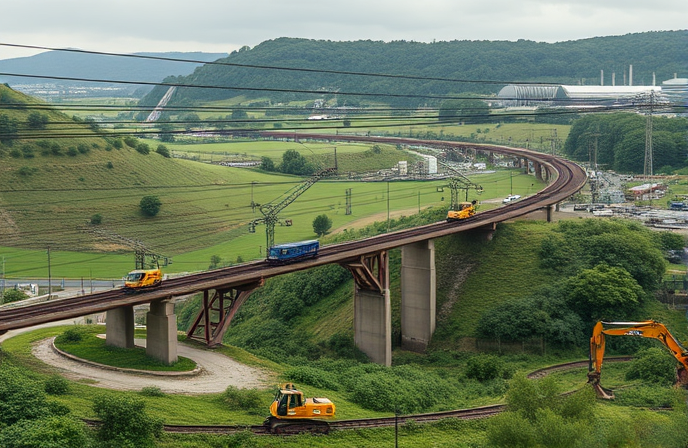
Industry Leaders Urge Government to Reconsider Midland Main Line Electrification Pause
In a move that has sent ripples of concern through the railway sector, The Rail Forum (RF) and the Railway Industry Association (RIA) have jointly written to Rail Minister Lord Hendy of Richmond Hill CBE, expressing their strong disapproval of the Government’s decision to “pause” the Midland Main Line (MML) electrification upgrade. This development, announced last week, has triggered alarm bells across the industry, as stakeholders fear the potential financial repercussions, the risk of stalled regional economic growth, and the loss of skilled jobs. The letter, dated July 14, 2025, highlights the potential for significant costs to taxpayers and a detrimental impact on achieving the government’s decarbonisation goals. This article explores the concerns raised by the RF and RIA, examining the potential consequences of the pause and exploring the industry’s call for a swift resolution.
Financial and Economic Impact of the Pause
The core of the RF and RIA’s argument lies in the projected financial and economic implications of the MML electrification pause. The joint letter underscores the potential for the Government’s decision to cost taxpayers between £50 million and £70 million due to potential demobilisation and remobilisation expenses. Beyond the direct financial burden, the pause risks jeopardizing almost £400 million in economic benefits and the creation of approximately 5,000 jobs. The pause also calls into question the future of the electrification scheme itself. By delaying the project, the government risks sending a negative signal to the supply chain, particularly businesses reliant on electrification projects for their future. This is especially concerning for the highly skilled workforce, with the potential for further job losses and a reduction in the industry’s overall capacity.
Supply Chain Concerns and Industry Sentiment
Elaine Clark OBE, Chief Executive of the Rail Forum (RF), voiced the sector’s disappointment, highlighting the immediate impact on supply chain businesses. “We risk losing further highly skilled individuals and jobs from the sector, which will ultimately add to costs for future electrification projects,” she stated. The RF’s perspective reflects a broader sentiment of frustration within the industry. Railway suppliers, after years of investment and preparation, are now faced with uncertainty. This uncertainty, according to Darren Caplan, Chief Executive of the Railway Industry Association (RIA), threatens the “boom-and-bust” approach to rail electrification, which has hindered the industry’s progress in the past. The pause undermines regional economic growth in the Midlands, delays the realisation of benefits from the project and further complicates the supply chain, specifically for rolling stock.
A Call for a Decarbonisation Strategy
The RF and RIA argue that the decision to pause the MML electrification runs contrary to the government’s agenda of “bringing track and train together” through rail reform. The MML electrification project is perceived by the RF to be a “shovel ready project” which is in direct contrast to other projects that are unlikely to even get off the ground in the same timeframe. By halting the project, the Government’s focus on overall “whole system thinking” appears to be called into question. The letter, therefore, urges Rail Minister Lord Hendy to treat the pause as a short-term measure, calling for work to recommence within the next year. To support this aim, the RIA and RF also offer to convene a cross-industry group to develop a detailed decarbonisation strategy and resourcing plan that would outline the minimum electrification necessary to achieve Net Zero for both passengers and freight by 2050.
Conclusion
The joint letter from the RF and RIA serves as a clear call to action, highlighting the substantial risks associated with the Government’s decision to pause the MML electrification project. The industry bodies have rightly highlighted the potential for significant financial losses, the endangerment of regional economic growth, and the erosion of crucial skills within the sector. The pause not only undermines the government’s own decarbonisation targets but also creates uncertainty for the supply chain, potentially delaying the modernization of the rail network. The situation, if unresolved, could reverse progress. The RF and RIA’s offer to collaborate on a decarbonisation strategy is a crucial step toward securing the future of the rail industry in the UK. The industry is now awaiting the Minister’s response, with the hope that the pause is truly temporary and that work will recommence promptly to deliver the tangible benefits that were outlined.

Railway infrastructure, rolling stock and transport technologies specialist focused on global rail industry developments, high-speed rail systems, signaling technologies and freight transportation. Covering railway investments, public transport modernization, rail operations and international mobility projects across Europe, Asia and North America.
RELATED POSTS
June 2, 2026 8:44 am
⚡ In Brief: The UK Office of Rail and Road...
June 1, 2026 9:19 pm
300 IBEW signal workers initiated a strike against Canadian Pacific...
June 2, 2026 10:31 am
⚡ In Brief: The UK’s Office of Rail and Road...
June 2, 2026 11:37 am
⚡ In Brief: The UK’s Office of Rail and Road...
June 4, 2026 6:22 pm
Network Rail and HS2 demolishes two strategic rail bridges, Saltley...

June 4, 2026 11:05 am
California High-Speed Rail Authority awarded a $3.5 billion track and...