
Midlands Rail: Connecting Coventry, Leicester, Nottingham – Faster Rail
Midlands Rail: Direct Coventry-Leicester-Nottingham service planned, slashing journey times.
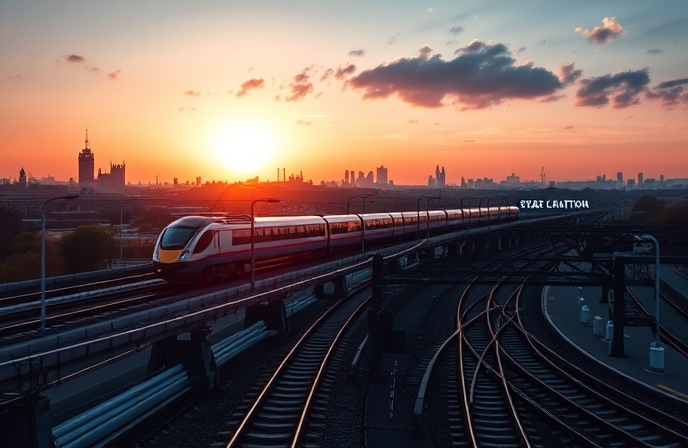
Midlands Rail Revival: Direct Services Set to Transform Connectivity between Coventry, Leicester, and Nottingham
In a move poised to revolutionize rail travel across the Midlands, plans are underway to reinstate direct rail services between Coventry, Leicester, and Nottingham for the first time in two decades. These proposals, spearheaded by Midlands Connect, aim to significantly reduce journey times, boost passenger numbers, and unlock substantial benefits for the rail freight sector. The initiative seeks to address the current underutilization of rail between Coventry and Leicester, where only 3% of journeys are made by train, hampered by indirect routes. This article explores the specifics of this ambitious project, detailing its potential impact on passenger experience, freight capacity, and regional economic growth. The key players are Midlands Connect, the Department for Transport (DfT), and local authorities including Coventry City Council and Leicester City Council. Should the Strategic Outline Business Case (SOBC) submitted in Spring 2025 be successful, the next stage will be the submission of an Outline Business Case (OBC), paving the way for a revitalized rail network connecting the heart of the Midlands.
Boosting Passenger Connectivity and Journey Times
The primary driver behind this initiative is the need to alleviate the current inconvenience and inefficiency of rail travel between Coventry and Leicester. Passengers currently face a change at Nuneaton, leading to average train speeds below 30mph, a stark contrast to the 100mph+ speeds on the Coventry to London line. Midlands Connect’s proposals directly address this issue by reinstating direct services, thereby slashing journey times significantly. The Coventry to Leicester journey, currently averaging 56 minutes, is projected to fall to 32 minutes, representing a 43% reduction. Similarly, travel times between Coventry and Nottingham are forecast to decrease from 117 minutes to 65 minutes, a 44% reduction. These time savings are anticipated to significantly increase passenger uptake, making rail a more attractive and competitive mode of transport, bolstering the economic and social links between these key Midland’s cities.
Expanding Capacity and Enhancing Rail Freight Capabilities
Beyond passenger benefits, the proposed upgrades have significant implications for rail freight. Currently, a considerable portion of freight transport is relegated to road due to capacity constraints on the existing rail network. The introduction of direct services and infrastructure enhancements will free up capacity, allowing for increased movement of goods by rail. The doubling of the Coventry to Nuneaton service, incorporating stops at Coventry Arena, Bedworth, and Bermuda Park, is expected to generate nearly 1.5 million extra seats annually. Further capacity gains are projected with the direct Coventry to Leicester and Nottingham service, which, with stops at Hinckley and Loughborough, should yield an additional 3 million seats per year. This expansion in capacity not only benefits passengers but also supports the shift towards a more sustainable and efficient freight transport system, reducing road congestion and lowering carbon emissions.
Strategic Business Case and Stakeholder Support
The project’s financial viability is underpinned by a comprehensive Strategic Outline Business Case (SOBC), submitted to the Department for Transport (DfT) in Spring 2025. Should this initial business case gain approval, the next step involves the submission of a detailed Outline Business Case (OBC). Support for the project is strong across the region. Andrew Clark, Head of Rail at Midlands Connect, highlights the importance of filling a crucial gap in the regional transport network. Leicester City Mayor Sir Peter Soulsby underscores the overwhelming economic case for investment, emphasizing the project’s potential to foster collaboration, attract investment, and drive economic growth. Councillor George Duggins, Leader of Coventry City Council, has provided long-term support, recognizing the project’s transformative potential to boost connectivity, reduce road traffic, and promote environmentally-friendly travel. The Mayor of the East Midlands, Clare Ward, emphasizes the project’s potential to improve connectivity and create opportunities for residents, businesses, and commuters alike.
Conclusion
The Midlands Connect plan to re-establish direct rail services between Coventry, Leicester, and Nottingham represents a critical investment in the region’s transport infrastructure and future economic vitality. By drastically reducing journey times, increasing passenger capacity, and unlocking additional rail freight capacity, this initiative is poised to reshape travel patterns across the Midlands. The success of the SOBC, and subsequent submission of an OBC, will be pivotal in securing funding and realizing the project’s full potential. The initiative has the support of local and regional authorities and marks a crucial step towards a more integrated and sustainable transport network. This project highlights a broader industry trend towards prioritizing efficient regional rail connections, and in the UK, is key to increasing passenger satisfaction, reducing environmental impact, and boosting economic opportunities throughout the region. The coming years will determine the full extent of the project’s impact, but the initial proposals promise to be a game-changer for rail travel in the Midlands.
RELATED POSTS

September 24, 2019 8:19 pm
Introduction This article examines the crucial railway infrastructure improvement project...
March 2, 2025 10:21 pm
The Port of Antwerp-Bruges, Europe’s second-largest port complex, is undergoing...
June 12, 2019 3:28 am
This article explores the significance of train driving simulators in...
January 28, 2018 8:12 am
Upgrade your railway infrastructure for improved efficiency and safety. ...

March 19, 2016 9:09 pm
Alstom and Colas Rail JV signed a contract with the...
September 11, 2018 3:09 pm
Upgrade your fleet with the Siemens Vectron Dual Mode locomotive!...