
Melbourne’s Elevated Rail: A Level Crossing Success Story
Melbourne’s level crossing removal project: Elevated rail design slashed delays, boosted safety, and revitalized communities. Discover how!
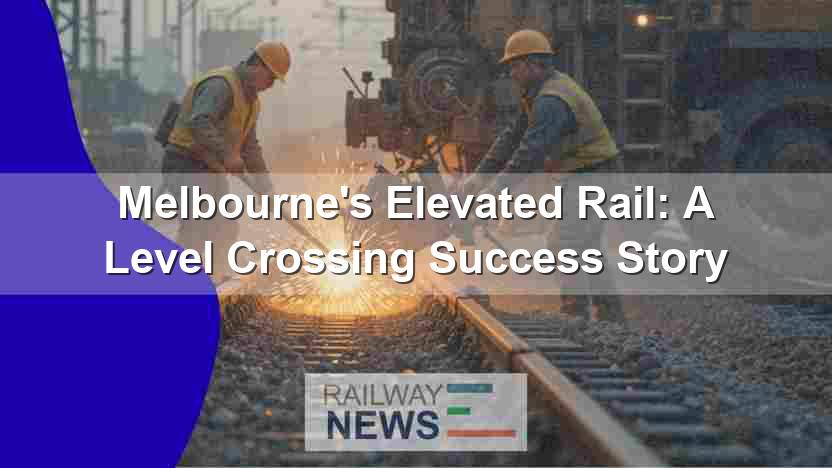
This article examines the Victorian government’s initiative to eliminate eight level crossings (LCs) in Melbourne’s northern suburbs, focusing on the engineering challenges, economic considerations, and societal impacts of this significant infrastructure project. The project, part of a broader A$1 billion (approximately US$700 million) investment, highlights the complexities involved in modernizing a mature railway network within a densely populated urban area. The removal of these LCs, impacting the Upfield and Mernda lines, is not merely a matter of replacing existing infrastructure but involves a detailed redesign incorporating elevated rail lines, new station construction, and meticulous traffic management throughout the construction phase. This analysis explores the rationale behind the chosen elevated design, the project timeline, and its projected benefits for commuters and the wider community. The lasting effects on traffic flow, community cohesion, and economic development are crucial aspects to consider when evaluating the success of such a large-scale undertaking.
Elevated Rail Design: Addressing Capacity and Safety
The decision to employ an elevated rail design for this level crossing removal project presents a compelling solution to several critical challenges. The existing at-grade crossings (where the railway line intersects with a road at the same level) created significant bottlenecks, resulting in prolonged delays for both vehicular and rail traffic, particularly during peak hours. An elevated design eliminates these delays by physically separating road and rail traffic. Additionally, elevated tracks significantly enhance safety by removing the risk of collisions between trains and vehicles. This is particularly important in a high-traffic area like Melbourne’s northern suburbs where the daily crossing of approximately 150,000 vehicles posed a considerable risk.
The choice of elevation also offers advantages in terms of construction time. The article notes that the elevated design will reduce construction time by around 18 months compared to a depressed rail design (lowering the track below ground level). This is a significant factor, minimizing disruption to both commuters and businesses in the affected areas.
Project Scope and Timeline: A Multi-Phased Approach
The project encompasses the removal of eight LCs across the Upfield and Mernda lines, specifically targeting crossings at Bell, Reynard, and Munro Streets in Coburg and Moreland Road in Brunswick (Upfield Line) and Murray Road, Bell Street, Cramer Street, and Oakover Road in Preston (Mernda Line). The phased approach prioritizes the completion of the Coburg and Brunswick crossings by 2020, followed by the Preston crossings by 2021. This strategic phasing helps to manage the inevitable disruption during construction, allowing for a more controlled and efficient project implementation.
The construction of new stations at Coburg, Moreland, Preston, and Bell further enhances the accessibility and efficiency of the upgraded rail network. These new stations will be integrated with the elevated rail lines, improving passenger flow and enhancing the overall commuter experience.
Economic and Social Impact: Beyond Infrastructure
The A$1 billion investment represents a significant commitment to improving Melbourne’s transport infrastructure. The project’s economic impact extends beyond the direct costs of construction. It creates numerous jobs throughout the construction phase and indirectly stimulates economic activity in the surrounding communities. Improved transport links facilitate easier commutes, boosting productivity and access to employment opportunities. The removal of the LCs also reduces congestion, saving commuters time and fuel costs. Additionally, the reduction in traffic accidents resulting from the elimination of at-grade crossings leads to significant long-term savings in healthcare and insurance costs.
On a social level, the project aims to foster a stronger sense of community. The unification of East and West Preston, as mentioned by Member for Preston Robin Scott, highlights the transformative potential of such infrastructure improvements. Improved transport networks contribute to social cohesion by enabling easier interaction and reducing barriers between different parts of a community.
Conclusion: A Model for Urban Rail Modernization
The Victorian government’s initiative to remove eight level crossings in Melbourne’s northern suburbs exemplifies a proactive approach to modernizing a mature urban rail network. The project’s success hinges on a well-defined strategy, the utilization of efficient engineering solutions (like the elevated rail design), and a clear understanding of the social and economic benefits. The project’s phased implementation, prioritizing the completion of crossings in Coburg and Brunswick before moving to Preston, showcases effective project management. The emphasis on enhanced safety, reduced congestion, and improved community connectivity goes beyond simply upgrading infrastructure; it represents a commitment to improving the quality of life for residents. The choice of elevated rail lines, while demanding significant investment, delivers several key advantages in terms of construction speed, safety improvements, and long-term operational efficiency. The anticipated reduction in delays and improved safety will yield tangible benefits for commuters, while the associated economic stimulation and social cohesion will further solidify the project’s overall value. The integration of new stations also underlines the commitment to ensuring seamless and accessible rail transit. To summarize, the Melbourne level crossing removal project provides a valuable case study in how detailed urban rail improvements can positively transform communities, demonstrating a model for other cities facing similar challenges in upgrading their aging railway systems.

Railway infrastructure, rolling stock and transport technologies specialist focused on global rail industry developments, high-speed rail systems, signaling technologies and freight transportation. Covering railway investments, public transport modernization, rail operations and international mobility projects across Europe, Asia and North America.
RELATED POSTS

October 1, 2026 7:09 am
United States regulators confirmed a September 30 deadline for the...

October 4, 2026 5:14 pm
Alstom secured a CA$4.7 billion order from VIA Rail Canada...

October 1, 2026 12:13 am
Illinois approved $1.5 billion annually for the Northern Illinois Transit...

October 6, 2026 2:14 am
Union Pacific launched export rail shipments with Ferromex to deliver...

October 1, 2026 6:10 am
Amtrak approved a System Expansion Committee on July 30 to...
October 1, 2026 3:12 am
Greenbrier confirmed Brian Comstock as new president and CEO effective...