
Melbourne Metro Tunnel: Rail Innovations & Future of Railway Technology

Melbourne Metro Tunnel: A New Era for Rail in the Victorian Capital
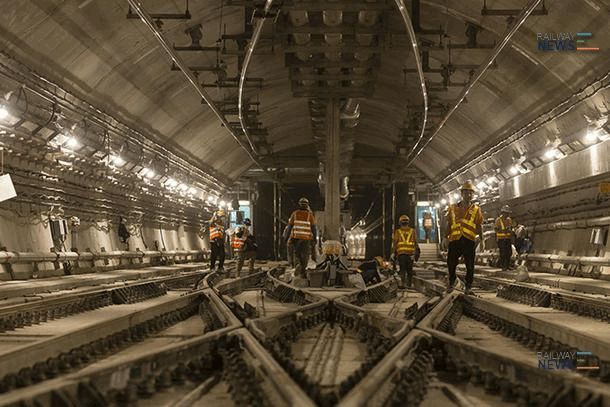
Melbourne is on the cusp of a transformative moment in its public transport history. Set to open by the end of 2025, the Metro Tunnel project represents the most significant expansion of the city’s rail network since the City Loop’s launch in January 1981. This ambitious undertaking, designed to alleviate congestion and boost capacity, involves the construction of twin tunnels beneath the CBD, creating a continuous line from Sunbury in the west to Cranbourne and Pakenham in the southeast. The project will also connect previously underserved areas like Parkville and St Kilda Road to the rail network. This article delves into the key technological advancements and operational changes underpinning the Metro Tunnel, with a focus on the innovative signalling system and its impact on the future of Melbourne’s rail network.
High Capacity Signalling: The Technological Heart of the Metro Tunnel
At the core of the Metro Tunnel’s enhanced capabilities lies a state-of-the-art signalling system. Delivered by the Rail Network Alliance (RNA), which includes Alstom, a joint venture of John Holland and CPB Contractors, AECOM, Metro Trains Melbourne, and the State of Victoria, this new system is pivotal to the project’s success. The system’s primary function is to control the movement of trains and ensure their safe and efficient operation. The installation of the new High Capacity Signalling system has been rolled out across the twin tunnels and sections of the Cranbourne, Pakenham, and Sunbury lines. This system is a world-leading Communications-Based Train Control (CBTC) solution known as Urbalis, which was delivered by Alstom and has been in operation on sections of the Pakenham/Cranbourne line since January 2023. This rollout was the first of High Capacity Signalling on an existing network in Australia.
CBTC Technology: Enhancing Capacity and Reliability
Alstom’s CBTC system, Urbalis, employs cutting-edge technology to optimize train operations. By wirelessly communicating the precise location of moving trains to other trains, the railway line, and signal control centres, train speed can be automatically adjusted, ensuring safe distances between trains. Unlike conventional signalling that uses stop-and-go lights, this allows trains to run closer together, thus significantly increasing the frequency of services. Alexander Robinson, Rail Control and Project Engineering Manager at Alstom, notes that this technology “is going to enable much more frequent rail services, and it has already done so on the surface areas in the east of Melbourne. It allows trains to arrive every three minutes – with the potential to reduce to two minutes in peak hour.” The benefits extend beyond increased capacity; the system also helps free up space on the existing rail network, enabling more frequent services on other lines. This is particularly beneficial for the Sunbury Line and the Cranbourne/Pakenham Line.
Mixed-Mode Signalling: A Complex Engineering Feat
The Metro Tunnel project marks a significant milestone as the first mixed-mode signalling application in Australia. Alstom has combined CBTC with mainline signalling on the same line, presenting a unique engineering challenge. As Alexander Robinson explains, “The system had to accommodate existing trains, such as V/Line and freight trains, as well as the new ones.” This required retaining existing signalling design to a certain extent and creating a bespoke system. According to Robinson, “Mixing the CBTC system with the existing conventional signalling was probably the most significant challenge of the project.” This involved incorporating Victorian signalling principles built over the past 100 years into modern CBTC signalling technology. Alstom’s global technology and local know-how were essential to meeting the customer’s needs, as well as drawing on expertise from the company’s Product Centre in Pittsburgh, USA.
Platform Screen Doors and Enhanced Safety
Adding to the safety and efficiency improvements, Alstom’s CBTC solution incorporates Platform Screen Door (PSD) technology at all five of the new underground stations. These doors are a first for Melbourne and open and close in sync with the train doors, increasing safety at the train/platform interface. According to Alexander Robinson, a significant number of rail safety incidents occur at this interface. The PSDs create an extra layer of safety by separating passengers from the rolling stock while it is in motion, as well as keeping trains on schedule. Skylar (Xin) Qi, System Integration Test Engineer at Alstom, notes the team has gone to great lengths in the design of the PSD, including a special door back design to prevent entrapment. The technology has been subjected to rigorous testing, and Qi states that “Safety is our number one priority.”
Streamlining Maintenance and Operations
Beyond its operational advantages, Alstom’s CBTC system offers substantial benefits in terms of maintenance and operational efficiency. The system reduces the need for extensive lineside equipment, minimizing wayside maintenance requirements. By reducing reliance on traditional wayside equipment, maintenance teams can focus on on-train systems, reducing operational downtime. The system is more software-based, which also provides more data to maintenance teams. This allows for more timely reactions to problems. The modern CBTC system is more software-based than mechanical, Robinson says more data is available to maintenance teams. Metro Trains has formed a special team to maintain the system, and Alstom is providing maintenance support through a 10-year service agreement. This technological advancement not only streamlines operations but also reduces maintenance costs, which results in significantly improved efficiencies. Robinson notes that this system can enable almost 24/7 operations.
Conclusion
The Melbourne Metro Tunnel project represents a crucial investment in the city’s infrastructure, poised to reshape its public transport landscape significantly. The integration of Alstom’s cutting-edge CBTC technology, coupled with the implementation of PSDs, signals a commitment to enhancing passenger safety, boosting capacity, and improving operational efficiency. This project is also the first mixed-mode signalling application in Australia, presenting a complex challenge to engineers. The project promises to increase frequency, improve reliability, and allow for more on-time departures. While the project has presented many challenges, the results promise to improve public transportation within Melbourne, making it more modern and efficient. As the Metro Tunnel prepares to open, it sets a new standard for urban rail systems in Australia and beyond, demonstrating the potential of technological innovation to transform public transport and improve the commuting experience for millions.
Company Summary: Alstom
Alstom is a global leader in sustainable mobility, providing rolling stock, signalling, services, and infrastructure solutions. With a presence in over 70 countries, Alstom plays a pivotal role in modernizing and enhancing rail networks worldwide. Alstom’s expertise encompasses a wide range of products and services, from high-speed trains to urban transport solutions. Their contribution to the Melbourne Metro Tunnel underscores their commitment to innovation and the advancement of railway technologies that improve efficiency, safety, and passenger experience.
RELATED POSTS
December 30, 2022 7:09 am
The Jabodebek LRT: A Modern Transit Solution for Greater Jakarta...
October 24, 2016 6:40 pm
The Hong Kong metro Kwun Tong Line extension entered into...
July 18, 2022 3:33 pm
The Australian Competition and Consumer Commission (ACCC) approval of Aurizon’s...
July 19, 2019 2:22 am
This article analyzes the strategic shift Indian Railways (IR) is...
October 28, 2022 11:43 pm
Modernization of Southeastern’s High-Speed Javelin Fleet This article examines the...

August 15, 2025 1:34 pm
River Cole realignment project boosts UK rail infrastructure resilience, enhancing...