
Melbourne Metro Tunnel Opens: Doubling Rail Capacity with CBTC
Melbourne’s Metro Tunnel officially opens, doubling rail capacity! This landmark project promises faster commutes and a major upgrade for the **rail network**, benefiting thousands.
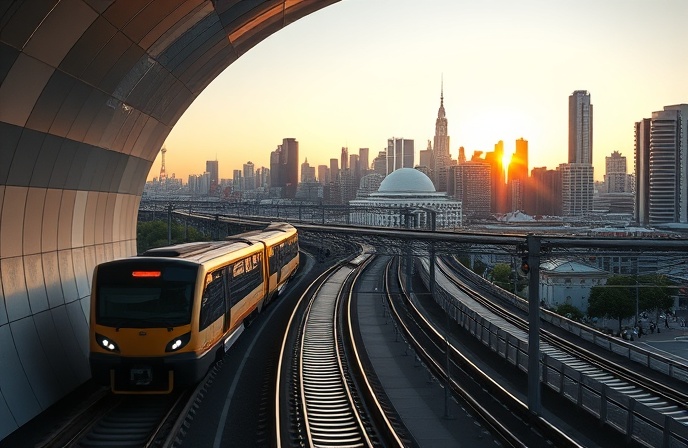
Melbourne Metro Tunnel Officially Opens, Doubling Rail Capacity and Ushering in New Era for Victorian Public Transport
Victoria State Premier Jacinta Allan and Transport Minister Gabrielle Williams have officially inaugurated the Metro Tunnel, a landmark infrastructure project, with the first train journey marking a significant upgrade to the metropolitan train timetable. The opening signifies the completion of a decade-long project that has transformed Melbourne’s rail network, promising faster journeys and increased capacity for thousands of commuters.
| Key Entity | Critical Detail |
|---|---|
| Project Name | Melbourne Metro Tunnel (Metro Tunnel) |
| Core Action | Official opening and first passenger journey through the tunnel |
| Key Stakeholders | Victoria State Premier Jacinta Allan, Transport Minister Gabrielle Williams |
| Date of Opening | November 30 |
| Impact | Doubling of transport capacity, biggest rail network change in 40 years |
Transformative Infrastructure Promises Faster, Fairer Travel
The newly opened Metro Tunnel comprises two 9-kilometer tunnels and five state-of-the-art underground stations: Arden, Parkville, State Library, Town Hall, and Anzac. This substantial investment in public transport infrastructure is set to dramatically reduce travel times between Melbourne’s central business district and its burgeoning metropolitan areas. Premier Jacinta Allan highlighted the project’s core objective of fairness, stating, “Thousands of Victorians will use the Metro Tunnel and experience the biggest change to our rail network in 40 years. This project is about fairness. It means getting to work, college, or home faster—saving time, no matter where you live.”
The operational efficiency of the Metro Tunnel is underpinned by a high-capacity signaling system featuring Communications-Based Train Control (CBTC) technology. This advanced system enables seamless travel through the tunnel and integration with a 97-kilometer line, which includes both the new metro lines and adapted existing infrastructure. The signaling system’s capability for frequent services and increased capacity will benefit the Cranbourne, Pakenham, and Sunbury lines, now integral components of the expanded Melbourne metro network.
Strategic Impact and Operational Enhancements
Over the ten years of its development, the Metro Tunnel project saw over 1.8 million cubic meters of earth excavated, extensive tunnel construction, and the installation of 40 kilometers of Australian-made rail. With its official launch, the Melbourne metro system effectively doubles its transport capacity. The new timetable introduces more than 240 additional services across the Cranbourne, Pakenham, and Sunbury lines, with trains now servicing the five new underground stations.
Industry Context
The completion of the Melbourne Metro Tunnel represents a significant benchmark in urban rail development globally. Its successful implementation of advanced signaling technology and its capacity to fundamentally alter commuter patterns underscore the critical role of large-scale public transport projects in facilitating sustainable urban growth and enhancing economic productivity. For railway operators and infrastructure developers worldwide, this project provides a compelling case study for the benefits of strategic investment in modern, high-capacity rail solutions to meet the increasing demands of metropolitan areas.
Last June 2025, we published an article about Renfe’s cutting-edge Aranjuez maintenance hub. Click here to read – Future of Rail: Renfe’s Railway Technology Hub, Aranjuez: Essential Guide
To encourage widespread adoption and familiarization, travel on the Melbourne metro system will be free every weekend from November 30, 2025, to February 1, 2026.

Railway infrastructure, rolling stock and transport technologies specialist focused on global rail industry developments, high-speed rail systems, signaling technologies and freight transportation. Covering railway investments, public transport modernization, rail operations and international mobility projects across Europe, Asia and North America.
RELATED POSTS

October 8, 2026 1:15 pm
Alstom secured a €1bn contract to build 13 automated trains,...

October 4, 2026 5:14 pm
Alstom secured a CA$4.7 billion order from VIA Rail Canada...

October 4, 2026 11:08 pm
Sound Transit confirmed the September 30 opening of Seattle Pinehurst...
October 1, 2026 10:14 am
HS2 installed a 55-metre steel span in Birmingham, completing phase...

October 1, 2026 3:12 am
Greenbrier confirmed Brian Comstock as new president and CEO effective...

October 5, 2026 6:12 pm
AECOM and Jacobs secured a contract in September 2026 to...