
Melbourne Level Crossing Removal: Rail Infrastructure Upgrade
Melbourne’s Frankston Line level crossings are being removed. New rail bridges and a modern station are planned. Project completion is slated for 2026.
Level Crossing Removal Project Advances in Melbourne’s South-East
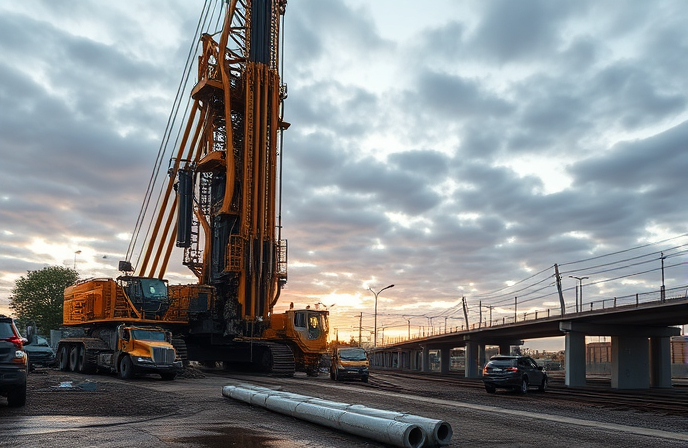
A significant infrastructure project is underway in Melbourne’s south-east, aiming to eliminate three dangerous level crossings, construct new rail bridges, and establish a modern Mordialloc Station. This ambitious undertaking, spearheaded by the Victorian Government, will dramatically improve safety and reduce congestion on local roads along the Frankston Line. Construction is currently focused in Aspendale, with major works slated to commence in the coming months. The initiative, a crucial element of the government’s broader plan to eliminate level crossings across the state, promises to enhance the efficiency and safety of the Frankston Line by 2029. The project’s primary objective is to modernize infrastructure, streamline rail operations, and bolster the overall transport network. The project involves intensive earthworks, utility relocations, drainage, and the installation of critical supporting structures, using advanced engineering techniques.
Progress in Aspendale: Preparatory Works and Utility Relocations
The current phase of the project in Aspendale involves a variety of preparatory works essential for the main construction phases. Crews are actively engaged in earthworks, utility relocations, and drainage operations. Crucially, the realignment of sewer lines is underway, requiring the establishment of a temporary two-way road on Station Street, between the level crossing and Attenborough Road. This meticulous process is a prerequisite for the subsequent stages, ensuring that the existing infrastructure is rerouted effectively before major construction activities commence. These preparatory actions are being undertaken with careful attention to detail, mitigating the potential impact on existing services and laying the groundwork for a seamless transition to the construction of the rail bridges and the upgraded station facilities.
Piling Operations: Foundation for the Future
A critical aspect of the project involves extensive piling operations to support the construction of the rail bridges. The project involves drilling 839 piles across the site to support the new structures. The project demands the drilling of 839 piles in total. The project team is utilizing a 150-tonne Geotech E25 piling rig for this task, a machine capable of delivering 50 tonnes of torque per metre of drilling. This powerful equipment uses a 1200mm-wide auger, a spiral-shaped metal drill, to bore deep into the ground. This enables the creation of the structural foundations. The drilling process is carefully controlled to ensure precision and stability. A seven-person crew is working on the piling process and is currently achieving two to three piles per day. Each pile is filled with approximately 36 cubic meters of high-strength concrete, delivered by up to seven concrete trucks and completed with reinforced steel cage to complete the pile.
Advanced Drilling Techniques: Engineering Precision
The piling rig’s capacity to generate significant torque is key to its effectiveness. “This twisting force is what helps it push deep into the ground without getting stuck,” a spokesperson for the Victorian Government stated, highlighting the engineering principles involved. The rig’s ability to generate 50 tonnes of torque per metre drilled reflects the considerable force required to penetrate the soil. The auger ensures precision and stability, which is vital for the structural integrity of the rail bridges and station facilities. This advanced methodology significantly reduces the time required for each installation, while maximizing the overall accuracy, thus, meeting stringent engineering specifications.
The Road Ahead: Timeline and Impact
Major construction work, including the removal of the three level crossings and the completion of the new Mordialloc Station, is set to commence in the coming months. The project is scheduled for completion in 2026. This project is part of a broader initiative to make the Frankston Line level crossing free by 2029. The project will bring substantial benefits to the local community, promising enhanced safety, smoother traffic flow, and improved public transport access for residents and commuters along the Frankston Line. The government is committed to modernizing the rail network and eliminating level crossings across the state. The project highlights the long-term benefits to the community in improving traffic flow and providing a safer environment.
Conclusion
The Melbourne level crossing removal project represents a significant stride in modernizing the city’s rail infrastructure, with the works in Aspendale being a critical phase in this. The strategic deployment of advanced engineering techniques, combined with careful planning, is creating new rail bridges and station facilities. These efforts highlight the importance of modern infrastructure development, showing its ability to generate a positive influence on urban transportation and create safer environments. The project also emphasizes the need for effective collaboration between government bodies, engineering companies, and construction teams to ensure successful project delivery. The completion of the Mordialloc Station and the elimination of the level crossings is expected to bring considerable benefits to the community, including improved road safety, enhanced travel times, and elevated quality of life. Further rail improvements are to be expected, with the elimination of the Frankston Line level crossings being a key objective for the future.
RELATED POSTS
September 13, 2025 4:25 am
TK Elevator secures five-year DSB contract to maintain 200+ elevators...

January 29, 2020 12:58 pm
This article examines the significant electrification project undertaken by Balfour...
June 24, 2017 11:01 pm
Here are a few voiceover-friendly excerpts focusing on railway safety:**Option...
September 13, 2025 6:55 pm
Victorian government seeks new operator for Melbourne's commuter rail network,...
July 16, 2023 3:50 pm
Optimize your railway for the electric future! This holistic...
January 31, 2022 11:42 pm
Introduction The increasing reliance on digital infrastructure within critical national...