
Melbourne Airport Rail Link: ROI Process & Insights
Melbourne Airport Rail Link’s Registration of Interest is open! Shape the future of Victorian transport; register your interest now!
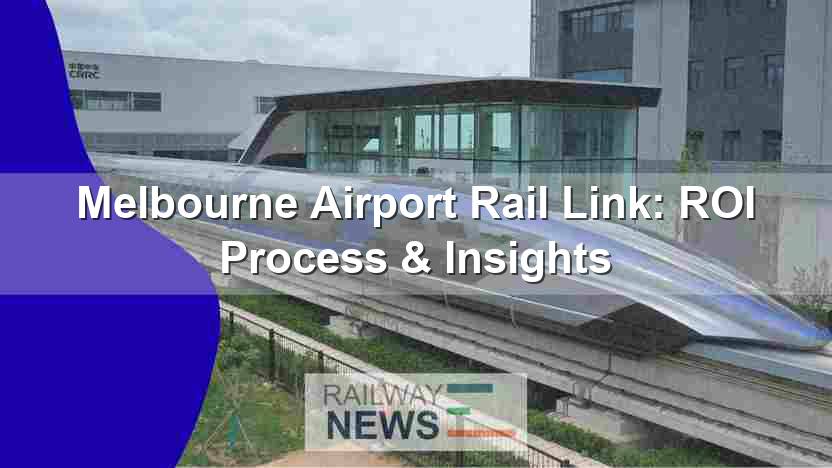
The Victorian government’s initiation of a Registration of Interest (RoI) process for the Melbourne Airport Rail Link marks a significant step towards realizing a long-anticipated infrastructure project. This article explores the strategic importance of this rail link, the implications of the RoI process for potential bidders, the technical challenges inherent in such a large-scale undertaking, and the broader economic benefits expected from its completion. The project’s integration with the proposed Suburban Rail Loop (SRL) further underscores its significance within Victoria’s broader transport strategy. This detailed analysis will examine the various facets of the project, from the initial stages of securing private sector involvement to the anticipated operational impacts on Melbourne’s transportation network.
Securing Private Sector Participation
The RoI process is a crucial step in attracting private sector investment and expertise. The Victorian government, through Rail Projects Victoria (RPV), aims to gauge the level of interest from national and international companies experienced in designing, constructing, and operating large-scale rail projects. This competitive approach is designed to secure the most favorable terms and ensure the project is delivered efficiently and cost-effectively. The evaluation criteria will likely encompass factors such as technical capabilities, financial capacity, project management experience, and alignment with the government’s sustainability goals. The selection process will be rigorous, involving detailed assessments of proposals and extensive due diligence.
Technical Challenges and Design Considerations
The Melbourne Airport Rail Link presents significant engineering challenges. The project involves complex tunneling and integration with existing rail infrastructure, including connection points with the existing rail network and seamless integration with the planned Suburban Rail Loop. This necessitates detailed geological surveys, careful route planning to minimize disruption to existing services, and sophisticated construction techniques to ensure safety and efficiency. Environmental considerations, such as minimizing noise pollution and ground vibrations, will also be paramount. The design must consider future capacity demands, incorporating provisions for potential expansion and technological advancements.
Economic and Social Impacts
The economic benefits of the Melbourne Airport Rail Link are substantial. Improved connectivity between the city’s central business district (CBD) and the airport will boost tourism, enhance business travel, and create numerous employment opportunities during construction and operation. The project’s contribution to the broader economic landscape of regional Victoria is also expected to be considerable. Reduced travel times and improved accessibility will significantly enhance the quality of life for commuters and residents. The strategic integration with the Suburban Rail Loop further amplifies these benefits by connecting the airport to a wider network of suburban areas, facilitating regional economic growth.
Integration with the Suburban Rail Loop (SRL)
The Melbourne Airport Rail Link forms a critical component of the ambitious Suburban Rail Loop (SRL) project. This larger undertaking aims to create a 90km underground loop connecting Melbourne’s suburbs, offering significant improvements to public transport accessibility. The seamless integration of the airport link into the SRL network will maximize its potential benefits and ensure a cohesive and efficient transport system. The combined effect will lead to enhanced connectivity across the entire metropolitan area, fostering economic growth and improving the overall quality of life for residents.
Conclusion
The Victorian government’s launch of the RoI process for the Melbourne Airport Rail Link signifies a crucial step forward in developing a vital piece of Melbourne’s transport infrastructure. The process of attracting private sector investment will be instrumental in ensuring the project’s timely and cost-effective delivery. The considerable engineering challenges inherent in constructing such a complex rail link necessitate meticulous planning, innovative construction techniques, and a commitment to minimizing disruption. However, the potential economic and social benefits are immense. The improved connectivity between the CBD and the airport, coupled with the integration into the Suburban Rail Loop, promises to significantly boost tourism, business, and regional economic growth. This project’s success hinges upon a collaborative effort involving the government, private sector partners, and engineering expertise, all working toward the common goal of delivering a world-class rail link that will benefit Melbourne and Victoria for decades to come. The detailed approach adopted by the Victorian government, focusing on both technological efficiency and broader economic development, positions the project as a model for future infrastructure initiatives. The successful completion of this project will undoubtedly shape the future of Melbourne’s transportation system, influencing urban development and enhancing the overall quality of life for its residents. The outcome of the RoI process will determine the next stage of this ambitious endeavor, ultimately leading to a vastly improved transport network for Melbourne and the surrounding regions.

Railway infrastructure, rolling stock and transport technologies specialist focused on global rail industry developments, high-speed rail systems, signaling technologies and freight transportation. Covering railway investments, public transport modernization, rail operations and international mobility projects across Europe, Asia and North America.
RELATED POSTS

October 8, 2026 1:15 pm
Alstom secured a €1bn contract to build 13 automated trains,...

October 1, 2026 7:09 am
United States regulators confirmed a September 30 deadline for the...

October 8, 2026 12:18 pm
Siemens Mobility signed an agreement with VinSpeed to supply 350...

October 4, 2026 5:14 pm
Alstom secured a CA$4.7 billion order from VIA Rail Canada...

October 5, 2026 6:12 pm
AECOM and Jacobs secured a contract in September 2026 to...

October 1, 2026 12:13 am
Illinois approved $1.5 billion annually for the Northern Illinois Transit...