
Melbourne Airport Rail Link: A $10B Transformation
The Melbourne Airport Rail Link: a $10 billion game-changer. This massive infrastructure project demands expertise – are you ready to build the future?
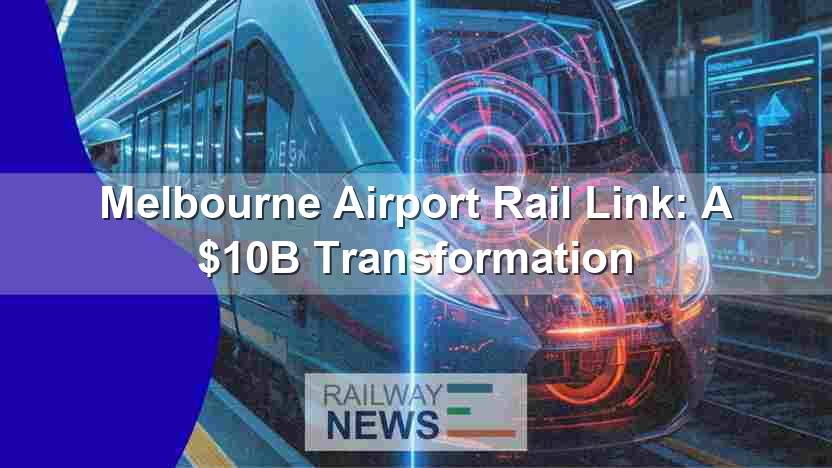
This article examines the Melbourne Airport Rail Link (MARL), a significant infrastructure project approved by the Victorian and Federal Governments of Australia. The project, with a projected cost between A$8 billion and A$13 billion (approximately US$5.67 billion to US$9.21 billion), represents a substantial investment aimed at alleviating traffic congestion, enhancing connectivity, and bolstering Melbourne’s status as a global city. The MARL will directly connect Melbourne Airport at Tullamarine to the city’s central business district (CBD), offering a much-needed alternative to the heavily congested Tullamarine Freeway. This analysis will explore the project’s economic implications, its engineering challenges, the governance structure facilitating its implementation, and the anticipated social and environmental impacts. The article further considers the long-term strategic benefits of this ambitious undertaking for Melbourne and its broader regional context. The sheer scale of the project, coupled with its potential for significant positive impacts, necessitates a detailed understanding of its various facets.
Project Funding and Governance
The A$10 billion (A$5 billion from each government) joint commitment by the Victorian and Federal Governments underscores the project’s importance. A Heads of Agreement (HoA) formalizes the shared investment and establishes clear governance arrangements, encompassing strategic objectives, decision-making processes, and information-sharing protocols. This collaborative approach aims to streamline the project’s execution, mitigate potential conflicts, and ensure accountability throughout all phases. The establishment of a reference group comprised of community, industry, and local government representatives further solidifies the commitment to transparency and stakeholder engagement. This group will play a vital role in guiding the project’s development and ensuring its alignment with community needs and expectations.
Engineering and Construction Challenges
The MARL presents considerable engineering complexities. Extensive ecological, traffic, and geotechnical investigations are underway to inform the detailed design. These investigations are crucial for minimizing environmental impacts, optimizing the route alignment, and ensuring the structural integrity of the rail infrastructure across diverse terrains. The selection of optimal track gauge, signaling systems, and rolling stock will be critical to ensuring operational efficiency and passenger comfort. Construction, expected to commence in 2022 and span approximately nine years, will require meticulous planning and execution to minimize disruptions to existing infrastructure and surrounding communities. Careful management of materials, logistics, and labor resources will be essential for staying on schedule and within budget.
Economic and Social Impacts
The economic benefits of the MARL extend beyond mere infrastructure development. It promises to stimulate economic growth through job creation during construction and operation. The improved connectivity is expected to enhance tourism, facilitate business travel, and support the development of surrounding areas. The reduction in traffic congestion on the Tullamarine Freeway will translate into significant time and cost savings for commuters and businesses. Moreover, the MARL is expected to provide a more environmentally friendly transportation option compared to road travel, thereby contributing to a reduction in carbon emissions. The enhanced accessibility to the airport will not only benefit passengers but also positively impact the overall efficiency of the airport’s operations.
Conclusion
The approval of the Melbourne Airport Rail Link marks a significant milestone in Melbourne’s infrastructure development. This A$10 billion project represents a substantial investment in both transport infrastructure and the city’s future. The collaborative approach taken by the Federal and Victorian Governments, incorporating robust governance structures and stakeholder engagement, sets a positive precedent for large-scale infrastructure projects. The project’s considerable engineering challenges demand careful planning and execution, emphasizing the need for meticulous design, risk management, and effective communication throughout the construction phase. Beyond the considerable engineering hurdles, the project promises a wide range of economic and social benefits, including job creation, reduced traffic congestion, enhanced tourism, improved airport accessibility, and reduced environmental impact. The successful completion of the MARL will significantly improve Melbourne’s transport network, solidifying its position as a major global city. The careful consideration of the economic, social, and environmental factors throughout the project lifecycle will be crucial to realizing the full potential of this transformative undertaking. The project’s success will serve as a benchmark for future large-scale infrastructure projects in Australia and globally.

Railway infrastructure, rolling stock and transport technologies specialist focused on global rail industry developments, high-speed rail systems, signaling technologies and freight transportation. Covering railway investments, public transport modernization, rail operations and international mobility projects across Europe, Asia and North America.
RELATED POSTS

September 6, 2026 5:19 am
Hitachi delivered Taiwan's first N700ST high-speed train from Japan in...

September 5, 2026 4:19 pm
CPK launched formal tender talks with four consortia to design...

September 5, 2026 7:14 pm
HS2 Ltd signed renegotiated civils contracts with EKFB and Align...

September 6, 2026 4:12 am
Alstom delivered the first of 100 new G Class trams...

September 6, 2026 6:17 am
Hungary ordered a national ban on most freight trains from...

September 6, 2026 1:17 am
Hitachi Toshiba Supreme Consortium confirmed the first of 12 N700ST...