
MBTA Cape Flyer Incident: Rail Safety in Massachusetts
Cape Flyer train struck by tree, but crew’s quick actions saved passengers. Trained railway staff reversed train, no injuries.
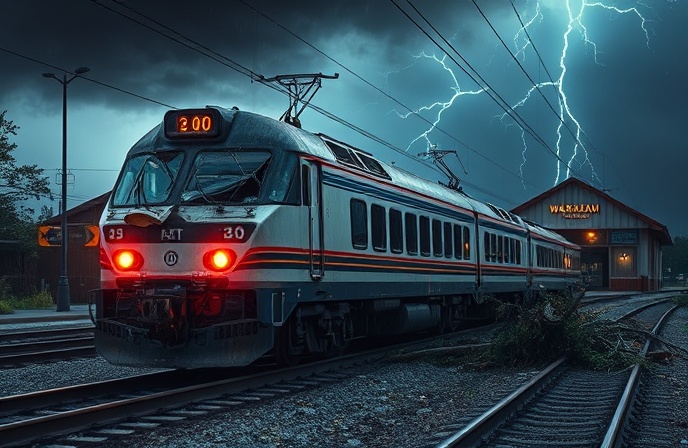
Quick Thinking Saves Passengers After Cape Flyer Tree Strike
In the midst of a severe summer storm, a Massachusetts Bay Transportation Authority (MBTA) Cape Flyer commuter train, operated by Keolis Commuter Services, encountered a dangerous obstacle. On July 3rd, at approximately 11:15 p.m., the Boston-bound train struck a fallen tree in Wareham, Massachusetts. This incident, however, highlights the critical role of skilled and decisive railway professionals. Four operating employees, Vincent Colombo, John Folan, Brandon Quaranto, and Kyle Smith, were lauded for their quick actions in ensuring passenger safety and preventing injury. This article focuses on the critical performance of these individuals and the vital role that employee training and quick-thinking play in maintaining safety in the commuter rail network.
The Incident: A Stormy Night in Wareham
The incident occurred as a severe storm system moved through southeastern Massachusetts. The Cape Flyer, operating on its regular Boston-bound route, was struck by a large tree that had fallen across the tracks in Wareham. The impact caused significant damage to the locomotive. The precise location and nature of the damage are key factors in the subsequent response and investigation. The use of Automatic Train Control (ATC), a crucial safety feature in modern commuter rail, was likely instrumental in the immediate response and the crew’s assessment of the situation, allowing for quick braking and the initial evaluation of damage to the lead locomotive.
The Crew’s Professionalism: Ensuring Passenger Safety
Faced with a damaged locomotive and potential for further hazards, the train’s crew exhibited exceptional professionalism. Instead of remaining in a perilous situation, the crew demonstrated remarkable crisis management skills by reversing the train back to Wareham Station. This strategic decision, executed under challenging circumstances, underscores the value of comprehensive training and experience in incident response. The crew’s coordinated response, utilizing established protocols for emergency communication and passenger management, facilitated an organized evacuation or containment, resulting in no injuries to passengers or crew members. This prompt and skillful reaction demonstrates the importance of consistent safety drills and employee readiness.
Recognition and Industry Significance
The MBTA and Keolis Commuter Services recognized the crew’s heroic actions by presenting them with certificates during a recent MBTA board meeting. This recognition highlights the importance of acknowledging employee dedication and reinforces the core value of safety within the rail industry. The swift response in this incident demonstrates the critical interplay of infrastructure, equipment maintenance, and, most importantly, human expertise in mitigating risk and ensuring passenger well-being. The incident also demonstrates the need for continued investment in infrastructure and preparedness to counter the increasing severity of weather events.
Conclusion
The Cape Flyer incident serves as a powerful reminder of the inherent risks involved in railway operations and the essential role that trained professionals play in mitigating them. The crew’s quick-thinking and decisive actions ensured passenger safety during a potentially catastrophic event. This case underscores the critical importance of comprehensive training programs, rigorous safety protocols, and ongoing investment in emergency response capabilities. The incident’s handling underscores the significance of safety culture and the necessity of recognizing and rewarding exemplary performance within the commuter rail system. In the face of increasingly unpredictable weather patterns, the ability to respond effectively to emergencies is more important than ever.
Looking ahead, the MBTA and Keolis, along with other commuter rail operators, should examine the specific details of this incident to update safety protocols. This includes a potential review of inspection frequencies for overhanging trees or other hazards near the railway line. This event provides valuable insights for future training programs. The incident can also encourage continued investment in weather monitoring systems, which will play a critical role in predicting extreme weather events and allowing for proactive adjustments to train schedules and operational plans.
Company Summary
Massachusetts Bay Transportation Authority (MBTA): The MBTA, also known as the “T,” is a public transportation authority responsible for operating public transportation services in the Greater Boston area. The MBTA provides services including subway, bus, commuter rail, and ferry. The MBTA’s mission focuses on providing safe, reliable, and accessible transportation options for the region.
Keolis Commuter Services: Keolis Commuter Services operates the MBTA’s commuter rail network, providing passenger rail services throughout Eastern Massachusetts. Keolis is a global transportation operator with a focus on public transportation management. Key aspects of their railway operations include the maintenance of rolling stock, operation of train services, and management of railway infrastructure.
RELATED POSTS

March 17, 2018 12:52 am
Delhi Metro's Pink Line: Driverless trains and seamless integration...
February 14, 2026 10:27 pm
Lumo reports a 49% visitor increase for its enhanced 3D...
August 16, 2018 5:46 am
Northern England's rail network needs a £100bn upgrade. Modernization...
July 4, 2025 11:33 am
Eurostar and St. Pancras International announce major expansion, tripling projected...

October 3, 2009 12:20 pm
The World Bank has released $14m of a $44m loan...
May 7, 2019 12:56 pm
The Jokeri Light Rail: a €386 million collaborative success story...