
Mauritius Metro Express: A Light Rail Case Study
The Mauritius Metro Express: a light rail success story! Learn how this ambitious project tackles urban transport challenges and inspires global transit solutions.
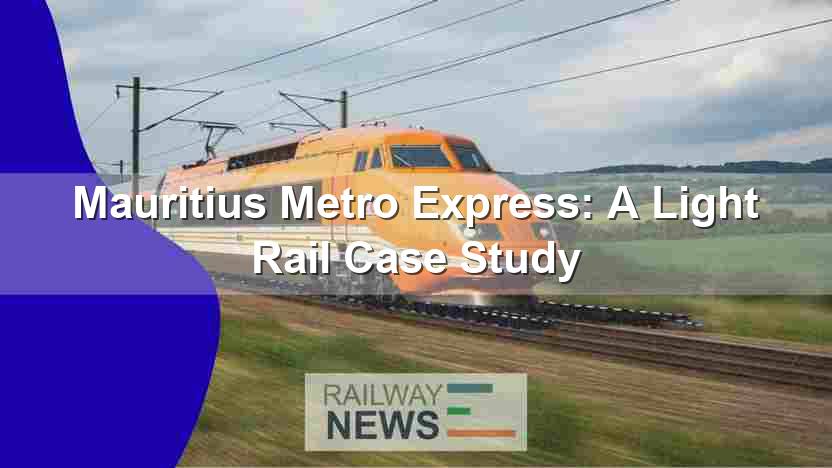
This article examines the Mauritius Metro Express Project, focusing on its implementation, challenges, and potential implications for urban transport in developing nations. The project, a significant undertaking for Mauritius, represents a substantial investment in modernizing its public transportation infrastructure. The initial phase, a light rail system connecting Rose Hill and Port Louis, serves as a crucial first step towards a larger, more detailed network. This analysis explores the project’s construction progress, the technological choices made regarding rolling stock, and the future expansion plans. Further, it explores the broader context of the project within the Mauritian economy and its potential impact on urban development, examining both the successes and potential shortcomings of this ambitious endeavor. Understanding the Mauritius Metro Express project provides valuable insights for other countries considering similar large-scale public transit initiatives.
Project Implementation and Progress
The Mauritius Metro Express Project’s first phase, encompassing a 13km light rail line between Rose Hill and Port Louis, was slated for completion by September 2019. As of the information available at the time of this report, approximately 70% of the construction work was reported to be complete. This phase included the construction of the necessary infrastructure, including tracks, stations, and signaling systems. The project involved significant logistical challenges, including managing the construction within a densely populated urban environment, navigating existing road networks and infrastructure, and ensuring minimal disruption to daily life for residents. The selection of Larsen & Toubro (L&T), an Indian firm, as the primary contractor highlights the increasing role of international partnerships in large-scale infrastructure projects in developing countries. The project’s estimated cost of $565 million underscores the considerable financial investment required for such ventures.
Rolling Stock and Technological Choices
The Metro Express utilizes Urbos light rail vehicles (LRVs) manufactured by CAF (Construcciones y Auxiliar de Ferrocarriles), a Spanish rolling stock manufacturer. The selection of these LRVs reflects a focus on modern, reliable, and energy-efficient technology. Each 50-meter-long vehicle is composed of five wagons and seven compartments, designed for a maximum operating speed of 50 km/h, though typical speeds are between 20-25 km/h, suitable for the urban environment. The procurement of 18 LRVs demonstrates the commitment to providing sufficient capacity to meet anticipated passenger demand. The deployment of this modern rolling stock signifies a significant upgrade from pre-existing public transport systems, likely leading to improved passenger comfort and operational efficiency.
Expansion Plans and Future Development
The Metro Express project is envisioned as a multi-phase development. Beyond the initial Rose Hill to Port Louis line, the second phase involves an extension from Rose Hill to Quatre Bornes, adding four new stations and reducing the travel time between Port Louis and Quatre Bornes to approximately 28 minutes. The ultimate goal is to create a 26km line connecting Curepipe to Immigration Square in Port Louis, encompassing a total of 19 stations. This ambitious expansion plan demonstrates the government’s long-term commitment to developing a detailed, interconnected light rail network across the island. Successful implementation of these expansion plans will be crucial in realizing the full potential of the Metro Express system to significantly improve urban mobility and reduce reliance on private vehicles.
Challenges and Sustainability Considerations
While the Metro Express project holds considerable promise, it is essential to acknowledge potential challenges. Sustaining the project’s long-term operational efficiency and financial viability will require effective management, ongoing maintenance, and regular investment. Addressing potential issues related to fare collection, integrating the light rail system with other modes of transport, and adapting to future changes in passenger demand will be essential for long-term success. Additionally, the environmental impact of the project should be carefully monitored and mitigated, including measures to reduce noise pollution and energy consumption.
Conclusion
The Mauritius Metro Express Project represents a significant investment in modernizing the country’s transportation infrastructure. The initial phase, connecting Rose Hill and Port Louis, showcases the potential of light rail systems to improve urban mobility. The project’s progress, despite challenges inherent in large-scale infrastructure developments, demonstrates a commitment to improving public transport. The decision to utilize modern LRVs from CAF, reflects a focus on energy efficiency and passenger comfort. The planned expansion to Quatre Bornes and beyond, aims to create a detailed network that will enhance connectivity across the island. However, ensuring the long-term financial viability and operational efficiency of the system, and proactively addressing environmental concerns remain crucial aspects for the project’s enduring success. The project serves as a valuable case study for other developing nations contemplating similar initiatives, emphasizing the importance of careful planning, sustainable practices, and international collaboration in successful light rail implementation. The success of the Metro Express will not only impact Mauritius’s transportation system but also shape its urban development and economic growth for years to come, influencing how it manages transport solutions in densely populated areas. Continuous monitoring, adaptation, and a commitment to addressing challenges are crucial to ensuring that this ambitious project fulfills its potential as a model for sustainable urban transport development.

Railway infrastructure, rolling stock and transport technologies specialist focused on global rail industry developments, high-speed rail systems, signaling technologies and freight transportation. Covering railway investments, public transport modernization, rail operations and international mobility projects across Europe, Asia and North America.
RELATED POSTS
September 6, 2026 5:19 am
Hitachi delivered Taiwan's first N700ST high-speed train from Japan in...

September 6, 2026 4:12 am
Alstom delivered the first of 100 new G Class trams...
September 6, 2026 1:17 am
Hitachi Toshiba Supreme Consortium confirmed the first of 12 N700ST...
September 6, 2026 12:20 pm
Indian Railways ordered a probe after a fire destroyed 2...
September 7, 2026 4:11 am
ÖBB Rail Cargo Group leased 500 Eanos-y scrap-metal wagons from...
September 7, 2026 4:15 pm
Zimbabwe approved the EUR 3 billion Harare Light Rail project,...