
MARK Commission Launches: Study Explores SE Wisconsin Rail Link to
MARK commission launches, exploring enhanced passenger rail service linking southeastern Wisconsin to Chicago. Initial focus: organizational structure and feasibility studies.
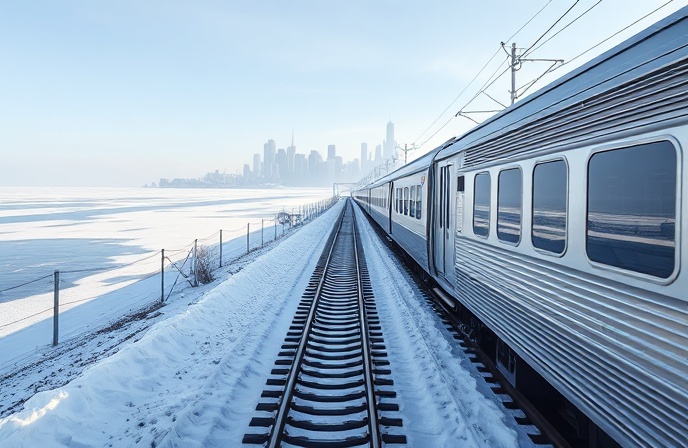
The newly formed Milwaukee-Area–Racine–Kenosha Passenger Rail Commission (MARK) will convene its inaugural meeting on December 5, 2025, at Racine City Hall in Wisconsin. This foundational meeting will focus on establishing the commission’s organizational structure and initiating preliminary coordination to assess the viability of enhanced passenger rail service connecting southeastern Wisconsin’s major urban centers to Chicago and other communities along the Lake Michigan shoreline.
| Key Entity | MARK (Milwaukee-Area–Racine–Kenosha Passenger Rail Commission) |
|---|---|
| Core Action | Inaugural meeting to establish organizational structure and explore feasibility of new passenger rail service. |
| Geographic Focus | Southeastern Wisconsin (Kenosha, Racine, Milwaukee) connecting to Chicago and northern Lake Michigan shore communities. |
| Formation Authority | Intergovernmental agreement under Wisconsin statute, approved by Milwaukee, Racine, and Kenosha. |
| Date | December 5, 2025 |
Strategic Impact
The establishment of the MARK commission signifies a significant step forward in regional transportation planning for southeastern Wisconsin. By formally bringing together the cities of Milwaukee, Racine, and Kenosha, this initiative aims to streamline the often-complex process of developing new intercity passenger rail routes. The commission’s mandate, authorized by an intergovernmental agreement under Wisconsin statute, allows for collaborative efforts in preliminary planning, crucial public engagement, and securing eligibility for vital federal rail-planning programs. This organized approach is designed to foster efficient progress and ensure that the potential benefits of enhanced rail connectivity are thoroughly investigated.
Operational Details
The commission’s initial focus on organizational structure is paramount to its long-term success. This includes defining roles, responsibilities, and decision-making processes to ensure effective governance. Concurrently, the early coordination phase will involve detailed feasibility studies. These studies will critically examine ridership projections, infrastructure requirements, operational costs, and potential economic impacts. The goal is to build a robust case for investment and to identify the most effective service models that can connect downtown Kenosha, Racine, and Milwaukee to Chicago and the broader northern Illinois and Wisconsin passenger rail network along the Lake Michigan corridor.
Last June 2025, we published an article about Renfe’s cutting-edge Aranjuez maintenance hub. Click here to read – Future of Rail: Renfe’s Railway Technology Hub, Aranjuez: Essential Guide
Industry Context
This development mirrors a broader trend across the United States where regional collaboration is becoming a cornerstone of advancing passenger rail infrastructure. The MARK commission’s approach aligns with similar successful transportation initiatives established elsewhere in Wisconsin and reflects a nationwide recognition of the need for improved intercity mobility options. For industry stakeholders, this signals a commitment to exploring new corridors and potentially expanding service, offering opportunities for infrastructure development, rolling stock procurement, and operational expertise. CEOs of rail manufacturing, engineering, and construction firms, as well as passenger rail operators, should monitor this initiative closely as it progresses through its planning and feasibility stages, as it could represent future project pipelines.

Railway infrastructure, rolling stock and transport technologies specialist focused on global rail industry developments, high-speed rail systems, signaling technologies and freight transportation. Covering railway investments, public transport modernization, rail operations and international mobility projects across Europe, Asia and North America.
RELATED POSTS

October 1, 2026 7:09 am
United States regulators confirmed a September 30 deadline for the...

October 1, 2026 12:13 am
Illinois approved $1.5 billion annually for the Northern Illinois Transit...
October 1, 2026 5:14 am
Siemens confirmed delivery of the first new S200 train to...

October 1, 2026 6:10 am
Amtrak approved a System Expansion Committee on July 30 to...

October 1, 2026 3:12 am
Greenbrier confirmed Brian Comstock as new president and CEO effective...

October 1, 2026 4:10 am
DART launched two public ridership dashboards in March 2026 to...