
Manila MRT Line 3: JICA’s $330M Lifeline
Manila’s MRT Line 3 gets a $330M JICA boost! This massive rehabilitation project, upgrading tracks, signals, and trains, will revolutionize commutes – discover how!
This article examines the significant $330 million loan agreement between the Japan International Cooperation Agency (JICA) and the Philippines, focusing on its impact on the rehabilitation of Manila’s Metro Rail Transit Line 3 (MRT Line 3). The agreement represents a crucial investment in upgrading a vital component of Manila’s public transportation infrastructure. The loan’s terms, the technological transfer involved, and the projected improvements to the MRT Line 3’s operational efficiency and safety will be analyzed. Additionally, the broader context of this project within Manila’s ongoing efforts to address its persistent traffic congestion will be discussed, highlighting the socio-economic benefits of improved mass transit systems. The article will conclude by assessing the long-term implications of this initiative for both Manila’s transportation network and the collaborative relationship between Japan and the Philippines in the realm of infrastructure development.
The MRT Line 3 Rehabilitation Project: A Necessary Investment
The Manila MRT Line 3, a crucial artery in the city’s transportation system, had suffered from years of deferred maintenance and operational inefficiencies. This resulted in frequent breakdowns, delays, overcrowding, and safety concerns, significantly impacting the commuting public and the overall efficiency of the city. The JICA loan addresses these critical issues by funding a detailed rehabilitation project targeting several key areas. This includes the complete overhaul of aging infrastructure, ensuring that the system meets modern safety standards, improves ridership, and enhances the overall commuting experience.
Technological Transfer and Capacity Building
The loan agreement extends beyond mere financial assistance. A key component is the inclusion of Special Terms for Economic Partnership (STEP), facilitating technology transfer and expertise sharing from Japan. This aspect is particularly important for long-term sustainability. The project leverages Japanese diagnostic technology for precise maintenance planning, ensuring the effective allocation of resources and the prevention of future breakdowns. The transfer of knowledge and skills to Filipino engineers and technicians is crucial to building local capacity for the ongoing maintenance and operation of the modernized MRT Line 3. This knowledge transfer ensures that the improvements are not temporary fixes but lasting advancements.
Scope of Improvements: From Tracks to Signaling Systems
The rehabilitation encompasses a broad range of upgrades. These include:
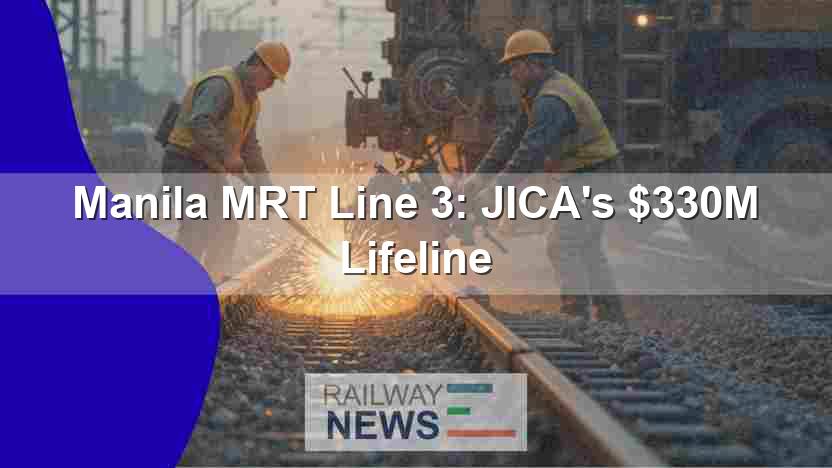
- Track replacement: Replacing deteriorated track sections with modern, high-quality materials to improve ride quality and reduce derailment risks.
- Light Rail Vehicle (LRV) refurbishment: Overhauling 72 LRVs to improve their reliability, passenger comfort, and overall lifespan.
- Signaling system modernization: Upgrading the signaling system to enhance safety and increase train frequency, optimizing operational efficiency.
- Infrastructure upgrades: Rehabilitating associated infrastructure, including power supply systems, depot equipment, public address systems, and CCTV for improved safety and security.
These multifaceted improvements demonstrate a commitment to a holistic approach to system rehabilitation, maximizing the long-term benefits of the project.
Socio-Economic Impacts and Long-Term Sustainability
The successful rehabilitation of MRT Line 3 will have significant positive socio-economic impacts on Metro Manila. Improved service reliability and efficiency will alleviate traffic congestion, reducing travel times and improving productivity. Increased ridership is anticipated, providing a more affordable and environmentally friendly alternative to private vehicles. The project’s emphasis on technology transfer and capacity building ensures the long-term sustainability of the improvements, empowering the Philippines to maintain and operate a modern and efficient mass transit system. This is crucial, not only for Manila’s current needs, but also for its future growth and development.
Conclusions
The JICA loan agreement marks a significant milestone in the modernization of Manila’s public transportation infrastructure. The $330 million investment in the MRT Line 3 rehabilitation project is not simply about repairing a failing system; it is about building a sustainable and efficient mass transit solution for the future. The project’s scope, encompassing track replacement, LRV refurbishment, signaling system modernization, and broader infrastructure upgrades, demonstrates a commitment to detailed improvement. The inclusion of STEP, facilitating the transfer of Japanese technology and expertise, ensures not only immediate improvements but also long-term capacity building within the Philippines. The anticipated benefits extend beyond mere infrastructural improvements; they include reduced traffic congestion, improved commuting experiences, enhanced safety, and increased ridership, ultimately contributing to Metro Manila’s economic development and improved quality of life. The successful completion of this project serves as a model for future collaborations between the Philippines and Japan in tackling major infrastructure challenges, fostering economic growth, and strengthening bilateral relationships.

Railway infrastructure, rolling stock and transport technologies specialist focused on global rail industry developments, high-speed rail systems, signaling technologies and freight transportation. Covering railway investments, public transport modernization, rail operations and international mobility projects across Europe, Asia and North America.
RELATED POSTS

September 6, 2026 4:12 am
Alstom delivered the first of 100 new G Class trams...

September 6, 2026 6:17 am
Hungary ordered a national ban on most freight trains from...
September 7, 2026 8:16 am
Midea, Gree and TCL shipped air conditioners via China Railway...
September 6, 2026 8:17 am
DB InfraGO reopened the Nuremberg-Regensburg line in Bavaria on 31...
September 7, 2026 4:11 am
ÖBB Rail Cargo Group leased 500 Eanos-y scrap-metal wagons from...
September 7, 2026 4:15 pm
Zimbabwe approved the EUR 3 billion Harare Light Rail project,...