
Manila LRT Line 2 Extension: A $62M Upgrade
Manila’s LRT Line 2 East Extension: A $62 million project expanding the railway by 4km, improving commutes for millions. Discover how this public-private partnership is transforming transport!
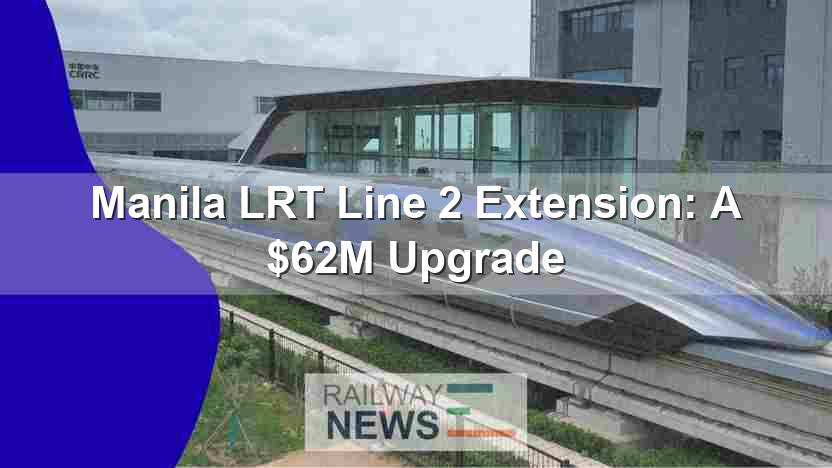
This article explores the significant contract awarded to a consortium of Marubeni Corporation (a Japanese general trading company) and D.M. Consunji Inc. (DMCI), a prominent Filipino construction firm. Their undertaking involves the crucial East Extension of Manila’s Light Rail Transit (LRT) Line 2. This project represents a critical step in addressing Metro Manila’s persistent transportation challenges, characterized by severe traffic congestion and air pollution. The $62 million contract encompasses not only the construction of a 4-kilometer (km) railway extension, including two new stations, but also the complex integration of the electrical and mechanical (E&M) systems. This necessitates a sophisticated understanding of railway engineering, procurement, and construction management, which this partnership uniquely brings together. The project’s success is vital for improving the efficiency and capacity of Metro Manila’s mass transit system, ultimately enhancing the lives of millions of commuters. We will explore the scope of the project, the roles of each consortium member, the broader context within Metro Manila’s transportation infrastructure development, and the implications of this project for future urban planning in the region.
The Scope of the LRT Line 2 East Extension
The LRT Line 2 East Extension project significantly expands the existing 13.8 km elevated railway line, adding a crucial 4 km extension eastward. This extension features two new stations, Emerald and Masinag, strategically located to serve densely populated areas currently underserved by efficient public transportation. The project’s scope extends beyond mere track laying and station construction. It involves the detailed design, procurement, and installation of all E&M systems, a complex undertaking requiring specialized expertise in signaling, power supply, communication systems, and train control technologies. The construction of a viaduct to support the elevated track is also a critical component of the project.
Consortium Roles and Expertise
The successful bid by the Marubeni-DMCI consortium highlights the complementary strengths of each partner. Marubeni, leveraging its extensive international experience in railway projects, assumes the lead role in overall project administration and the procurement of sophisticated E&M railway systems. Their expertise in global supply chain management and intricate system integration is crucial for the project’s timely and efficient completion. DMCI, a well-established Filipino construction firm with proven experience in large-scale infrastructure projects, is responsible for track-work procurement and construction, as well as the on-site installation of the E&M systems. Their local knowledge and extensive network of subcontractors are essential for effective project execution within the Philippine context.
The Broader Context of Metro Manila’s Transportation Infrastructure
The LRT Line 2 East Extension is not an isolated project; it is a key component of the larger “Capacity Enhancement of Mass Transit Systems in Metro Manila” initiative. This detailed program aims to address the chronic traffic congestion and air pollution plaguing the region, ultimately enhancing the quality of life for its residents. The project’s success is vital for the continued development of Metro Manila’s public transport network, impacting commuting times, economic activity, and overall urban sustainability. The ongoing development of the Metro Manila subway further emphasizes the region’s commitment to improving its mass transit infrastructure.
Implications and Future Outlook
The successful completion of the LRT Line 2 East Extension project will have far-reaching implications for Metro Manila. The expansion of the LRT network will significantly increase its carrying capacity, reducing road congestion and improving commuting times for thousands of passengers. This improved accessibility will positively impact economic development in the eastern regions of Metro Manila, creating opportunities for businesses and residents alike. Additionally, the reduction in private vehicle usage will contribute to cleaner air and a more sustainable urban environment. This project serves as a model for future infrastructure development, demonstrating the successful collaboration between international and local firms in tackling significant urban challenges. The experience gained from this project, particularly in the integration of advanced E&M systems, will prove valuable for future railway expansion projects across the Philippines and potentially within the wider Southeast Asian region. The project’s success underscores the importance of strategic public-private partnerships in addressing the complex needs of rapidly growing urban areas.

Railway infrastructure, rolling stock and transport technologies specialist focused on global rail industry developments, high-speed rail systems, signaling technologies and freight transportation. Covering railway investments, public transport modernization, rail operations and international mobility projects across Europe, Asia and North America.
RELATED POSTS
July 4, 2026 9:18 am
Intramotev deployed its TugVolt autonomous railcar in March 2025 at...
July 4, 2026 11:41 pm
Eurostar cancelled all direct London–Amsterdam trains through July 2 after...
July 1, 2026 1:37 pm
NRHS awarded $187K to 34 U.S. rail heritage projects in...
July 1, 2026 6:37 am
Amtrak launched a small-plate dining program for Acela First Class...
July 1, 2026 1:42 am
UK government launched a £30bn Better Connected plan, allocating £15.6bn...

July 4, 2026 11:02 pm
Eurostar suspends all direct London–Dutch trains through 2 July after...