
Liverpool City Region: £1.6B Investment to Transform Public Transport
Liverpool City Region secures a monumental £1.6 billion public transport investment, promising faster, greener journeys. This boosts **railway** accessibility and supports regional **transport** goals.
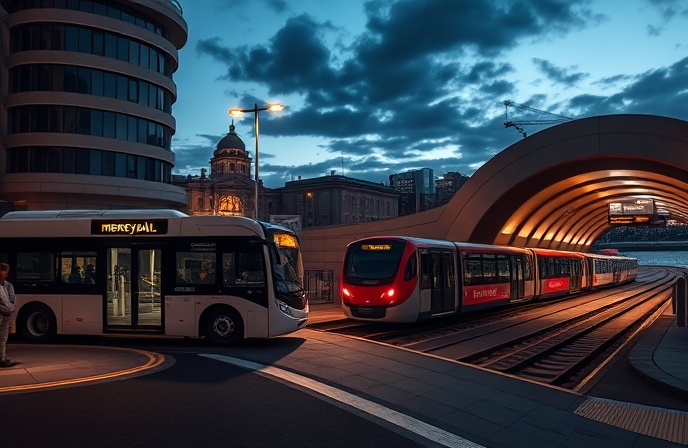
Liverpool City Region has secured a monumental £1.6 billion transport investment, the largest in its history, aimed at revolutionizing public transit, fostering inclusive growth, and accelerating regeneration across its six boroughs. This landmark funding, confirmed by the Chancellor ahead of the Spending Review, positions Liverpool as the first Combined Authority to unveil such ambitious plans, promising faster, greener, and more connected journeys for its 1.6 million residents.
| Key Entity | Critical Detail |
|---|---|
| Liverpool City Region (LCR) | Secured £1.6 billion public transport investment |
| Transport for City Region (TCR) Settlement | Confirmed in June, largest transport investment in LCR history |
| Projected Impact | 20% increase in residents reaching Liverpool City Centre within 30 mins by public transport; 20% increase in residents within 800m of a step-free rail station |
| Timeline | Introduction of franchised bus services in 2026; Local Transport Plan (LTP4) targets 2040 |
The detailed Transport for City Region (TCR) settlement will facilitate a significant overhaul of the region’s public transport network, enhancing accessibility and affordability for communities and supporting major housing and regeneration projects. The investment is poised to increase the proportion of residents able to reach Liverpool City Centre via public transport within 30 minutes by 20%, alongside a substantial rise in direct links to town centres throughout the region. Additionally, it aims to ensure equitable access to public transport across Halton, Knowsley, Liverpool, Sefton, St Helens, and Wirral, with a target of a 20% increase in residents living within 800 meters of a step-free rail station.
Strategic Impact: Unlocking Growth and Connectivity
Mayor Steve Rotheram emphasized the transformative potential of this investment, stating, “This £1.6 billion settlement is the largest transport investment in our region’s history and a massive statement of intent towards delivering the greener, more accessible, more affordable and better-connected public transport system our 1.6 million residents deserve.” The strategic goals include the development of new, step-free rail stations, rapid transit links, and smart ticketing systems designed to directly connect communities to employment opportunities, new housing, cultural attractions, and significant regeneration initiatives. A primary focus is supporting the construction of thousands of new homes, particularly in areas designated for growth, ensuring these developments are seamlessly integrated with major employers and the region’s burgeoning industries.
Operational Enhancements and Future Vision
This substantial funding follows a period of considerable transport investment in the region, including the deployment of a £500 million fleet of new trains, the procurement of over 100 all-electric zero-emission buses, the extension of the Merseyrail network to Headbolt Lane in Kirkby, and the construction of the first new Mersey Ferry in over six decades. The current proposals, slated for review by the Combined Authority this month, are designed to accelerate the modernization and expansion of the public transport system, aligning with Mayor Rotheram’s vision for a more sustainable, accessible, and affordable network. The long-term strategy is further underpinned by the Liverpool City Region’s Local Transport Plan (LTP4), which outlines the anticipated evolution of the network up to 2040, incorporating ongoing public consultation to ensure resident feedback shapes future developments.
Last June 2025, we published an article about Renfe’s cutting-edge Aranjuez maintenance hub. Click here to read – Future of Rail: Renfe’s Railway Technology Hub, Aranjuez: Essential Guide
Industry Context
This significant commitment from the Liverpool City Region underscores a growing trend among major urban areas to leverage public transport infrastructure as a critical driver of economic growth and social equity. For transport operators, manufacturers, and urban planners, this £1.6 billion investment signals substantial opportunities in infrastructure development, rolling stock procurement, and digital integration. The emphasis on greener solutions, accessibility improvements, and integrated mobility platforms highlights a forward-looking approach that other city regions will undoubtedly monitor closely as they strategize their own urban development and transport modernization efforts. CEOs in the rail and transport sectors should view this as a blueprint for how integrated regional transport planning can unlock substantial economic and social benefits, creating a more attractive environment for investment and talent.

Railway infrastructure, rolling stock and transport technologies specialist focused on global rail industry developments, high-speed rail systems, signaling technologies and freight transportation. Covering railway investments, public transport modernization, rail operations and international mobility projects across Europe, Asia and North America.
RELATED POSTS

October 1, 2026 7:09 am
United States regulators confirmed a September 30 deadline for the...

October 1, 2026 12:13 am
Illinois approved $1.5 billion annually for the Northern Illinois Transit...

October 4, 2026 5:14 pm
Alstom secured a CA$4.7 billion order from VIA Rail Canada...

October 1, 2026 6:10 am
Amtrak approved a System Expansion Committee on July 30 to...

October 1, 2026 3:12 am
Greenbrier confirmed Brian Comstock as new president and CEO effective...

October 6, 2026 2:14 am
Union Pacific launched export rail shipments with Ferromex to deliver...