
LAX APM: P3 Rail Innovation & Future Trends
The LAX APM project: a $4.9 billion Public-Private Partnership success story showcasing innovative automated transit solutions. Learn how this model streamlines large-scale infrastructure development!
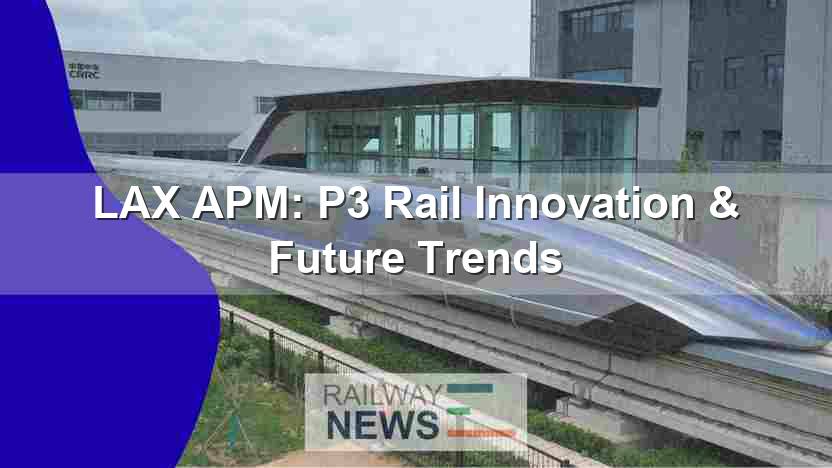
This article examines the $4.9 billion contract awarded to the LAX Integrated Express Solutions (LINXS) consortium for the design, construction, financing, operation, and maintenance of an Automated People Mover (APM) system at Los Angeles International Airport (LAX). The project represents a significant undertaking, showcasing a large-scale Public-Private Partnership (P3) model in the transportation sector. We will delve into the intricacies of this project, exploring the financial aspects, the technological choices, the operational challenges, and the long-term implications of such a large-scale transit initiative. The successful implementation of this project is crucial not only for LAX’s capacity and efficiency but also as a benchmark for future APM deployments in major transportation hubs globally. The analysis will highlight the key factors contributing to the project’s success or potential challenges, providing valuable insights for future large-scale transit projects.
The LINXS Consortium and the P3 Model
The LAX APM project is a prime example of a successful Public-Private Partnership (P3). The LINXS consortium, comprising Fluor, Balfour Beatty, ACS Infrastructure Development, Dragados USA, HOCHTIEF PPP Solutions, and Flatiron, along with design firms HDR and HNTB, assumes significant financial and operational risk. This risk-sharing model allows LAWA (Los Angeles World Airports) to leverage private sector expertise and capital without bearing the entire financial burden. The 30-year operational contract ensures long-term maintenance and performance guarantees, mitigating potential cost overruns and operational disruptions for LAWA. The P3 model encourages innovation and efficiency, as the private consortium is incentivized to deliver a high-quality, cost-effective system.
Technological Specifications and Operational Efficiency
Bombardier Transportation provides the APM vehicles and operating system, ensuring a technologically advanced and reliable system. The driverless trains, arriving every two minutes, are designed to carry up to 10,000 passengers per hour, or an estimated 85.1 million annually. The design incorporates large doors for easy boarding with luggage, and stations include escalators, elevators, and moving walkways to facilitate passenger flow and accessibility. This focus on passenger experience and operational efficiency is critical to the success of the APM system, addressing a common bottleneck at large airports: the efficient movement of large numbers of passengers between terminals and ground transportation.
Financial Aspects and Risk Mitigation
The $4.9 billion contract represents a substantial investment, yet the P3 structure mitigates financial risks for LAWA. The private consortium bears a significant portion of the construction and operational costs, reducing the upfront financial burden on the public sector. The long-term operational contract, however, necessitates careful risk assessment and management by both parties. Potential challenges include managing unforeseen construction delays or cost overruns, ensuring the system’s long-term reliability and maintenance, and adapting to changing passenger demands and technological advancements over the 30-year operational period. Transparency and robust contractual agreements are key to mitigating these risks.
Long-Term Implications and Future Outlook
The LAX APM project serves as a model for future large-scale transit initiatives. Its success will depend on factors like effective project management, adherence to schedules and budgets, and the successful integration with existing transportation networks. The system’s ability to seamlessly connect air travelers with other modes of transportation, such as buses and metro lines, will be critical in alleviating traffic congestion around LAX. This project’s success would validate the effectiveness of P3 models in delivering large-scale, complex transit projects, paving the way for similar initiatives in other major airports and cities worldwide. The project’s long-term operational and maintenance aspects will also be closely studied, informing future infrastructure planning and partnership models.
Conclusion
The LAX APM project, a $4.9 billion undertaking by the LINXS consortium under a Public-Private Partnership (P3) model, represents a significant step towards modernizing transportation infrastructure at a major international airport. The project, employing Bombardier Transportation’s technology and aiming for an operational capacity of 85.1 million passengers annually, highlights the increasing reliance on innovative technological solutions and P3 models for large-scale infrastructure development. The decision to use a P3 model successfully shifts a significant financial burden from the public sector while leveraging the expertise and efficiency of the private sector in construction, operation, and maintenance. However, the long-term success of the project hinges on the ability of both LAWA and the LINXS consortium to effectively manage risks associated with cost overruns, technological challenges, and changing operational demands over the 30-year contract period. The project’s success will provide valuable lessons learned for future large-scale transportation projects, particularly those employing P3 models and advanced automated transit technologies. Careful monitoring of the project’s performance and a thorough evaluation of the long-term financial and operational outcomes will be critical in assessing the effectiveness of this approach and informing future similar initiatives.

Railway infrastructure, rolling stock and transport technologies specialist focused on global rail industry developments, high-speed rail systems, signaling technologies and freight transportation. Covering railway investments, public transport modernization, rail operations and international mobility projects across Europe, Asia and North America.
RELATED POSTS

September 6, 2026 5:19 am
Hitachi delivered Taiwan's first N700ST high-speed train from Japan in...

September 5, 2026 4:19 pm
CPK launched formal tender talks with four consortia to design...

September 5, 2026 7:14 pm
HS2 Ltd signed renegotiated civils contracts with EKFB and Align...

September 6, 2026 4:12 am
Alstom delivered the first of 100 new G Class trams...

September 6, 2026 6:17 am
Hungary ordered a national ban on most freight trains from...

September 6, 2026 1:17 am
Hitachi Toshiba Supreme Consortium confirmed the first of 12 N700ST...