
Lausanne Metro m2 Project: Vaud Canton, Switzerland
Switzerland’s Lausanne Metro m2, a new automated rail system, opens, boosting public transport and interconnectivity.

Lausanne Metro m2: A Case Study in Modern Urban Rail Development
This article examines the Lausanne Metro m2 (m2) project in Vaud canton, Switzerland, a significant undertaking in urban rail development. The project aimed to replace an aging funicular/rack railway system connecting Ouchy on Lake Geneva to the city center, while significantly expanding its reach and capacity. The primary goals were to improve public transportation, reduce reliance on private vehicles, and enhance interconnectivity with other modes of transport. This involved not only replacing the existing line but also extending it considerably to serve northern Lausanne. The project’s success serves as a valuable case study for similar urban rail expansion projects worldwide, showcasing the challenges, solutions, and long-term benefits of integrating modern rail technology into existing urban infrastructure. This analysis will explore the project’s planning, construction, technological advancements, and operational aspects, highlighting the key decisions and their impacts.
Project Planning and Implementation
The existing Ouchy-Flon line, operating for over a century, was nearing the end of its lifespan. Its limited length (less than 1.5km) and steep gradients (up to 12%) constrained its capacity and operational efficiency. In 1997, Metro Lausanne-Ouchy initiated a search for a more comprehensive solution, culminating in the approval of a fully automated driverless metro system (m2). Following a local referendum and securing funding (SF706m), contracts were awarded to Alstom in 2003 encompassing rolling stock, power supply, signaling, track, and project management. The project, initially slated to start in 2003, faced delays due to unexpected tunneling challenges. Construction included the dismantling of the old line and its realignment, along with a 4.5km extension north to Les Croisettes. A temporary “Métrobus” service maintained north-south connectivity during construction.
Technological Innovations and Infrastructure
The m2 line features a driverless, automatic operation system, providing significant long-term cost advantages through reduced staffing needs. Alstom projected that only 70 trained staff would be required. The line is primarily double-tracked, with 14 stations featuring 30-meter platforms and platform screen doors. Approximately 90% of the track is underground, yet stations are strategically located near the surface to maximize accessibility. The system utilizes a unique technology incorporating flanged steel wheels alongside rubber tires running on a metal beam, offering both stability and the ability to manage the steep gradients (retaining some of the original 12% incline, making it the world’s steepest metro). Alstom’s Urbalis 300 automatic signalling system, similar to that used in Singapore, enhances operational efficiency and safety. The Vennes depot serves as the central hub for signaling, information, and security systems.
Rolling Stock and Operational Aspects
The m2 utilizes Alstom MP89-based, six-car bi-directional trains, similar to those used on Paris Metro Line 14. The initial fleet consists of 15 two-car units, each accommodating 222 passengers (60 seated). These trains achieve a maximum speed of 60 km/h and complete the 7.8km route, with a 338m vertical difference, in 18 minutes. The system integrates seamlessly into the existing Vaud canton’s Mobilis fare structure, connecting with SBB (Swiss Federal Railways), LEB (Lausanne-Echallens-Bercher), and TL (Transports publics de la région Lausannoise) networks.
Interconnectivity and Future Expansion
A crucial element of the m2 project is its integration with other modes of transport. Key interchange points include Lausanne Flon station, connecting with the m1 light rail line and the LEB metre-gauge railway; and Lausanne CFF (Lausanne SBB), connecting with the national rail network. This focus on intermodal connectivity maximizes efficiency and encourages a modal shift away from cars. The Les Croisettes terminus provides potential for future northward expansion of the system. The system’s overall success relies heavily on strategic integration within the broader transportation network.
Conclusions
The Lausanne Metro m2 project stands as a remarkable example of successful urban rail development. It overcame challenges associated with replacing an existing system while significantly expanding its reach and integrating it seamlessly into a broader network. The adoption of cutting-edge technologies, such as driverless operation and advanced signaling, delivered significant operational efficiencies and long-term cost savings. The careful planning, involving community engagement, referendum processes, and collaboration with various stakeholders, ensured the project’s success. The integration of m2 with existing public transport networks (SBB, LEB, TL) exemplifies a successful model for improving urban mobility and reducing car dependence. The project’s success demonstrates that even in densely populated areas with challenging topography, a well-planned and executed metro system can provide a significant boost to public transportation and improve the quality of life for residents. The flexibility afforded by the design, allowing for future extensions, further ensures its long-term sustainability and continued relevance in meeting the transportation demands of a growing city. The chosen technology also demonstrates a commitment to sustainability, minimizing operational costs and environmental impact. By utilizing state-of-the-art rolling stock and signalling technology, the project provides a blueprint for other cities striving for more efficient, sustainable urban transportation solutions. The Les Croisettes terminus clearly indicates scope for future expansion, highlighting the forward-thinking planning incorporated within this significant infrastructure investment. This comprehensive project serves as an exemplary case study for future urban rail development globally.
| Project Parameter | Value |
|---|---|
| Project Name | Lausanne Metro m2 |
| Location | Vaud canton, Switzerland |
| Project Type | Automated, driverless metro system |
| Route Length | 7.8 km |
| Number of Stations | 14 |
| Connections | SBB (Swiss Federal Railways), LEB (Lausanne-Echallens-Bercher), TL (Transports publics de la région Lausannoise), m1 light rail line |
| Project Budget | SF706 million |
| Rolling Stock Supplier | Alstom |
| Signalling System | Alstom Urbalis 300 |
Company Information:
Alstom: A global leader in the design, manufacture, and maintenance of rail transportation systems.
SBB (Swiss Federal Railways): The national railway company of Switzerland.
LEB (Lausanne-Echallens-Bercher): A regional railway company operating in the Vaud canton.
TL (Transports publics de la région Lausannoise): The public transportation network serving the Lausanne region.
RELATED POSTS
October 16, 2020 5:49 am
Jaipur's Metro Rail project expands, adding a new line boosting...
September 2, 2022 8:25 pm
Abbey Wood station's £130 million revamp, completed in 2017, modernized...
January 22, 2013 11:05 am
Shenzhen Metro's expansion showcases rapid transit development, integrating international tech...
April 18, 2022 8:13 pm
Victoria's North East Rail Line upgrade, part of a $1.13...
May 24, 2020 4:45 pm
This article explores the significant long-term service support (LTSS) agreement...
February 17, 2017 6:00 pm
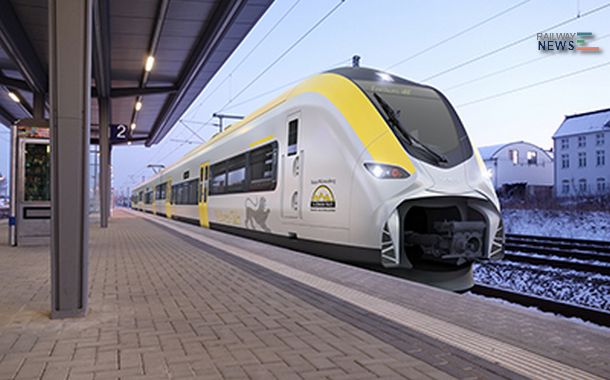
Beginning in 2020, DB Regio AG will operate its Rhine...