
Klas Telecom’s AI Rail Vision: Revolutionizing Safety
Revolutionize railway safety and efficiency with Klas Telecom’s AI-powered computer vision. Discover how deep learning transforms operations!
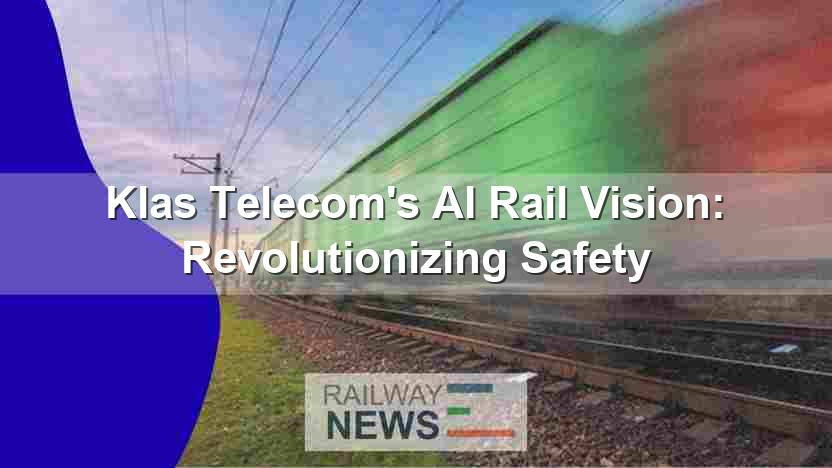
This article explores Klas Telecom’s groundbreaking deep learning computer vision solution designed to revolutionize railway operations. The integration of artificial intelligence (AI) and machine learning (ML) into the railway sector promises significant advancements in safety, security, and efficiency. This innovative technology leverages the power of computer vision, enabling trains and network infrastructure to “see” and interpret their surroundings in real-time. We will examine the core components of this solution, its practical applications within the railway industry, and its potential impact on the future of rail transportation. We will also analyze the technological advancements incorporated and discuss the economic benefits this system promises to deliver to railway operators worldwide. Finally, the article will consider the broader implications of this technology on the future of railway safety and operational efficiency.
Intelligent Surveillance and Risk Mitigation
Klas Telecom’s solution employs deep learning algorithms and computer vision to enhance railway safety and security. Through the use of smart cameras and advanced object detection, the system enables real-time monitoring of railway infrastructure and train operations. This capability facilitates various crucial applications, including:
- Vehicle Identification: Accurate and rapid identification of trains, ensuring smooth traffic management and preventing collisions.
- Intruder Detection: Early detection of unauthorized personnel or objects near tracks, minimizing trespassing-related risks and enhancing security.
- Empty Seat Recognition: Optimization of passenger capacity and resource allocation based on real-time occupancy data.
The system’s ability to analyze visual data surpasses human capabilities in speed and accuracy, providing a detailed real-time situational awareness for improved response times in critical situations.
Technological Foundation: Hardware and Software Integration
The core of Klas Telecom’s solution lies in its seamless integration of hardware and software components. The system utilizes the Klas Telecom TRX Connected Transportation Platform R6 (TRX R6), a robust router/server and six-modem cellular gateway device. This platform acts as the central processing unit, handling the vast amounts of data generated by the computer vision system. Additionally, the integration of Intel OpenVINO convolutional neural networks (CNNs) significantly accelerates the deep learning processes, allowing for real-time analysis and immediate responses to detected events. The inclusion of Intel Core i7, i5, and i3 processors, coupled with 32GB of RAM and up to 8TB of built-in storage, ensures the system can efficiently handle the complex computational demands of deep learning applications.
Operational Efficiency and Predictive Maintenance
Beyond safety and security, Klas Telecom’s solution offers significant potential for improving operational efficiency. Predictive analysis capabilities, enabled by the deep learning algorithms, allow railway operators to anticipate potential issues before they escalate into major disruptions. For instance, the system can identify patterns indicative of potential track damage or equipment malfunction, allowing for proactive maintenance and minimizing costly downtime. This proactive approach contributes to significant cost savings and enhanced operational reliability.
Expanding Applications and Future Prospects
The versatility of Klas Telecom’s deep learning computer vision solution extends beyond the applications already discussed. Its adaptable nature allows for seamless integration with various passenger information systems, providing real-time updates on train schedules, platform locations, and potential delays. This enhanced information flow contributes to a more seamless and user-friendly passenger experience. Moreover, the continued advancements in AI and ML technologies promise further enhancements to the system’s capabilities, opening up new possibilities for optimizing railway operations and ensuring a safer, more efficient railway network in the years to come.
Conclusion
Klas Telecom’s deep learning computer vision solution represents a significant step forward in railway technology. By integrating advanced AI and ML capabilities, this system delivers a detailed suite of functionalities that enhance safety, security, and operational efficiency. The use of smart cameras, coupled with the powerful processing capabilities of the TRX R6 platform and Intel OpenVINO CNNs, allows for real-time analysis of visual data, enabling rapid responses to critical situations and proactive mitigation of potential risks. The system’s applications are diverse, ranging from vehicle and intruder detection to passenger information services and predictive maintenance, demonstrating its broad applicability across various facets of railway operations. The economic benefits, including reduced downtime, optimized resource allocation, and improved passenger experience, highlight the transformative potential of this technology for railway operators worldwide. As AI and ML continue to advance, Klas Telecom’s solution is poised to become an indispensable tool for modernizing railway infrastructure and ensuring a safer, more efficient, and reliable rail transportation system for the future. The focus on integrating advanced computing power within a rugged, railway-compliant platform showcases a commitment to delivering a practical and effective solution that addresses the real-world challenges faced by the railway industry.

Railway infrastructure, rolling stock and transport technologies specialist focused on global rail industry developments, high-speed rail systems, signaling technologies and freight transportation. Covering railway investments, public transport modernization, rail operations and international mobility projects across Europe, Asia and North America.
RELATED POSTS
September 6, 2026 5:19 am
Hitachi delivered Taiwan's first N700ST high-speed train from Japan in...

September 5, 2026 4:19 pm
CPK launched formal tender talks with four consortia to design...

September 5, 2026 7:14 pm
HS2 Ltd signed renegotiated civils contracts with EKFB and Align...

September 6, 2026 4:12 am
Alstom delivered the first of 100 new G Class trams...
September 6, 2026 6:17 am
Hungary ordered a national ban on most freight trains from...
September 6, 2026 1:17 am
Hitachi Toshiba Supreme Consortium confirmed the first of 12 N700ST...