
KL Sentral Project: Malaysia’s Multi-Modal Transport Hub
KL Sentral, Kuala Lumpur’s central railway station, exemplifies successful railway technology and urban development, boosting connectivity and economic growth. This multi-modal hub is a model for integrated transport systems.
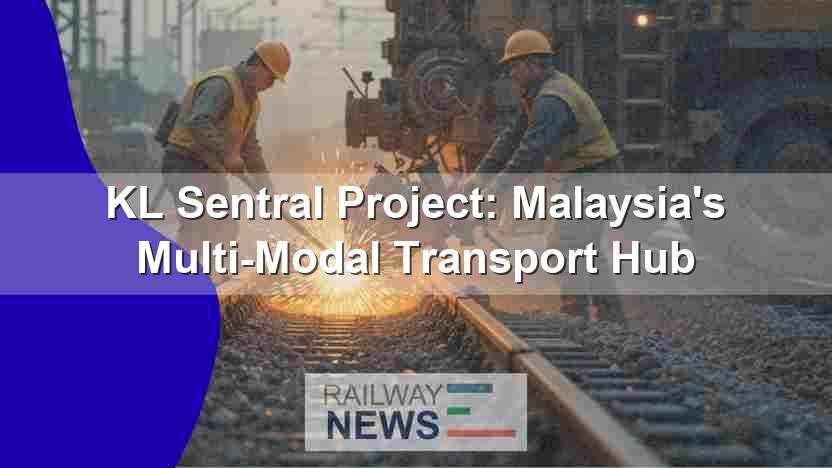
This article examines the development and impact of Stesen Sentral (KL Sentral), Kuala Lumpur’s central railway station, as a significant example of integrated railway technology and urban planning. The project’s aims extended beyond simply replacing an outdated railway station; it aimed to create a multi-modal transportation hub that would stimulate economic growth and improve connectivity within Kuala Lumpur and beyond. The analysis will explore the engineering challenges overcome during construction, the station’s role as a catalyst for urban regeneration, and its lasting influence on Kuala Lumpur’s transportation network. The project’s success, measured in ridership, economic impact, and its contribution to a more efficient and integrated transport system, will be evaluated. Further, the article will examine the long-term vision for KL Sentral and its potential for future expansion and enhancement, considering the ongoing development of surrounding infrastructure and the increasing demands of a growing metropolis.
Engineering Challenges and Construction Methodology
The construction of Stesen Sentral presented significant engineering challenges. The project involved the construction of a new railway terminal, associated rail tracks, and three commercial development decks, all while maintaining the operational integrity of existing railway lines. The marshalling yard, with its three electric railway lines, proved particularly complex. To mitigate disruption, the project employed a night-time construction strategy, leveraging periods when power supply to existing tracks was disconnected. This phased approach, which involved temporarily diverting tracks, proved essential in ensuring minimal impact on regular railway operations. The project’s complexity was further amplified by the concurrent construction of the Putra Light Rail Transit (LRT) track, demanding meticulous coordination and advanced project management skills. The build-and-transfer model, where the developer (Kuala Lumpur Sentral, a consortium led by Malaysian Resources Corporation (MRCB)) received development rights for surrounding land in exchange for building the station, presented unique logistical and financial considerations. The successful execution of this complex project serves as a testament to advanced engineering and construction management practices.
Stesen Sentral as a Multi-Modal Transportation Hub
Stesen Sentral’s design emphasizes multi-modal integration. It serves as a central convergence point for various transportation modes, including KTM Intercity (long-distance trains), KTM Komuter (commuter trains), Rapid KL (LRT and bus services), the Kuala Lumpur International Airport Express Rail Link (ERL) – including KLIA Ekspres and KLIA Transit – and the KL Monorail. This integrated approach significantly enhances passenger convenience and provides seamless connectivity to diverse destinations within Kuala Lumpur and beyond, including Kuala Lumpur International Airport (KLIA), Putrajaya (the federal government administrative center), and Cyberjaya (a technology hub). The station’s seven platforms, each catering to a specific rail service, demonstrate the scale and intricacy of this multi-modal integration.
Urban Regeneration and Economic Impact
Beyond its transportation function, Stesen Sentral acted as a catalyst for urban regeneration. The 72-acre KL Sentral development, centered around the station, transformed a former goods yard into a vibrant mixed-use area encompassing commercial spaces, international hotels, shopping malls, and residential areas. This integrated approach fostered economic activity and created employment opportunities, boosting the surrounding area’s value and contributing to Kuala Lumpur’s overall economic growth. The successful integration of public transport and commercial development showcases a model for sustainable urban development, maximizing the impact of a transportation hub.
Future Development and Sustainability
The ongoing development of KL Sentral, with planned investments exceeding RM 11.76 billion (approximately $3.7 billion as of the time of writing), underscores its enduring significance. This continued investment highlights the project’s long-term vision and its potential to further enhance Kuala Lumpur’s connectivity and economic vitality. Future expansion plans need to address increasing ridership demands and ensure the station’s continued sustainability. This could involve exploring new technologies, improving operational efficiency, and incorporating environmentally friendly practices to ensure KL Sentral remains a model of modern transport infrastructure. Future planning must also consider seamless integration with planned expansions of the existing rail network and new modes of transport.
Project Summary
| Project Attribute | Details |
|---|---|
| Project Name | Stesen Sentral (KL Sentral) |
| Project Type | Multi-modal transportation hub and integrated urban development |
| Location | Kuala Lumpur, Malaysia |
| Opened | April 2001 |
| Initial Investment | RM 1.1 billion (approximately $348 million at the time of construction) |
| Planned Future Investment | RM 11.76 billion (approximately $3.7 billion) |
| Area | 72 acres |
| Platforms | 7 (KTM Komuter, KTM Intercity, Kelana Jaya Line, KLIA Ekspres, KLIA Transit) |
| Daily Ridership (Initial) | Approximately 100,000 |
| Connecting Cities/Areas | Kuala Lumpur, KLIA, Putrajaya, Cyberjaya, and other surrounding areas. |
| Main Contractor (Construction) | EKD Joint Ventures (led by Dragages Malaysia) |
| Operator & Management | Kuala Lumpur Sentral (consortium led by MRCB) |
Conclusions
Stesen Sentral’s success is multifaceted. It stands as a testament to ambitious urban planning and sophisticated railway engineering. The project’s innovative build-and-transfer model successfully integrated public transport infrastructure with private sector development, generating significant economic activity and transforming a previously underutilized area. The multi-modal integration has greatly enhanced Kuala Lumpur’s connectivity, benefiting commuters and fostering economic growth. The project’s impact extends beyond mere transportation; it has become a key component of Kuala Lumpur’s urban fabric, a symbol of the city’s dynamism and future aspirations.
However, the project’s long-term success depends on continued investment and adaptation. The planned future development is crucial for accommodating the projected increase in ridership and maintaining the station’s role as a central transportation hub. Sustainable practices must be integrated into future expansion plans to ensure the environmental viability of this significant urban development. Ongoing monitoring and assessment of passenger flow, service efficiency, and the integration of new technologies will be vital to optimizing the station’s performance and ensuring that it continues to meet the evolving needs of Kuala Lumpur.
To summarize, Stesen Sentral serves as a powerful case study for integrated urban development and efficient rail transport. Its success lies not only in its engineering achievements but also in its ability to stimulate economic growth and improve the quality of life for Kuala Lumpur residents. The project’s lasting impact on the city underscores the critical role of well-planned, integrated transportation systems in driving sustainable urban development.
Company Information:
- Keretapi Tanah Melayu Berhad (KTMB): Malaysia’s national railway operator.
- Malaysian Resources Corporation Berhad (MRCB): A Malaysian public-listed construction and property development company. Led the consortium that developed KL Sentral.
- Dragages Malaysia: A major construction company, part of the EKD Joint Ventures that constructed Stesen Sentral.

Railway infrastructure, rolling stock and transport technologies specialist focused on global rail industry developments, high-speed rail systems, signaling technologies and freight transportation. Covering railway investments, public transport modernization, rail operations and international mobility projects across Europe, Asia and North America.