
Kenya’s SGR: Success, Challenges, and Future

The Nairobi-Naivasha Standard Gauge Railway (SGR): A Case Study in Large-Scale Rail Infrastructure Development
This article examines the development and implications of the Nairobi-Naivasha Standard Gauge Railway (SGR) line in Kenya, a significant project within China’s Belt and Road Initiative (BRI). The $1.5 billion extension, built by China Road and Bridge Corporation, adds 120 kilometers of track connecting Nairobi to Naivasha, significantly expanding Kenya’s national rail network. This expansion builds upon the existing Mombasa-Nairobi SGR line, a $3.2 billion project also funded by China. The project’s implementation, financing, and broader geopolitical context will be analyzed, considering its economic impact, social consequences, and potential for future expansion. Furthermore, we will delve into the challenges faced during construction, including accusations of land fraud, and analyze the sustainability and long-term viability of the project in light of these challenges and global trends in rail infrastructure development. This comprehensive analysis aims to provide valuable insights into the complexities of large-scale rail infrastructure projects in developing nations, highlighting both their potential benefits and inherent risks.
Financing and Geopolitical Implications
The financing of the Nairobi-Naivasha SGR, primarily through a loan from the Export-Import Bank of China (Exim Bank), underscores the increasing role of Chinese investment in African infrastructure. This project is a key component of China’s Belt and Road Initiative (BRI), a global infrastructure development strategy aiming to connect Asia, Africa, and Europe. The BRI’s investment in Kenya’s rail network is a significant geopolitical move, strengthening economic ties between the two nations. However, this reliance on Chinese financing raises concerns about debt sustainability for Kenya and the potential for geopolitical influence.
Technical Aspects and Operational Efficiency
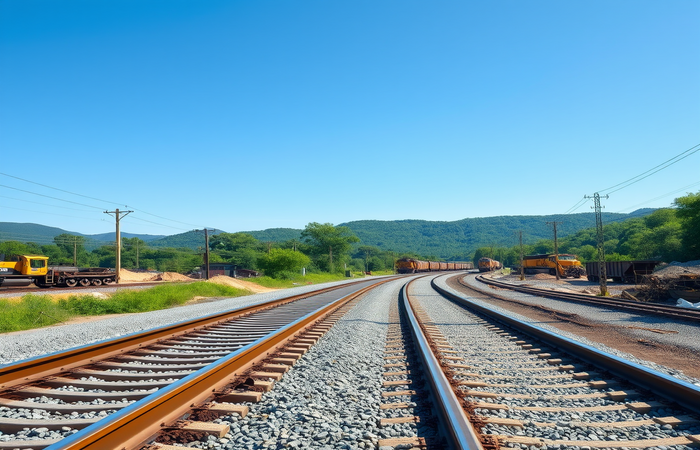
The Nairobi-Naivasha SGR line utilizes standard gauge track, offering improved capacity and efficiency compared to the existing narrow-gauge network. The line features four terminals, with trains operating three times daily, facilitating passenger and freight transport. The integration with the existing Mombasa-Nairobi SGR line creates a more extensive and efficient freight and passenger corridor. However, successful long-term operation requires robust maintenance strategies and skilled personnel to manage the advanced technology deployed.
Social and Economic Impacts
The project is projected to create jobs, stimulate economic activity along the route, and improve connectivity within Kenya. Reduced transportation costs for goods and people are anticipated to benefit businesses and communities. However, the project’s social impact has also faced criticism. Allegations of land acquisition irregularities and displacement of communities highlight the need for more transparent and equitable land acquisition processes in future infrastructure projects. The economic benefits must be carefully weighed against potential social costs to ensure overall positive impact.
Challenges and Future Prospects
The Nairobi-Naivasha SGR project, despite its significant investment and potential benefits, highlights inherent challenges in large-scale infrastructure development. The legal proceedings related to land fraud underscore the critical need for robust governance and transparency in project implementation. Ensuring long-term operational efficiency and financial sustainability requires effective management, maintenance, and a clear strategy for addressing potential risks. The future of the SGR network relies on successful integration with other modes of transportation, sustainable operational practices, and continued investment in its maintenance and expansion. Furthermore, Kenya must strategically manage its debt obligations incurred through Chinese financing to prevent potential economic burdens. The success of this project will serve as a significant case study for future large-scale rail infrastructure projects in developing nations, highlighting the critical need for balanced approaches that prioritize both economic development and social equity.
Conclusions
The completion of the Nairobi-Naivasha SGR line marks a significant milestone in Kenya’s infrastructure development. Funded largely through Chinese investment as part of the Belt and Road Initiative, the project demonstrates the growing role of China in African infrastructure projects. The expansion of the SGR network promises improved connectivity, economic growth, and job creation. However, the project also highlights the complexities and challenges associated with large-scale infrastructure development in developing countries. Issues surrounding land acquisition, transparency, debt sustainability, and the need for effective governance must be addressed to ensure the project’s long-term success and maximize its positive impact. The integration of the new line with the existing Mombasa-Nairobi SGR significantly expands Kenya’s rail capacity and efficiency. Ongoing maintenance and operational management will be crucial for ensuring the long-term viability of the SGR network. The Nairobi-Naivasha project serves as a valuable case study for future infrastructural initiatives across Africa and beyond, emphasizing the necessity for a holistic approach that balances economic benefits with responsible social and environmental considerations. Ultimately, the project’s success hinges not just on engineering prowess, but on sound governance, financial management, and a commitment to equitable development.
RELATED POSTS

November 2, 2024 11:11 am
The upgrade will include track duplication, rail straightening, park and...
August 1, 2019 3:42 pm
This article examines the strategic partnership between RATP Dev, a...

February 28, 2025 7:44 am
The State of UK Rail Station Catering: A Competitive Landscape...
January 13, 2023 4:20 am
This article examines the significant investment in the Huron Central...
May 28, 2025 11:00 pm
Norfolk, United States – March 15, 2025 The resumption of...
October 20, 2025 5:54 pm
Madrid invests €10.9M in Metro de Madrid maintenance, enhancing the...